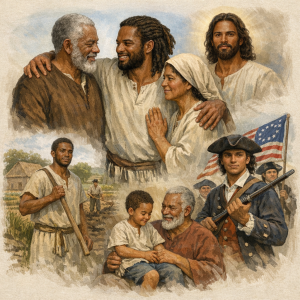
Primary Definition
Son means a young man or man in relation to his father and mother, or to his father or mother individually. A man remains his father’s son and his mother’s son throughout his life; he does not cease to be a son when he reaches maturity, marries, establishes his own household, or becomes a father himself.
In its ordinary and primary sense, son names a real family relationship. It commonly describes a man born to his father and mother, and it may also describe a man received as a son through adoption. The word is relational rather than merely biological, administrative, or statistical. It identifies a man in the line of family life: a son may be known in relation to his father, his mother, his household, his brothers and sisters, and the generations from which he comes.
The word also has established extended meanings. A man may be called a “son of” a family, tribe, people, land, nation, occupation, school, cause, or tradition. In such expressions, the phrase may indicate descent, origin, belonging, loyalty, character, or close association rather than immediate descent from a particular father. A “son of the soil,” for example, is a man native to or closely identified with a place. A “son of liberty” is a man identified with the cause of liberty. “Sons of Israel” can identify the people descended from Israel and, by extension in biblical usage, the covenant people associated with that ancestral name.
Conventional dictionaries and statutes sometimes define son through classificatory expressions based on sex and descent, or as “a person in relation to parents.” Those formulations may be useful within a particular statute, benefit program, scientific classification, or institutional record. They are not, however, the best primary explanation of the ordinary human relationship. A son is a man in relation to his father and mother, or to either his father or mother.
Etymology and Origin
The English word son comes through Middle English sone from Old English sunu, meaning “son” and, more broadly, a male descendant. It belongs to a very old Germanic and Indo-European family of related words. Cognates include Old Norse sonr, Danish søn, Swedish son, Dutch zoon, German Sohn, Gothic sunus, Sanskrit sūnu, Greek huios, and several Slavic forms such as Russian syn. Etymologists commonly connect this word family with a Proto-Indo-European root associated with birth or begetting.
This is a linguistic inheritance, not a Roman legal invention, a government-created status, a military designation, or an ecclesiastical title. The English word developed from the ordinary vocabulary of family relationship used among Germanic-speaking peoples long before modern statutes, corporate institutions, and administrative classifications existed.
Son and sun are pronounced alike in modern English, but they are different words with different histories. Son descends from Old English sunu; sun descends from Old English sunne, referring to the heavenly body. Similar sound does not establish common origin, hidden symbolism, or legal equivalence. Claims that son means sun, that the ordinary family word proves sun worship, or that a man becomes a legal fiction by being called a son are not supported by standard historical linguistics or by common-law doctrine.
The figurative use of son of is also ancient. Old English already used sonship language for a man marked by a quality or condition, and English later used the phrase for a man regarded as the product of a place. Thus, a phrase such as “son of the soil” is not a new bureaucratic usage; it is an established figurative pattern built upon the familiar relationship between a father and his son.
Cultural and Historical Context
Across many societies, a son’s place in the household has carried social, economic, genealogical, and sometimes political importance. In households organized around land, trade, livestock, or inherited office, fathers often trained sons in the work by which the household was sustained. A son might receive instruction, property, a craft, a family name, or responsibility for caring for his father and mother in their later years. These practices varied greatly by place, period, wealth, and custom; they were not universal rules inherent in the word son.
Genealogies frequently preserve father-to-son lines because they identify descent, household membership, tribal connection, inheritance, and historical memory. A genealogy may name a man as “the son of” a father even when the purpose is not merely to state biological descent. In ancient records, such language can establish a place within a clan, tribe, dynasty, priestly line, or covenant people. Context remains important: genealogies sometimes telescope generations, using “son” or “father” for a more distant descendant or ancestor.
In medieval England, sons sometimes received special treatment under inheritance customs. The best-known example is primogeniture: in certain forms of descent involving inherited real property, the eldest son could take before younger sons. Blackstone’s eighteenth-century Commentaries on the Laws of England describes that historical common-law preference while also recognizing local customs that differed, including customs favoring all sons together or, in some places, the youngest son.
Historical primogeniture did not mean that every son automatically became heir, that every eldest son owned his father’s estate during the father’s life, or that daughters never inherited. Rules depended upon the type of property, the tenure, the local custom, the existence of a will, and surviving heirs. Those historical rules also should not be confused with present-day American inheritance law. Modern inheritance normally turns on a valid will, trust, beneficiary designation, deed, probate statute, and the law of the governing jurisdiction.
English also developed many cultural expressions involving sonship: “father and son,” “like father, like son,” “native son,” “son of the house,” and “son of a nation.” Such phrases may convey continuity, affection, identity, responsibility, or belonging. They do not automatically establish a biological, tribal, governmental, or legal relationship.
Biblical / Torah Context
Ancient Israelite and Biblical Hebrew Setting
The Ancient Israelite setting is central to understanding many of the oldest and most influential uses of son in English Bible translation. The principal Biblical Hebrew word translated “son” is ben (בֵּן), with the common plural banim (בָּנִים). Its ordinary sense is a son, and it can also refer to a descendant. In the Hebrew Scriptures, sonship is woven into household life, genealogy, tribal order, inheritance, covenant history, and the transmission of instruction from father to son.
The Torah presents sons within the concrete life of family and inheritance. Genesis repeatedly traces lines through fathers and sons. The descendants of Jacob are called the sons of Israel, and their households form the tribes of Israel. This is an Ancient Israelite genealogical and covenantal expression. It should not be reduced to a later ethnic, religious, or administrative label without attention to the particular biblical passage and period.
Deuteronomy 21:15–17 addresses the inheritance rights of a firstborn son where a man has sons by more than one wife. The text directs that the firstborn receive a double portion and forbids a father from setting aside that right merely because he loves another wife more. This passage describes a rule within the Torah’s ancient Israelite household and inheritance setting. It is not a self-executing rule of present-day American civil law.
Exodus 20:12 commands, “Honor thy father and thy mother,” placing honor toward father and mother at the center of covenant household life. Proverbs, though not part of the Torah, repeatedly preserves the father-to-son pattern of instruction: “My son, hear the instruction of thy father” (Proverbs 1:8). In these passages, sonship includes not only descent but discipline, learning, honor, responsibility, and continuity between generations.
The divine Name represented in the Hebrew text by the four consonants YHWH is rendered in various English forms. In this dictionary’s Ancient Israelite heritage context, Yah or Yahuah may be used when speaking of the Creator. Scripture’s sonship language must nevertheless be read carefully: the phrase “son of” may describe literal descent, a household relationship, covenant membership, character, office, or figurative association, depending on the text.
Hebrew Idioms of Sonship
Biblical Hebrew uses “son of” in ways that extend beyond immediate father-to-son descent. “Sons of Israel” commonly refers to Israel’s people. “Sons of the prophets” identifies men associated with prophetic communities rather than necessarily the biological sons of a particular prophet. “Sons of Belial,” in older English translations, is an idiom for men characterized by worthlessness or wickedness. These expressions do not abandon the ordinary meaning of son; rather, they use family language to communicate belonging, origin, association, or character.
“Son of man” is another important expression. In Hebrew usage, it can emphasize human frailty or mortality. Yah addresses Ezekiel repeatedly as “son of man,” distinguishing the prophet’s mortal human condition from the Creator. In Daniel 7, “one like a son of man” appears in a vision that later became especially significant in Jewish and Christian interpretation. The phrase must be interpreted in its immediate literary setting rather than forced into a single meaning everywhere it occurs.
“Son of God” and Later Religious Usage
The expression “son” or “sons of God” has several biblical settings and is the subject of genuine interpretive disagreement. Depending on the passage, it may refer to heavenly beings, Israel in covenant relation to Yah, a Davidic king, or men who belong to and reflect the character of the Creator. No responsible reading should assume that every occurrence carries one later theological definition.
In the Greek writings commonly called the New Testament, the principal word translated “son” is huios (υἱός). It may mean a literal son, a descendant, or a man identified with a group or quality. The titles “Son of God” and “Son of Man” are applied to Yahshua in ways that are central to Christian scripture and theology. Classical Trinitarian Christianity understands “the Son” as eternally related to the Father and not as a created biological son. That is a later Christian doctrinal formulation concerning the identity of Yahshua; it is not an English common-law definition of son, nor should it erase the distinct Ancient Israelite and biblical contexts from which the language arose.
Later Jewish and rabbinic interpretation, Christian interpretation, Muslim interpretation, and secular scholarship do not always agree concerning these titles. The dictionary distinction is simple: literal family sonship, biblical figurative sonship, covenant sonship, and later theological titles should not be collapsed into one another.
Legal Implications
Historical Common Law
At historical English common law, a son’s legal position could be affected by legitimacy, descent, land tenure, inheritance custom, and the father’s estate plan. Primogeniture was a rule of descent associated particularly with certain inherited real-property arrangements. It was a contingent historical legal doctrine, not the definition of sonhood itself.
Blackstone described descent as the title by which a man acquired an ancestor’s estate as heir at law. His discussion illustrates the importance common law once placed on lineal descent, sex, primogeniture, and representation in determining succession to land. Yet Blackstone’s eighteenth-century account is historical evidence, not controlling law for a modern American probate question.
Historically, sons born outside marriage were often burdened by severe inheritance restrictions. Those restrictions have been substantially limited in American law. In Trimble v. Gordon, 430 U.S. 762 (1977), the United States Supreme Court held unconstitutional an Illinois intestate-succession rule that broadly prevented sons and daughters born outside marriage from inheriting from their fathers. The decision did not create a universal inheritance rule for every case; it applied constitutional equal-protection principles to the statute before the Court.
Statutes and Current American Law
In present-day United States law, son is usually not a stand-alone universal legal category. A statute, will, trust, insurance policy, benefit plan, military record, court order, or agency regulation may define the relevant relationship in its own terms. The controlling question is therefore not simply what a dictionary says, but what the governing text provides and which jurisdiction’s law applies.
Federal statutes often use broader institutional language such as “son or daughter” and “child.” For example, the federal Family and Medical Leave Act defines “son or daughter” to include a biological, adopted, foster, or step son or daughter; a legal ward; or a son or daughter of a man or woman standing in loco parentis. The statute also includes age and disability conditions. That is a statutory definition for federal leave law, not a replacement for the ordinary meaning of a son in family life.
Immigration law likewise uses detailed statutory definitions. Under 8 U.S.C. § 1101, “child” is defined through age, marital status, birth, legitimation, custody, and adoption requirements that vary according to the immigration benefit or classification at issue. A man may plainly be his father’s son and his mother’s son in ordinary speech while not meeting a statute’s narrower definition of “child” for a particular immigration purpose. The difference reflects the limited purpose of the statute, not a denial of the natural family relationship.
Adoption deserves particular care. An adopted son is a son within the adoptive family relationship. Adoption law generally establishes a legal father-and-son or mother-and-son relationship, but the consequences for inheritance through a biological line, benefits, citizenship, and other matters may differ by jurisdiction and statute. When a legal source uses terms such as “adopted child,” “parent,” “legal custody,” or “ward,” those terms should be read accurately within that source rather than treated as the ordinary definition of son.
Limits of Private Redefinition
Calling oneself a “natural son,” “living son,” “freeborn son,” or similar phrase does not by itself create an exemption from statutes, taxes, court jurisdiction, licensing requirements, or criminal law. Capitalization ordinarily does not alter legal status: son, Son, and SON do not create different legal beings merely by their spelling.
Nor is there a general rule that a son automatically serves as his father’s legal agent, owns his father’s property, inherits his father’s debts, controls his father’s affairs, or receives a special political status. Agency requires authority; inheritance requires a legal basis; guardianship requires lawful appointment or recognized authority; and estate administration is governed by applicable probate law. Natural family language should not be confused with unsupported claims of automatic legal power.
Spiritual Meaning
In spiritual and moral language, sonship often expresses belonging, instruction, inheritance, discipline, loyalty, and responsibility. A father’s relation to his son may provide a powerful image for teaching, correction, care, and the passing of wisdom from one generation to another. Such language is relational: it does not merely describe a status claimed for privilege, but may also imply duties of honor, faithfulness, maturity, and service.
Within the biblical record, Israel is at times described in filial terms in relation to Yah. Christian scripture also speaks of believers as receiving adoption and becoming sons of God. Christians commonly distinguish this adopted sonship from the unique title “the Son” applied to Yahshua. These are theological uses of family language; they are not civil adoption decrees and do not alter ordinary legal rules simply through religious profession.
At its soundest, spiritual sonship should encourage a man to honor his father and mother, receive correction with humility, preserve what is righteous in his household, and carry responsibility faithfully into the next generation. It should not be used as a slogan for rejecting lawful duties or for claiming authority without truth, character, and responsibility.
Modern Usage
In contemporary English, son remains an ordinary, respectful, and widely understood family word. A father may speak of “my son,” and a mother may speak of “my son,” whether that son is an infant, a young man, a husband, a grandfather, or an elderly man. The relationship continues throughout life.
The word appears in family conversation, genealogy, obituaries, religious speech, military notifications, court records, wills, trusts, and public announcements. It may identify a biological son or an adopted son. In ordinary conversation, a man may also be called a son within a blended household where the relationship is accepted and understood, even though a particular statute may use more exact categories such as stepchild or foster child.
Modern institutional drafting often prefers terms such as “child,” “children,” or “descendant” when sex is immaterial or when the document must include both sons and daughters. That practice can be appropriate for the purpose of a statute or instrument. Yet son remains the clearest word when the relationship of a man to his father or mother is the fact being expressed.
Controversies / Criticisms
Controversies concerning son often arise from historical inheritance systems, gendered language, legitimacy rules, and religious interpretation. Because many historical societies gave sons, especially eldest sons, preference in landholding and succession, the word can carry associations with male privilege. Those associations arise from particular institutions and customs, not from the basic meaning of a son as a man in relation to his father and mother.
Some modern writers prefer gender-neutral wording when the distinction between sons and daughters is irrelevant. Others maintain that sex-specific family words remain valuable where they accurately state the relationship. Both concerns can be addressed by careful language: use “son” where a son is meant; use “daughter” where a daughter is meant; and use a broader term only where the broader term is truly intended.
Religious controversy surrounds expressions such as “Son of God,” “sons of God,” and “Son of Man.” These phrases occur in different literary and historical settings and receive different readings among Jewish, Christian, Muslim, and secular interpreters. A dictionary should identify the context and interpretive tradition rather than present one disputed theological conclusion as though it were an uncontested linguistic fact.
Finally, wordplay should not replace evidence. The homophones son and sun are not the same word. The ordinary term son does not secretly make a man property, a corporation, a government-created entity, or a man without natural rights. Such claims confuse sound, symbolism, and law.
Conclusion
A son is a young man or man in relation to his father and mother, or to his father or mother individually. The relationship is enduring: a man remains his father’s son and his mother’s son throughout life. The word has ancient linguistic roots and developed important genealogical, cultural, biblical, spiritual, and figurative uses.
In the Ancient Israelite and biblical setting, sonship concerns household, lineage, inheritance, tribal identity, covenant history, instruction, and responsibility. In historical English common law, sons could have special significance under rules of descent and property, especially primogeniture; those rules were historical legal arrangements and not the universal meaning of sonhood. In current law, a son’s rights or obligations in a particular matter depend upon the controlling constitution, statute, contract, court order, will, trust, and jurisdiction.
Careful use of the term preserves the distinction between a natural family relationship and the specialized language of institutions. A son is not merely an entry in a classification system. He is a man known in relation to his father and mother, within the living reality of family, household, ancestry, and generation.
Sources / Further Reading
- Online Etymology Dictionary, “Son.” https://www.etymonline.com/word/son
- Online Etymology Dictionary, “Sun.” https://www.etymonline.com/word/sun
- William Blackstone, Commentaries on the Laws of England, Book II, Chapter 14, Avalon Project, Yale Law School. https://avalon.law.yale.edu/18th_century/blackstone_bk2ch14.asp
- United States Code, 29 U.S.C. § 2611, definitions under the Family and Medical Leave Act. https://uscode.house.gov/view.xhtml?req=granuleid:USC-prelim-title29-section2611&num=0&edition=prelim
- United States Code, 8 U.S.C. § 1101, immigration definitions. https://www.law.cornell.edu/uscode/text/8/1101
- Trimble v. Gordon, 430 U.S. 762 (1977). https://supreme.justia.com/cases/federal/us/430/762/
- Bible Odyssey, “Sons of God, Children of God.” https://www.bibleodyssey.org/dictionary/sons-of-god-children-of-god/
- Blue Letter Bible, Greek Lexicon, huios (G5207). https://www.blueletterbible.org/lexicon/g5207/kjv/tr/0-1/