Polygyny
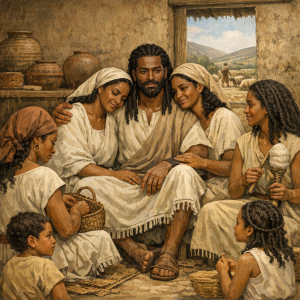
Primary Definition
Polygyny is the state or practice in which one man has more than one wife at the same time. In anthropology and family-law discussion, it is the sex-specific form of polygamy: polygyny means one husband and multiple wives, whereas polyandry means one wife and multiple husbands. The broader word polygamy may include either arrangement, although in ordinary English it is often used loosely to mean polygyny.
The term should not be confused with adultery, concubinage, serial remarriage after divorce or widowhood, informal dating, or consensual non-monogamy. A polygynous arrangement ordinarily describes a continuing household or marriage structure involving a man and two or more women. Whether each relationship is legally recognized, religiously solemnized, socially accepted, or merely private depends upon the governing law and the community concerned.
In zoology, polygyny has a related but broader technical use. It describes a mating pattern in which a male mates with multiple female partners during a breeding season. That biological use does not itself imply human marriage, moral approval, legal status, or religious doctrine. Dictionary definitions recognize both the human-marital and animal-mating senses of the word.
Etymology and Origin
Polygyny entered English in the late eighteenth century. Merriam-Webster records its first known English use in 1780. The word is formed from Greek elements: poly-, meaning “many,” and gynē, meaning “woman” or “wife.” Thus, in its literal construction, polygyny means “many women” or “having many wives.” The corresponding adjective is polygynous.
The etymology is important because it distinguishes the narrower word from polygamy. Polygamy derives from Greek elements concerning “many marriages,” while polygyny identifies the particular pattern in which the plurality is on the wife’s side of the marital arrangement. Modern social science adopted this precision because the legal, economic, kinship, and inheritance consequences of polygyny are not identical to those of polyandry.
The word’s modern technical character should not be projected backward anachronistically. Ancient Hebrew, Arabic, Greek, Roman, African, Asian, and other legal or customary systems did not generally use the English word polygyny. They had their own terms and institutions for marriage, household, concubinage, inheritance, and kinship. The English term is therefore a later descriptive label that scholars apply to earlier practices when the description fits.
Cultural and Historical Context
Polygyny has appeared in many societies across history, but it has never operated as one uniform institution. In some communities it was associated with agricultural households, lineage expansion, wealth, status, labor organization, or care for widows and children. In royal and elite households, multiple wives or concubines could also serve political, diplomatic, or dynastic purposes. In other settings, the practice was limited by custom, bridewealth, property, rank, or the husband’s demonstrated ability to support separate households.
Historical occurrence does not prove that a practice was equally available to all men. In many polygynous societies, only men with sufficient wealth, land, family standing, or political power could maintain more than one wife. Nor does the historical existence of polygyny establish that every woman within such a system had equal bargaining power or freely entered the relationship. These matters must be assessed from the particular historical evidence rather than assumed from the label alone.
Western legal history developed along a different path. English law came to treat a second marriage made while a first valid marriage continued as void and punishable. The historical English offense was commonly called bigamy, though legal writers sometimes used bigamy and polygamy imprecisely or interchangeably. Sir William Blackstone noted that English legal usage called the offense “bigamy” while using it as a synonym for having a plurality of wives at once. His discussion also reflects the historical overlap of ecclesiastical jurisdiction, civil jurisdiction, and statutory criminal law in marriage matters.
It is therefore inaccurate to say that polygyny originated in English common law. The practice is much older and culturally widespread. Common law is relevant chiefly because English and later American legal institutions developed rules against plural legal marriage and supplied part of the legal vocabulary through which the practice was condemned, regulated, or criminalized.
Biblical / Torah Context
The Hebrew Bible contains several narratives involving men with multiple wives or concubines. Figures commonly discussed in this connection include Abraham, Jacob, Elkanah, David, and Solomon. The presence of such accounts establishes that plural-wife households were known within the biblical world; it does not, by itself, settle every theological question about whether the narratives prescribe, approve, tolerate, or criticize the conduct described.
The Torah contains provisions that contemplate a man having more than one wife. Exodus 21:10 provides that when a man takes another wife, he must not diminish the first woman’s food, clothing, or marital rights. Deuteronomy 21:15–17 addresses inheritance where a man has two wives and requires protection for the firstborn son’s inheritance rights even if the father favors the other wife. These are regulatory provisions: they impose duties and restrain favoritism within a household situation they recognize.
For that reason, it is not historically sound to claim that the Torah contains an express, general prohibition of polygyny comparable to a modern criminal bigamy statute. At the same time, regulation is not necessarily identical to an endorsement of unlimited plural marriage. The Torah also contains narratives displaying rivalry, grief, favoritism, divided inheritance, and domestic conflict in plural households. Deuteronomy 17:17 cautions Israel’s king not to multiply wives, linking the accumulation of wives with the danger of his heart turning away.
Jewish legal history developed beyond the biblical text. Later rabbinic practice and communal enactments placed significant restrictions on polygyny in many Jewish communities, while the timing and scope of those restrictions varied by place and tradition. Consequently, “the biblical rule” should not be reduced either to the assertion that all plural marriage was forbidden or to the assertion that every form was unrestrictedly approved.
Christian interpretation is likewise diverse. Many Christian traditions read Genesis’s language concerning a man and woman becoming “one flesh,” together with New Testament teachings on marriage and church leadership, as presenting monogamy as the normative marital pattern. Others argue that the Bible distinguishes between an ideal pattern and the regulation of existing plural households, and that it does not expressly declare every polygynous union sinful. These are theological interpretations, not identical propositions of modern civil law.
Legal Implications
Common Law, Ecclesiastical Law, and Statute
In the English legal tradition, marriage was historically shaped by more than one body of law. Ecclesiastical courts had substantial authority over matrimonial causes, while the common-law courts and Parliament addressed civil consequences and criminal offenses. Blackstone described the second marriage entered while a former spouse was living as void and explained that statutory law made the conduct a felony. Thus, the historical prohibition cannot accurately be attributed to “common law alone”; it developed through the interaction of church jurisdiction, common-law principles, and legislation.
Roman law, canon law, English common law, equity, and modern statutory family law should not be treated as interchangeable. Roman law is a separate legal tradition. Equity historically addressed remedies where common-law forms were inadequate, but it did not create a general right to plural legal marriage. Modern marriage validity, divorce, property division, custody, inheritance, benefits, and criminal offenses are generally governed by constitutions, statutes, regulations, and judicial decisions rather than by an unaltered medieval rule.
United States Law
In the United States, a person generally may not enter a second legally valid marriage while a prior marriage remains legally undissolved. State criminal laws usually describe the offense as bigamy, though statutes and legal commentary may also use polygamy. Cornell’s Legal Information Institute summarizes that polygamy as a crime developed from the common law and is prohibited in every state. The precise elements, penalties, defenses, and enforcement practices differ by jurisdiction.
The leading historical federal case is Reynolds v. United States, 98 U.S. 145 (1879). The United States Supreme Court upheld George Reynolds’s conviction under a federal anti-bigamy law applicable in the Utah Territory and rejected the claimed religious-duty defense. The decision became an early and influential Free Exercise case because the Court distinguished religious belief from conduct that government could regulate. Its rhetoric about religion, culture, and marriage reflects the assumptions of its nineteenth-century setting and should not be mistaken for neutral anthropological description.
Subsequent nineteenth-century federal measures, including the Edmunds Anti-Polygamy Act of 1882, intensified federal opposition to plural marriage in the territories. Those measures affected voting, jury service, property, religious institutions, and political power, not merely marriage licensing. The history therefore has both family-law and governmental dimensions.
A crucial modern distinction is between (1) a legally licensed second marriage and (2) adults who describe themselves as a plural family without obtaining a second state marriage license. The first ordinarily presents a direct bigamy issue. The second may raise different questions concerning cohabitation laws, fraud, welfare rules, tax filings, child welfare, domestic violence, housing, estate planning, immigration, and contractual arrangements. Religious ceremonies cannot by themselves override statutes governing civil marriage or criminal bigamy.
This entry provides historical and general educational information, not legal advice. Anyone facing a current marriage, custody, criminal, immigration, benefits, or estate issue should consult a qualified attorney in the relevant jurisdiction.
Spiritual Meaning
Polygyny has no single inherent spiritual meaning apart from the teachings of a particular religion or community. In some religiously grounded communities, plural marriage has been understood as an expression of obedience, covenant, household order, fertility, communal survival, or religious identity. In other communities, monogamy is understood as the spiritual expression of exclusive mutual covenant, equal partnership, or the unity of husband and wife.
A careful spiritual analysis should distinguish a believer’s claimed religious conviction from a legal conclusion and from an empirical claim about the effects of plural households. A sincere religious belief may be meaningful to its adherent, but it does not automatically establish civil recognition, eliminate legal duties, or answer concerns about consent, welfare, coercion, and equality. Conversely, criticism of a marital structure should not become a blanket accusation against every person born into or voluntarily associated with a plural-family community.
Modern Usage
Today, polygyny is used most precisely in anthropology, sociology, religious studies, history, biology, and comparative family-law writing. It is often preferable to polygamy when the speaker specifically means one man and multiple wives. The word may describe a legal institution in countries or communities where plural marriage receives some form of recognition, a customary household arrangement, a religiously solemnized union, or an unrecognized relationship structure.
In everyday American speech, people often say “polygamy” even when “polygyny” is technically the more exact term. News reporting may also use “plural marriage,” particularly where religious communities are involved. “Polyamory” is not a synonym: it usually refers to consensual intimate relationships involving more than two people and does not necessarily involve marriage, sex-specific roles, or a husband with multiple wives.
Controversies / Criticisms
Modern criticism of polygyny commonly focuses on unequal legal status, economic dependence, inheritance disparities, unequal divorce rights, pressure on women or girls, arranged or underage marriages, isolation, and the possibility that religious authority may be used coercively. The United Nations Human Rights Committee has stated that polygamy is incompatible with equal treatment in marriage, violates women’s dignity, and constitutes inadmissible discrimination against women. That statement is an international human-rights body’s normative position; it is not a complete description of the law in every nation.
Defenders of consensual adult plural marriage argue that criminal prohibitions can stigmatize families, discourage persons from reporting abuse, interfere with religious exercise, and deny adults freedom of association and household formation. Critics answer that formal consent may be difficult to assess where there are large disparities of age, authority, resources, education, or religious power. Both concerns make it essential to distinguish genuinely informed adult consent from coercion, trafficking, child abuse, domestic abuse, fraud, or forced marriage. None of those abuses is justified by calling a relationship spiritual, cultural, traditional, or consensual.
Another controversy is linguistic. Because polygamy is frequently used as a catch-all term, public debate sometimes overlooks the fact that polygyny and polyandry distribute marital opportunities and household authority differently. Precision does not settle the moral or legal debate, but it prevents participants from arguing about different arrangements under the same label.
Conclusion
Polygyny is the specific form of polygamy in which one man has multiple wives at the same time. Its name is Greek in origin, but the social arrangements it describes have appeared in many different cultures and periods. The Torah recognizes and regulates certain plural-wife household circumstances without stating a general modern-style criminal prohibition; later Jewish and Christian traditions have interpreted the subject differently. In Anglo-American law, however, plural legal marriage became subject to ecclesiastical, common-law, statutory, and constitutional conflict, with modern United States law generally prohibiting a second legal marriage while a first remains in force.
Sound use of the term requires precision: polygyny is not automatically equivalent to every form of non-monogamy, nor does historical or religious existence alone resolve present questions of legality, consent, equality, or human welfare.
Sources / Further Reading
- Merriam-Webster, “Polygyny” — https://www.merriam-webster.com/dictionary/polygyny
- Sefaria, Exodus 21:10 — https://www.sefaria.org/Exodus.21.10
- Sefaria, Deuteronomy 21 — https://www.sefaria.org/Deuteronomy.21
- William Blackstone, Commentaries on the Laws of England, Book IV, Chapter 13 — https://contextus.org/Blackstone%2C_Commentaries_on_the_Laws_of_England%2C_Book_4_Public_Wrongs%2C_Chap_13_%28of_Offenses_against_the_Public_Health%2C_the_Public_Police_or_Economy%29
- Reynolds v. United States, 98 U.S. 145 (1879), Cornell Legal Information Institute — https://www.law.cornell.edu/supremecourt/text/98/145
- Cornell Legal Information Institute, “Polygamy” — https://www.law.cornell.edu/wex/polygamy
- United Nations Human Rights Committee, General Comment No. 28, “Equality of Rights Between Men and Women” — https://docstore.ohchr.org/SelfServices/FilesHandler.ashx?enc=W9QrCfm73MrL2LahrC9KgSAVnymHKkHOFVYtJA5EW6lRUYZaN%2F2KchzRAWZPKAlfYthCZl0EHXv8e97TTfwQoQ%3D%3D