Priest
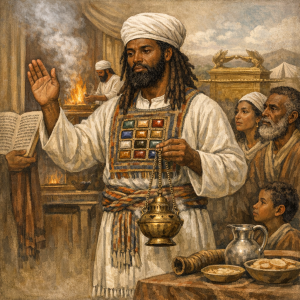
Primary Definition
A priest is a person set apart, appointed, ordained, inherited into office, or otherwise recognized within a religious tradition to perform sacred duties. Those duties commonly include leading worship, guarding or administering holy rites, offering prayers or sacrifices, teaching religious law, blessing the people, providing pastoral counsel, and representing the religious community in formal dealings before God. The exact meaning depends upon the tradition concerned.
In its broad comparative-religion sense, a priest is not simply any religious teacher or public speaker. A priestly office ordinarily involves an authorized relationship to worship, sacred space, sacramental acts, sacrifice, ritual purity, or the care of things treated as holy. In some traditions, priesthood is hereditary; in others, it is conferred by ordination; in still others, the term is not used at all, even though comparable religious functions exist.
In ordinary modern English, priest frequently refers to an ordained minister in the Roman Catholic, Eastern Orthodox, Oriental Orthodox, Anglican, and certain Lutheran churches. Within many of those churches, a priest ranks below a bishop and above a deacon. A priest may preside at the Eucharist or Holy Communion, administer particular sacraments or rites, preach, teach, bless, perform pastoral care, and serve a parish or other religious community.
The word should not be used carelessly as a universal label for all religious leaders. A rabbi is not simply a Jewish “priest,” an imam is not simply an Islamic “priest,” and a Protestant pastor is not necessarily a priest in the sacramental sense. Such persons may have important spiritual leadership roles, but their office, authority, and religious vocabulary arise from their own traditions.
Etymology and Origin
The English word priest came into Middle English as preist and into Old English as prēost. It ultimately derives from Late Latin presbyter, which came from the Greek presbyteros, meaning “elder” or “older man.” This linguistic history is significant: the English ecclesiastical title developed from a word associated with eldership.
However, etymology alone does not settle every theological or historical question about the office. Greek-speaking Jewish and Christian texts use more than one relevant term. Presbyteros means elder. By contrast, hiereus refers more directly to a cultic or sacrificial priest, and archiereus denotes a chief priest or high priest. In biblical translation, English “priest” may therefore represent different original-language terms and different kinds of office.
This distinction is particularly important in New Testament discussion. The first Christian communities used terms translated as “elder,” “overseer,” and “deacon.” Over time, in many historic churches, the English term priest became the customary title for an ordained presbyter. That development is not proof that the offices were identical in every respect from the beginning; rather, it reflects the historical development of Christian ministry, worship, and language.
It is therefore inaccurate to claim that the English word priest is itself originally a Hebrew word, a Roman governmental office, or evidence that every priestly institution derives from pagan religion. The word’s documented English linguistic path is Old English through Latin and Greek. The religious idea of priesthood, however, is much older and appears in diverse civilizations and sacred traditions.
Cultural and Historical Context
Priestly institutions have appeared in many societies because communities often establish recognized persons to care for sacred places, rites, calendars, offerings, funerals, oaths, purification practices, and relations between the people and the divine. In ancient temple-centered societies, priests could also possess social, educational, economic, and political influence because religious observance was often inseparable from public life.
Ancient Israel had a priesthood connected to the sanctuary and, later, the Temple in Jerusalem. Ancient Egyptian, Mesopotamian, Greek, Roman, and other religious systems also had priestly figures, but these offices should not be treated as interchangeable. Their authority, doctrines, relation to rulers, rituals, and moral duties differed widely. A shared English translation does not establish a shared origin or theology.
In the Christian world, the priesthood became especially associated with the public ministry of the church. As Christianity moved from small assemblies into a more organized and geographically extensive body, offices of bishop, presbyter, and deacon developed in visible and durable forms. In churches retaining a sacramental priesthood, priests became associated especially with eucharistic worship, absolution, pastoral oversight, instruction, and care for the sick and dying.
The Protestant Reformation brought major disagreement concerning priesthood. Roman Catholic, Orthodox, Anglican, and some Lutheran traditions continued to recognize ordained priests in sacramental ministry. Many Reformed, Baptist, Congregational, Pentecostal, and other Protestant traditions rejected the idea of a separate sacrificing priesthood among Christians, emphasizing instead the direct access of believers to God through Christ and the spiritual priesthood shared by the faithful. They may use titles such as pastor, minister, elder, bishop, or preaching elder rather than priest.
Thus, the historical meaning of priest has broadened in English. It may refer to an ancient temple official, an Aaronic priest in the Torah, an ordained Christian presbyter in liturgical churches, or, more generally, a recognized ritual minister in another religion. Careful writing identifies which meaning is intended.
Biblical / Torah Context
The Torah and the Aaronic Priesthood
In the Torah, the principal Hebrew word translated “priest” is kohen (plural kohanim). The Torah distinguishes priests from the larger tribe of Levi. Aaron and his sons were appointed for priestly service, while the Levites as a broader group were assigned supporting and protective duties connected with the sanctuary. Not every Levite was a priest, and not every Israelite could assume priestly functions.
Exodus presents Aaron and his sons as brought near “to serve” God as priests. Their office included sacrificial service, handling holy things according to divine instruction, teaching distinctions between holy and common and between clean and unclean, and blessing the people. Priestly garments, consecration, purity rules, and restrictions concerning sacred service underscore that the office was not merely honorary. It carried responsibility, discipline, and accountability.
The high priest held a distinctive role within the Aaronic order. The Torah associates that office with particular vestments and special duties, including entry into the most holy place on the Day of Atonement under prescribed conditions. The high priest was not a king and should not be confused with a civil ruler merely because the office had public importance.
Melchizedek, described in Genesis as king of Salem and priest of God Most High, appears before the establishment of the Aaronic priesthood. His brief appearance later became important in Jewish and Christian interpretation. The text itself identifies him as priest and king, but it does not provide a full institutional description of his priesthood. Later theological conclusions drawn from Melchizedek should be recognized as interpretation rather than inserted into Genesis as if all details were expressly stated there.
Priests After the Temple
After the destruction of the Second Temple in Jerusalem in A.D. 70, the sacrificial service prescribed for the Temple could no longer be performed in its historic form. In contemporary Judaism, kohanim remain recognized in many communities as descendants of the priestly line and may receive particular synagogue honors, such as the first Torah reading or participation in the priestly blessing. Yet Judaism does not presently have a functioning Temple sacrificial priesthood because there is no Temple in which that service may be lawfully conducted.
This point matters in legal and historical discussion: the biblical priesthood was not simply a general religious profession. It was connected to lineage, covenantal law, the sanctuary, sacrifice, and the people of Israel. Modern uses of the word “priest” should not erase those specific Torah conditions.
New Testament Context
The New Testament uses priestly language in several ways. It refers to Jewish priests and high priests associated with the Temple. The Epistle to the Hebrews also presents Jesus Christ as high priest, drawing upon the order of Melchizedek and interpreting Christ’s work as decisive and enduring. Many Christians understand this to mean that Christ’s priesthood is unique and not replaceable by any human office.
New Testament passages also describe believers collectively in priestly terms, including the expressions “holy priesthood” and “royal priesthood.” Christians disagree about the institutional implications of those passages. Sacramental churches generally distinguish the shared priesthood of all baptized believers from the ordained ministerial priesthood. Other Christians treat the common priesthood of believers as a reason to reject a distinct priestly caste. Both positions appeal to Scripture, tradition, and differing understandings of apostolic ministry.
Legal Implications
In civil law, priest is usually a descriptive religious term rather than a governmental office. A person does not acquire civil legislative, executive, judicial, or police power merely by being called a priest. Religious authority within a church, synagogue, temple, or other body is not automatically authority enforceable by the state.
Historically, English common law developed in a society where ecclesiastical institutions had substantial legal significance. Church courts, canon law, clerical status, marriage, wills, tithes, and moral offenses were at various times treated through overlapping civil and ecclesiastical systems. Those historical arrangements do not mean that modern American law is governed by English ecclesiastical law. In the United States, legal questions concerning clergy generally arise under constitutional principles, statutes, rules of evidence, employment law, charitable law, and the internal rules of religious organizations.
One important modern doctrine is commonly called the clergy-penitent privilege, priest-penitent privilege, or clergy-communicant privilege. It concerns confidential communications made to a priest or other recognized spiritual adviser in that person’s religious capacity. The scope of the privilege is not identical everywhere. Under Federal Rule of Evidence 501, federal courts develop privileges through common-law principles interpreted in light of reason and experience, while state law governs privilege in civil matters when state law supplies the rule of decision.
State statutes and rules often define “clergy” broadly enough to include a priest, minister, rabbi, chaplain, or similar religious functionary. They may protect confidential communications made as a formal act of religion or as a matter of conscience. The privilege commonly belongs primarily to the communicant, not simply to the priest, and may be lost through waiver, lack of confidentiality, or other statutory limitations. A person should not assume that every conversation with a priest is legally privileged; the governing jurisdiction and facts matter.
Military usage also requires precision. A priest may serve as a military chaplain if properly endorsed and commissioned or otherwise authorized under the applicable system. But “chaplain” is a functional office serving members of the armed forces or an institution; it is not a synonym for priest. Chaplains may be priests, ministers, rabbis, imams, or leaders from other recognized faith groups.
Religious bodies may also have their own internal law. Roman Catholic canon law, for example, provides that only a priest may ordinarily administer the sacrament of penance and declares the sacramental seal of confession inviolable. That is canon law within the Roman Catholic Church. Whether and how civil law protects a given communication is a separate legal question, determined by the relevant civil jurisdiction.
Spiritual Meaning
Spiritually, priesthood is often understood as service rather than personal elevation. The priest is entrusted with sacred responsibilities on behalf of a people and is therefore expected to show reverence, integrity, self-discipline, compassion, and fidelity to the law or teachings of the religious community. The ideal is not private spiritual power for its own sake, but accountable service before God and neighbor.
In the Torah, priestly holiness is connected with nearness to sacred service and with careful obedience. In Christian sacramental traditions, priesthood is commonly understood as participation in Christ’s pastoral and priestly ministry, especially through proclamation, sacramental care, and service to the community. In traditions that reject an ordained priesthood, the spiritual principle of priestly service may still be applied to all believers through prayer, moral responsibility, and direct devotion to God.
The dictionary’s interpretive analysis is that the enduring spiritual idea behind priesthood is stewardship of what a community regards as holy. That stewardship must be measured by humility and faithfulness, not by titles, clothing, institutional rank, or claims of unreviewable authority.
Modern Usage
Modern English uses priest both specifically and figuratively. Specific usage includes “Catholic priest,” “Orthodox priest,” “Anglican priest,” “Aaronic priest,” and “temple priest.” Figurative expressions such as “high priest of finance” or “priest of science” are journalistic metaphors for a prominent devotee or authority. Such language does not create an actual religious or legal office.
The term remains gendered in ordinary usage, though practices vary by religious body. Some traditions reserve priestly ordination to men; others ordain women as priests. The term priestess remains available for female priests in certain ancient, contemporary, and reconstructed religious contexts, but it is not universally used or preferred.
Because priesthood is tradition-specific, respectful modern usage asks how the relevant community identifies its own leaders. A writer should not call every spiritual teacher a priest merely because the person teaches religion, performs weddings, or offers prayer.
Controversies / Criticisms
Priesthood has long been debated because it joins spiritual authority with institutional authority. Critics have warned against clericalism: the treatment of clergy as inherently superior, beyond correction, or entitled to control conscience. Religious history contains serious examples of abuse of office, financial exploitation, sexual misconduct, political entanglement, secrecy, and institutional failures to protect the vulnerable. These failures do not define every priest or every religious community, but they demonstrate why priestly authority must be subject to moral standards, lawful accountability, and truthful scrutiny.
Another major controversy concerns mediation. Some Christians hold that ordained priests serve sacramentally and pastorally without displacing Christ’s unique mediation. Other Christians object that calling a human minister “priest” can obscure the belief that Christ alone is the final high priest and mediator. This is a genuine theological dispute, not a question resolved merely by the English etymology of the word.
Questions of sex, marriage, celibacy, lineage, authority, and ordination also remain disputed. The Torah’s Aaronic priesthood was hereditary and male. Churches differ over whether women may be ordained priests, whether priests may marry, and how apostolic continuity should be understood. These questions should be described accurately as matters of doctrine and discipline within particular religious communities, rather than as rules of universal civil law.
Finally, claims that all priesthood is inherently corrupt, inherently pagan, or automatically contrary to Scripture are overbroad. So are claims that every modern clerical office is identical to the Aaronic priesthood of the Torah. Responsible analysis distinguishes ancient Israelite temple service, later Jewish practice, Christian ordained ministry, and the many other religious offices translated into English as “priest.”
Conclusion
A priest is, at its core, a recognized servant of sacred duties. The word has a documented linguistic connection to “elder,” yet its religious use embraces a wider history of worship, sacrifice, ritual service, pastoral care, and institutional ministry. In the Torah, priesthood is especially associated with Aaron, his descendants, and Temple-centered service. In Christianity, the word developed into a principal title for ordained ministry in several historic churches, while other Christian traditions reject or redefine the title.
In law, a priest is not a civil sovereign by virtue of ordination, though priestly service may carry legal consequences in matters such as confidential spiritual communications, chaplaincy, religious employment, and internal church governance. In spiritual terms, priesthood properly signifies accountable service, not exemption from accountability. The meaning of the term must always be determined by its historical, religious, and legal context.
Sources / Further Reading
- Merriam-Webster Dictionary, “Priest”
- Sefaria, Exodus 28 — Aaron and His Sons Appointed for Priestly Service
- My Jewish Learning, “What Are Kohanim, or Jewish ‘Priests’?”
- Bible Gateway, Hebrews 5:6
- Church of England, “Introduction by the House of Bishops”
- The Holy See, Code of Canon Law, Canons 959–997
- Cornell Legal Information Institute, Federal Rule of Evidence 501
- Library of Congress, Trammel v. United States, 445 U.S. 40 (1980)