Polygamy
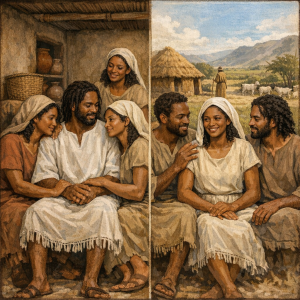
Primary Definition
In its broadest and most precise sense, the term describes a marital system in which a person has more than one spouse at the same time. It is a category word, not the name of one uniform social practice. Its principal forms are polygyny, in which one man has multiple wives, and polyandry, in which one woman has multiple husbands. Polygyny has historically been more widely documented than polyandry, but both fall within the broader category.
The word should not be used carelessly as a synonym for every form of non-monogamy. A person who remarries after divorce or the death of a spouse is not in a plural marriage, because the marriages are successive rather than simultaneous. Likewise, consensual non-marital relationships involving more than two adults may be described as polyamorous or non-monogamous, but they are not necessarily marriages and should not automatically be classified under this term.
In ordinary legal usage in the United States, the closely related offense is usually called bigamy: knowingly entering, or purporting to enter, a second marriage while a prior lawful marriage remains undissolved. Bigamy is narrower than the general social or anthropological term because it ordinarily concerns two simultaneous purported legal marriages. A larger plural household may involve one legal marriage and additional religious, customary, or informal unions. The legal status of those additional relationships depends upon the jurisdiction and the facts.
Etymology and Origin
The English word entered through Late Latin polygamia and Greek polygamia. It is formed from Greek polys, meaning “many,” and gamos, meaning “marriage.” Earlier Greek usage could carry the sense of being married often or repeatedly; English usage developed toward the now familiar meaning of simultaneous plurality in marriage. English dictionaries record its use from the sixteenth century.
The related terms reveal useful distinctions. Monogamy joins the Greek elements for “one” and “marriage.” Polygyny joins “many” with gynē, “woman” or “wife,” and therefore identifies the one-man/multiple-wives form. Polyandry joins “many” with anēr, “man” or “husband,” and identifies the one-woman/multiple-husbands form. Bigamy, from Greek roots associated with “twice” and “marriage,” became the more technical Anglo-American legal term for an unlawful second marriage while a first remains valid.
The vocabulary itself can mislead if treated as timeless legal language. Ancient communities did not all use modern categories such as “legal spouse,” “civil marriage,” “religious ceremony,” and “domestic partnership.” In historical records, households could include wives, concubines, enslaved persons, dependents, and children whose legal and social positions differed substantially. Modern definitions should therefore not be projected mechanically onto every ancient text.
Cultural and Historical Context
Plural marriage has appeared in many societies, but in differing forms and under differing constraints. In some settings it was associated with wealth, landholding, political alliance, household labor, inheritance, fertility, warfare, or the care of widows and children. The fact that a society permitted plural marriage did not mean that most men had multiple wives; economic resources, family arrangements, local custom, and sex ratios often made such households exceptional rather than universal.
Historical permission also did not necessarily mean equality within the household. First wives, later wives, concubines, children, and collateral relatives could have very different claims to property, succession, maintenance, authority, and social standing. Conversely, it is inaccurate to assume that every plural household had the same structure or that every participant lacked agency. Historical evidence must be evaluated in its particular legal, economic, religious, and cultural setting.
In European legal history, marriage became heavily shaped by Christian ecclesiastical norms favoring exclusive unions. Yet the path from moral disapproval to secular criminal punishment was not simple. In England, bigamy was long treated principally as an ecclesiastical or spiritual offense. Parliament’s Bigamy Act of 1604 made the remarriage of a person with a living spouse a temporal felony. This history matters in a common-law dictionary: the modern criminal treatment of simultaneous marriage was not merely an unchanged rule inherited directly from immemorial common law; it was materially developed through statute, ecclesiastical jurisdiction, judicial interpretation, and later legislation.
In the nineteenth-century United States, plural marriage became nationally controversial because of the practice of plural marriage among some members of The Church of Jesus Christ of Latter-day Saints. Congress enacted federal anti-polygamy measures applicable especially to federal territories, including Utah Territory. In Reynolds v. United States (1879), the United States Supreme Court upheld a federal bigamy conviction and rejected the claim that religious duty supplied a constitutional defense to the criminal law at issue. The decision is historically important both for marriage law and for its early formulation of the distinction between religious belief and conduct regulated by law.
The Church’s 1890 Manifesto announced the end of new plural marriages within the Church, although the practical end of the practice occurred over time rather than in a single moment. Contemporary plural-marriage communities should not be assumed to represent that church, whose official position does not authorize the practice.
Biblical / Torah Context
The Hebrew Bible contains narratives involving men with multiple wives or concubines, including patriarchal and royal households. Such narratives establish that plural households existed in the world described by the text; they do not, by themselves, settle every moral, theological, or legal question about the practice. Biblical narratives often portray rivalry, unequal treatment, inheritance disputes, grief, and conflict within such families.
The Torah includes regulations that assume the existence of a man taking another wife. Exodus 21:10 requires that, if he takes another wife, he must not diminish the earlier woman’s food, clothing, and marital rights. Deuteronomy 21:15–17 addresses inheritance where a man has two wives and requires recognition of the actual firstborn son’s inheritance rights even if the father prefers the other wife. These passages are significant because they regulate responsibilities within an existing social practice.
Regulation, however, should be distinguished from an uncomplicated endorsement. A legal rule protecting a vulnerable person in an established household arrangement does not necessarily pronounce every feature of that arrangement ideal. In addition, the Torah contains limits relevant to the subject. Deuteronomy 17:17 warns that an Israelite king should not multiply wives to himself, lest his heart turn away. Leviticus 18:18, concerning taking a woman “to vex” her sister during the sister’s lifetime, has generated interpretive disagreement: some readers see it as a limited prohibition on marrying sisters simultaneously, while others argue that it implies a broader restriction. The text itself should not be made to say more than its language and context support.
Jewish legal history also developed beyond the plain biblical rules. Rabbinic law discussed plural marriage, marital obligations, and equitable treatment; later Jewish communities adopted additional restrictions. A well-known medieval decree associated with Rabbenu Gershom prohibited polygyny among many Ashkenazi communities, although its scope, authority, and application varied by community and historical period. Thus, “Torah practice,” “rabbinic law,” and later communal custom should not be collapsed into one undifferentiated rule.
Christian interpretation is likewise diverse. Many Christians understand Genesis’ one-man/one-woman creation account and New Testament passages concerning marital leadership as expressing monogamy as the normative ideal. Others argue that the absence of a universal express prohibition, alongside Torah regulations, means the practice cannot be labeled inherently sinful in every circumstance. These are theological interpretations, not propositions resolved by the civil law.
Legal Implications
Common Law, Ecclesiastical Law, and Statute
A careful legal analysis must distinguish several sources of law. Historical English ecclesiastical law addressed marriage as a religious and moral institution. Common-law courts and later secular courts addressed civil consequences, such as legitimacy, property, and marital status. Parliament then enacted statutes criminalizing bigamy. The American legal tradition inherited elements of English common law but developed through state constitutions, statutes, court decisions, federal territorial legislation, and modern family-law codes.
Accordingly, it is imprecise to say simply that “common law makes plural marriage illegal.” In modern American law, the operative rules ordinarily arise from statutes and judicial decisions within particular jurisdictions. Common-law concepts may influence the interpretation of marriage, capacity, fraud, domicile, property, and public policy, but they are not a substitute for reading the governing constitutional, statutory, and case law.
Current United States Law
As of August 10, 2026, no state generally issues a second marriage license to a person who is already married and whose prior marriage has not been terminated by death, divorce, or annulment. A purported later marriage is commonly void or voidable, and state criminal statutes commonly prohibit bigamy. Exact definitions, defenses, penalties, limitation periods, and enforcement practices differ by state. Legal advice about a specific relationship requires the law of the relevant state or territory and, where appropriate, qualified counsel.
Utah provides an instructive example because of its historical association with plural marriage. Its current bigamy statute defines the core offense as purporting to marry another person while knowing, or reasonably being expected to know, that one of the parties is legally married to someone else. Under the version effective May 7, 2025, the basic offense is an infraction, while fraudulent inducement, threats, coercion, abuse, and certain related criminal conduct can produce far more serious penalties. The statute expressly identifies particular aggravating circumstances. This is not a general authorization of plural civil marriage.
The federal government historically acted directly against plural marriage in the territories, and federal law may still matter in areas such as immigration, federal benefits, fraud, tax filings, child protection, and interstate matters. But there is no sound basis for treating every consensual adult cohabiting arrangement as automatically identical to the crime of bigamy. The legal question commonly turns on whether there was a legally recognized first marriage, a purported additional marriage, deception, coercion, fraud, abuse, or some independently unlawful conduct.
Constitutional and Human Concerns
Reynolds remains an important historical precedent, but it should not be overstated. It did not create a general rule that all religiously motivated conduct may be prohibited without constitutional analysis. Modern free-exercise doctrine has developed through later decisions and legislation. At the same time, religious conviction does not automatically nullify neutral criminal laws, especially laws directed at conduct such as fraud, child abuse, forced marriage, sexual offenses, or exploitation.
Legal scrutiny must also distinguish consenting adults from coercive systems. Allegations involving underage marriage, coercion, sexual abuse, domestic violence, welfare or immigration fraud, isolation, and deprivation of education or liberty concern independently serious wrongs. Those harms should be investigated and addressed on evidence, rather than assumed solely from the label applied to a household or religious group.
Spiritual Meaning
Spiritually, the subject often raises questions of covenant, fidelity, justice, self-government, family order, and responsibility toward the vulnerable. In traditions that regard marriage as a sacred covenant, the central issue is not merely the number of participants but whether promises, duties, truthfulness, sexual integrity, material provision, and protection from oppression are honored.
Some religious believers view plural marriage in certain biblical accounts as a permitted but difficult arrangement within fallen human conditions. Others regard exclusive marriage as the intended creation pattern and see biblical regulation as restraint of an existing custom rather than approval of an enduring ideal. Still others, including some modern religious plural-marriage communities, regard it as a divinely permitted or commanded practice. These positions are matters of religious interpretation and conscience; they should be identified as such rather than presented as settled civil-law conclusions.
A sound spiritual analysis should reject deception and domination. Consent that is obtained by threat, manipulation, economic compulsion, or misuse of spiritual authority is not morally equivalent to informed and voluntary assent. Claims of divine authority do not remove the obligation to examine whether conduct produces justice, truth, care for children, and respect for the equal dignity of every person involved.
Modern Usage
In contemporary speech, the term is often used broadly for any household consisting of one man and several women. That usage is understandable but technically imprecise because it excludes polyandry and may obscure the difference between civil marriage, religious sealing, customary marriage, cohabitation, and consensual non-marital relationships.
Journalistic and legal writing benefits from specificity. “Plural marriage” may be preferable where the relationship is presented as marital by the participants but is not recognized as a second civil marriage. “Polygyny” is preferable where one husband has multiple wives. “Bigamy” is preferable when describing the alleged statutory offense of contracting a second marriage while a previous lawful marriage continues. “Polyamory” should be reserved for consensual multi-partner relationships and should not be assumed to involve marriage, religion, or a patriarchal household structure.
Controversies / Criticisms
Criticism commonly focuses on possible inequalities of power, economic dependency, unequal marital opportunity, favoritism among spouses, and risks to women and children in closed or authoritarian communities. Critics also argue that plural-marriage systems can make it easier for powerful leaders to accumulate spouses or control family life. These concerns are serious, particularly where evidence shows coercion, underage marriage, or barriers to leaving.
Defenders of consensual adult plural households answer that criminal prohibition may stigmatize families, discourage victims from seeking police protection, and confuse private religious commitment with harmful conduct. They argue that the law should punish coercion, abuse, fraud, and exploitation directly rather than presume wrongdoing from nonconforming family structure alone. This argument does not itself establish a right to multiple civil marriage licenses; it frames a debate about privacy, religious liberty, enforcement, and family autonomy.
Another controversy concerns historical claims. It is inaccurate to state that every ancient religion, every non-Western society, or every biblical figure endorsed the practice without qualification. It is equally inaccurate to erase the documented presence of plural households from biblical and world history. The responsible approach is to identify the source, period, form of relationship, governing law, and contested interpretation.
Conclusion
This term identifies a broad category of simultaneous plural marriage, not a single legal status, culture, or theology. Its meaning has shifted from a word of Greek and Latin origin into a modern term used in anthropology, religion, public debate, and law. In legal analysis, the crucial distinction is between broad social description and the particular offense of bigamy, which depends upon governing statutes and facts. In biblical and spiritual analysis, the most defensible conclusions distinguish narrative from command, regulation from ideal, and sincerely held belief from legal immunity. Precision, historical honesty, voluntary consent, and protection of the vulnerable are essential to any serious use of the term.
Sources / Further Reading
- Merriam-Webster, “Polygamy” — https://www.merriam-webster.com/dictionary/polygamy
- Online Etymology Dictionary, “Polygamy” — https://www.etymonline.com/word/polygamy
- Legal Information Institute, Cornell Law School, “Bigamy” — https://www.law.cornell.edu/wex/bigamy
- Reynolds v. United States, 98 U.S. 145 (1879), Legal Information Institute — https://www.law.cornell.edu/supremecourt/text/98/145
- Utah Legislature, Utah Code § 76-7-101, “Bigamy” — https://le.utah.gov/xcode/title76/chapter7/76-7-s101.html
- Sefaria, Exodus 21:10 — https://www.sefaria.org/Exodus.21.10
- Sefaria, Deuteronomy 21:15–17 — https://www.sefaria.org/Deuteronomy.21
- The Church of Jesus Christ of Latter-day Saints, “Manifesto” — https://www.churchofjesuschrist.org/study/history/topics/manifesto?lang=eng
- Cambridge University Press, “Bigamous Marriage in Early Modern England” — https://www.cambridge.org/core/journals/historical-journal/article/abs/bigamous-marriage-in-early-modern-england/0E2AF3EBBD6C701E00F18F0D4BB1921D