Pray
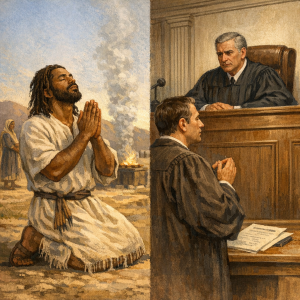
Primary Definition
As a verb, this term means to ask, entreat, petition, or make an earnest request. In ordinary religious use, it means to address God, or another object of devotion recognized within a particular faith, in adoration, confession, thanksgiving, intercession, lament, or supplication. The central idea is not merely reciting words; it is the act of directing a sincere request, concern, praise, or appeal toward a person or authority believed able to hear and respond.
The word also has a broader, older secular meaning: “I pray you” historically meant “I ask you,” “please,” or “I beg you.” That older sense remains visible in literary English and in formal legal language. Thus, the same English verb can refer either to a spiritual address to God or to a solemn request addressed to a human authority, including a court.
Dictionary analysis: the shared idea in both senses is petition. Religious prayer is a petition or communion directed toward the Divine; legal prayer is a formal petition directed toward a tribunal. The similarity of language does not make a court divine, nor does it transform a religious prayer into a legally enforceable demand. Context determines the meaning.
Etymology and Origin
The English verb entered Middle English through Anglo-French forms such as prier, praer, and preier. Those forms derived from Latin precari, meaning to ask earnestly, entreat, or beg, and from prex (plural preces), meaning a request, entreaty, or prayer. The word’s earliest English sense was therefore not limited to worship; it was an earnest request made to another. Merriam-Webster records use in English from the thirteenth century and identifies both the general “ask earnestly” sense and the religious sense. ([merriam-webster.com](https://www.merriam-webster.com/dictionary/pray?utm_source=openai))
This origin is important because it corrects a common overstatement: the English legal phrase “prayer for relief” was not created by modern courts as a religious device, and the religious meaning was not borrowed from legal procedure. Both developed from the older, general meaning of earnest request or entreaty. In older English, a speaker might say “pray, continue” or “pray tell” without making a devotional statement. The modern word please has displaced much of that usage in everyday speech.
The noun prayer developed correspondingly. It may mean an act of worship, the words used in worship, a personal request to God, or a formal request stated in a pleading. The word has therefore retained a semantic bridge between reverent appeal and formal petition, even as religious and judicial institutions remain distinct.
Cultural and Historical Context
Across human societies, prayer has commonly been associated with dependence, gratitude, grief, fear, repentance, hope, communal identity, and moral reflection. It may be silent or spoken, spontaneous or fixed in a liturgy, individual or communal. The Psalms, for example, preserve poems of praise, complaint, thanksgiving, mourning, confidence, and pleas for deliverance. In Jewish tradition, the Psalms have long been central to prayer, while their Hebrew title, Tehillim, is associated with songs of praise. ([myjewishlearning.com](https://www.myjewishlearning.com/article/the-book-of-psalms/?utm_source=openai))
Historically, prayer was often connected with public rites, family life, fasting, pilgrimage, seasons of danger, military conflict, harvest, illness, and governmental ceremony. Such practices show that communities have frequently understood prayer not only as a private inward exercise but also as a public act expressing collective humility, solidarity, or dependence upon God. They do not, however, prove that every public authority possesses religious authority, or that every public prayer is constitutionally proper in every setting.
In English-speaking culture, the older petitionary meaning survived especially well in formal writing. Phrases such as “I pray you,” “we pray,” and “your petitioner prays” appear in historic letters, petitions, statutes, and pleadings. Over time, conversational English narrowed the ordinary use of the verb mainly toward religious practice, while legal drafting retained the older formula longer than ordinary speech did.
Biblical / Torah Context
Torah and the Hebrew Scriptures
The English word does not correspond to only one Hebrew word or one uniform biblical practice. English translations use “pray” to render several Hebrew ideas, including calling upon God, crying out, seeking, blessing, praising, lamenting, and interceding. The Torah depicts direct appeals to God in many forms. Abraham intercedes for Abimelech in Genesis 20, Moses intercedes for Israel after grave wrongdoing, and Israel is repeatedly instructed to seek the LORD rather than rely on human power alone.
One major biblical pattern is intercession: a person appeals to God on behalf of another person or community. Another is covenantal remembrance: the petitioner appeals to God’s character, mercy, promises, justice, or prior acts of deliverance. A third is thanksgiving and praise. Biblical prayer is therefore broader than requesting material benefit. It includes confession, worship, listening, remembrance, lament, and commitment to obedience.
In later Jewish usage, tefillah became the common Hebrew term for prayer, particularly in relation to ordered communal and daily worship. Jewish prayer includes fixed liturgical forms as well as personal petition. The development of fixed forms should not be mistaken for a denial of personal sincerity; rather, traditional forms can provide a shared language for repentance, praise, petition, and remembrance.
Christian Scriptures
In the New Testament, Jesus teaches against prayer performed for public display and directs his followers toward sincere address to the Father. Matthew 6 includes both a warning against ostentation and a model prayer that joins reverence for God, desire for God’s will, daily provision, forgiveness, and deliverance from temptation. ([biblegateway.com](https://www.biblegateway.com/passage/?search=Matthew+6&version=KJV%3BAMPC%3BTLB&utm_source=openai))
Luke records that disciples asked Jesus to teach them how to pray, showing that prayer was understood as a practice to be learned rather than a mere formula to be mechanically repeated. Christian traditions differ concerning the use of written prayers, spontaneous prayer, intercession through saints, and liturgical practice. What is documented is that prayer has remained central in Catholic, Orthodox, Protestant, and other Christian communities, though its theology and forms vary substantially among them. ([search.biblegateway.com](https://search.biblegateway.com/passage/?search=Luke+11&version=GW%3BNIV%3BESV%3BNKJV&utm_source=openai))
The instruction to “pray without ceasing” is commonly understood as a call to continuing spiritual attentiveness and dependence, not necessarily nonstop spoken words. The surrounding Christian teaching also associates prayer with thanksgiving and the making known of requests to God. ([biblegateway.com](https://www.biblegateway.com/passage/?search=1+Thessalonians+5%3A17%2CPhilippians+4%3A6%2CMark+11%3A24&version=ESV&utm_source=openai))
Legal Implications
Prayer as a Legal Term of Art
In legal pleading, a “prayer” is a formal request that a court grant specified relief. A complaint may end with a heading such as “Prayer for Relief” and then identify what the plaintiff asks the court to award: money damages, declaratory relief, an injunction, costs, attorney’s fees where authorized, or other appropriate remedies. Cornell Law School’s Legal Information Institute describes the prayer for relief as the part of a complaint stating the remedies or damages sought. ([law.cornell.edu](https://www.law.cornell.edu/wex/prayer_for_relief?utm_source=openai))
This use is historical legal terminology, not a statement that litigation is religious worship. It reflects the old English sense of asking or entreating. Modern lawyers and rules often use plainer phrases such as “demand for relief,” “relief requested,” or “claim for relief,” but “prayer for relief” remains common in complaints, petitions, and older judicial opinions. The Legal Information Institute characterizes “pray” in this setting as an antiquated legal term of art. ([law.cornell.edu](https://www.law.cornell.edu/wex/pray?utm_source=openai))
Common Law, Equity, Statutes, and Present Procedure
Historically, English common-law courts and courts of equity developed different procedures and remedies. Common-law actions generally focused on legal remedies, especially damages; equity could provide remedies such as injunctions, specific performance, rescission, and other relief where money damages were inadequate. A pleading’s request for relief did not itself create a right to relief. The right depended on the facts pleaded, the cause of action, available remedies, jurisdiction, and applicable law.
In the United States, the Federal Rules of Civil Procedure merged much of the old procedural division between law and equity in federal civil practice. Federal Rule of Civil Procedure 8(a)(3) requires a pleading stating a claim for relief to contain a demand for the relief sought. The rules also permit alternative or different types of relief where appropriate. ([uscourts.gov](https://www.uscourts.gov/sites/default/files/document/civil_federal_rules_pamphlet_dec_1_2023.pdf?utm_source=openai))
Accordingly, a prayer for relief is important, but it is not magic language. It does not establish jurisdiction, prove facts, excuse service, override statutes of limitation, bind a court to grant an unavailable remedy, or convert a private assertion into law. A court determines relief according to governing constitutional provisions, statutes, procedural rules, precedent, evidence, and the equitable powers properly available in the case.
Common-law caution: claims sometimes circulate that a particular form of “prayer,” affidavit, notice, or unrebutted statement automatically creates judgment, removes a person from statutory law, or deprives a court of jurisdiction. Such propositions are contested and generally unsupported as broad statements of current American law. A legally operative filing must comply with the jurisdiction’s procedural requirements, and courts do not treat spiritual language or self-selected labels as substitutes for legal authority.
Governmental and Constitutional Context
Prayer has also appeared in American legislative custom. The Continental Congress used chaplains, and the House and Senate have long opened sessions with prayer. The House elected William Linn as its first chaplain on May 1, 1789; the Senate elected Samuel Provoost on April 25, 1789. Congressional chaplains perform ceremonial and pastoral functions in addition to opening sessions. ([congress.gov](https://www.congress.gov/crs-product/R41807?utm_source=openai))
That history does not mean every government-directed prayer practice is valid. The First Amendment bars laws respecting an establishment of religion and protects free exercise. The Supreme Court has upheld certain legislative-prayer practices by reference to longstanding historical tradition, including Marsh v. Chambers (1983) and Town of Greece v. Galloway (2014), while other government-sponsored prayer practices have been held unconstitutional in different contexts. Constitutional analysis turns on setting, history, coercion, governmental involvement, and the particular practice at issue. ([constitution.congress.gov](https://constitution.congress.gov/browse/essay/amdt1-3-3/ALDE_00013073/%5B%27fourth%27%2C%20%27amendment%27%5D?utm_source=openai))
Military Context
Prayer is relevant to military life primarily through the work of chaplains and the religious-liberty rights of service members. Military chaplains have historically provided worship opportunities, counseling, rites, and pastoral care for personnel, including those deployed or facing danger, loss, and moral injury. The existence of military chaplaincy does not make military command a religious authority. In constitutional terms, accommodation of service members’ religious exercise and governmental establishment of religion are related but distinct questions.
Spiritual Meaning
Spiritually, prayer is often understood as an act of relationship rather than a technique for controlling events. A petitioner may ask for healing, protection, wisdom, provision, justice, forgiveness, or peace; yet many faith traditions also treat prayer as a discipline of humility, self-examination, gratitude, and alignment with divine will. In that understanding, prayer changes the person praying even where the requested outcome does not occur.
Prayer may be contemplative rather than verbal. Silence, meditation, tears, song, bodily posture, fasting, written petitions, liturgy, and acts of mercy may accompany it. Different religious traditions define its object and proper form differently. A careful dictionary entry should therefore avoid claiming that one theological account is universally accepted.
For persons of faith, prayer can be an exercise of conscience and a protected form of religious expression. For persons who do not hold religious beliefs, analogous practices may include reflection, meditation, ethical commitment, mourning, or expressions of hope. These practices may share psychological or social functions without being identical in theology or meaning.
Modern Usage
Modern English uses the verb in several principal ways:
- Devotional: “They gather to pray for peace.”
- Intercessory: “Please pray for the injured family.”
- Informal hopeful expression: “I pray that the storm passes quickly.”
- Archaic politeness: “Pray, explain your meaning.”
- Legal pleading: “Plaintiff prays for judgment and appropriate relief.”
In contemporary public speech, prayer may be personal, congregational, ecumenical, interfaith, or ceremonial. It may occur in houses of worship, homes, hospitals, schools, public meetings, disaster responses, athletic events, online gatherings, and private conversations. Its meaning depends heavily on who is speaking, the audience, the setting, and whether participation is voluntary.
Controversies / Criticisms
Public prayer can generate disagreement where participants hold different beliefs or where a governmental body appears to favor one tradition. Supporters may view ceremonial prayer as a historical acknowledgment of religious liberty, moral humility, or voluntary expression. Critics may view it as exclusionary, coercive, or inconsistent with religious neutrality when nonparticipants are pressured, marginalized, or made to appear disloyal.
Another controversy concerns efficacy. Believers may testify that prayer brings comfort, guidance, community, or answers to specific requests. Skeptics may regard claimed supernatural outcomes as unverified, attributable to ordinary causes, or unsuitable as a basis for public policy. These are philosophical and theological disputes; a dictionary should identify them rather than declare them settled by language alone.
There is also a practical criticism that prayer must not be used as a substitute for duties that require action. Offering prayer after a crisis may be a sincere spiritual response, but it does not eliminate legal, medical, charitable, civic, or personal responsibilities. In legal practice especially, asking a court for relief must be accompanied by a legally sufficient claim, competent evidence where required, and compliance with procedural rules.
Conclusion
This term carries an enduring core meaning: an earnest appeal. Its religious use concerns address to God or the sacred; its older secular and legal use concerns a respectful request directed to another person or lawful authority. The word’s history explains why prayer and petition share vocabulary, but careful interpretation requires keeping spiritual devotion, legal procedure, and governmental ceremony distinct.
In common-law usage, a prayer for relief is a formal request to a court, not an independent source of jurisdiction or remedy. In biblical and spiritual usage, prayer may include petition but also praise, confession, thanksgiving, intercession, contemplation, and submission to divine will. Its continuing importance lies in this breadth: it is both language of request and, for many people, a disciplined expression of conscience, dependence, and hope.
Sources / Further Reading
- Merriam-Webster, “Pray” — https://www.merriam-webster.com/dictionary/pray
- Legal Information Institute, Cornell Law School, “Pray” — https://www.law.cornell.edu/wex/pray
- Legal Information Institute, Cornell Law School, “Prayer for Relief” — https://www.law.cornell.edu/wex/prayer_for_relief
- United States Courts, Federal Rules of Civil Procedure — https://www.uscourts.gov/sites/default/files/document/civil_federal_rules_pamphlet_dec_1_2023.pdf
- Library of Congress, Constitution Annotated, “Establishment Clause Tests Generally” — https://constitution.congress.gov/browse/essay/amdt1-3-3/ALDE_00013073/
- Congressional Research Service, “House and Senate Chaplains: An Overview” — https://www.congress.gov/crs-product/R41807
- Office of the Chaplain, U.S. House of Representatives, “History of the Chaplaincy” — https://chaplain.house.gov/chaplaincy/history.html
- My Jewish Learning, “The Book of Psalms” — https://www.myjewishlearning.com/article/the-book-of-psalms/
- Bible Gateway, Matthew 6 — https://www.biblegateway.com/passage/?search=Matthew%206&version=KJV
- Bible Gateway, 1 Thessalonians 5:17; Philippians 4:6; Mark 11:24 — https://www.biblegateway.com/passage/?search=1%20Thessalonians%205%3A17%2CPhilippians%204%3A6%2CMark%2011%3A24&version=ESV