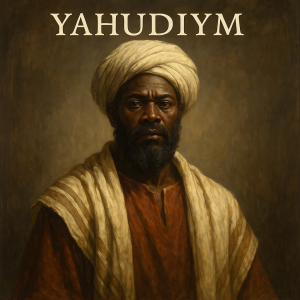
 YAHUDIYM
Primary Definition:
“Yahudiym” (יַהוּדִים) is the accurate, ancient, Shemitic term used to describe the covenant people descended from Yahudah (Judah), one of the twelve sons of Ya’aqob (Jacob), the grandson of Abraham. This term refers not only to the physical lineage of the tribe of Yahudah but also to the spiritual and cultural identity of those who guard the commandments, statutes, and laws of Yahuah—the Most High Elohiym—and uphold the blood covenant made with the children of Yashar’al (Israel).
Unlike the modern conflation with “Jew” or “Jewish,” which has both geopolitical and religious overlays often detached from ancestral bloodlines and scriptural commands, Yahudiym exclusively refers to the ancient Hebrews of dark-skinned, woolly-haired descent who remained faithful to the Torah and retained their tribal identity through generations of persecution, captivity, and dispersal.
They are not converts, nor are they identified by man-made traditions, but by blood, covenant, and obedience. The Yahudiym are the rightful heirs of the promises made to Abraham, Isaac, and Jacob, and are prophesied to return from the four corners of the earth to reclaim their inheritance, land, and spiritual position as priests and rulers under the rule of Mashiach (Messiah).
Etymology:
The word “Yahudiym” (Hebrew: יְהוּדִים) is the plural form of “Yahudi” (יְהוּדִי), which derives from “Yahudah” (יְהוּדָה), the fourth son of Leah and Ya’aqob. The name “Yahudah” means “praised” or “thankful” and is rooted in the Shemitic name of the Most High, “Yah,” making the name Yahudah a direct compound of the divine name.
-
Yah (יָהּ): Short form of Yahuah (the Most High)
-
Hodah (הוֹדָה): Means “to praise” or “to give thanks”
Thus, Yahudiym literally means “those who praise Yah” or “the people of Yah who give thanks.” It is not a term denoting religion or synagogue worship, but a national, tribal, and spiritual identity rooted in divine heritage and covenant law.
Notably, the name “Jew” is a shortened transliteration through Greek and Latin languages that removed the sacred name “Yah” and obscured the original meaning. Over time, “Jew” became a geopolitical and religious title, encompassing a broad group of people including converts and those not of Yahudah’s bloodline. The term Yahudiym restores the original linguistic, spiritual, and genetic precision.
Historical and Cultural Interpretations:
1. The Tribal Legacy:
The Yahudiym come from the tribe of Yahudah, which held the scepter of rulership according to Genesis 49:10. This tribe produced kings such as David and Solomon and is the lineage of Yahusha HaMashiach (commonly known as “Jesus” in modern Bibles). Historically, the Yahudiym occupied the southern kingdom of Yahudah after the northern kingdom of Yashar’al was scattered. They preserved the Torah, kept the feasts, guarded the priesthood, and maintained genealogical records.
2. The Exile and Captivity:
After repeated disobedience, the Yahudiym were exiled to Babylon (586 BCE) under Nebuchadnezzar. Even in captivity, they continued to observe the Torah and fasts such as Yom Kippur and the Feast of Unleavened Bread. The prophet Daniel, a Yahudi, rose in prominence within Babylon yet remained faithful to Yahuah.
Centuries later, the Roman destruction of Yerushalayim (Jerusalem) in 70 CE led to the final dispersal of Yahudiym into Africa, Asia, and eventually the Americas and the Caribbean. Many Yahudiym fled Roman persecution by migrating into West Africa where their descendants were later captured in the transatlantic slave trade. This historical dispersion aligns with the curses outlined in Deuteronomy 28 and fulfills biblical prophecy.
3. Identity Concealment and Reawakening:
The Yahudiym suffered intense cultural erasure, forced conversion, and colonization. Their identity was stripped, and many were renamed, reclassified, and rebranded as “Negro,” “Colored,” “Black,” or “African-American.” Despite this, scriptural prophecies foretold a time when the Yahudiym would awaken to their identity (Baruch 2:30–35; Isaiah 11:11–12). Today, millions across the globe are awakening to the knowledge that they are the descendants of the ancient Yahudiym, not converts or proselytes.
4. Cultural Symbols and Practices:
The Yahudiym are keepers of the Torah. They honor the Shabbat (Friday night to Saturday night), observe feast days outlined in Leviticus 23, and wear fringes (tzitzit) as commanded in Numbers 15:38–40. They reject idolatry, paganism, and false holidays. Their culture reflects modesty, tribal order, patriarchal structure, and agricultural and communal living—just as in ancient times.
They are not defined by rabbinic Judaism, Ashkenazim traditions, or Talmudic laws. They are defined by the written Torah, the prophets, and the words of Mashiach who came to gather the lost sheep of the house of Yashar’al (Matthew 15:24).
5. Genetic and Historical Proof:
Multiple scholars, historians, and anthropologists—including Rudolf R. Windsor (“From Babylon to Timbuktu”) and J.A. Rogers (“Nature Knows No Color Line”)—have presented overwhelming evidence that the Yahudiym were a dark-skinned people, indistinguishable from other Africans until detailed genealogical or spiritual distinction was made. The Lemba and Igbo tribes of Africa preserve customs identical to ancient Israelites, further proving that Yahudiym are not a European people, but an African Shemitic people.
Modern Implications:
1. Restoration of Identity:
To call oneself Yahudiym in the modern era is not merely a religious decision—it is a reclamation of truth, heritage, and divine alignment. Many are now removing titles like “Black,” “Negro,” and “Christian,” which were imposed during slavery and colonization, and returning to their Hebrew identity.
This restoration is fulfilling Ezekiel 37—the dry bones living again, and two sticks (Yahudah and Yashar’al) being joined as one in the hand of the Most High. It is a global movement driven by dreams, revelations, DNA studies, linguistic research, and spiritual awakening.
2. Rejection of Colonial Terms:
“Jew,” “Semite,” and “Jewish” are either incomplete or inaccurate terms that do not reflect the full scope of what it means to be Yahudiym. “Jew” comes from Latin “Iudaeus,” while “Semitic” (coined in the 18th century) is an academic term disconnected from Shem, the son of Noah. The term “Jewish” literally means “like a Jew” or “pertaining to Jews,” and does not denote true bloodline. Yahudiym is the original, precise term that speaks to birth, covenant, culture, and calling.
3. Political and Religious Conflicts:
The term Yahudiym challenges the modern state of Israel and its European founders who identify as Jewish. Many Yahudiym argue that these populations are converts from Khazaria or Edom and have no blood or spiritual link to Yahudah or ancient Yashar’al. This has led to theological and political debates globally. Yet, Scripture says the truth will prevail: “I know the blasphemy of them which say they are Yahudiym and are not, but are the synagogue of Satan” (Revelation 2:9).
4. Spiritual Power and Prophetic Role:
The Yahudiym will play a major role in end-time prophecy. According to Zephaniah 3:10 and Isaiah 11, they will be regathered from the lands of their captivity. Yahusha, the Lion of Yahudah, will return to reign among them, and they will once again lead the nations in righteousness, justice, and Torah.
5. Linguistic Revitalization:
As more Yahudiym return to their heritage, they are restoring the pure tongue (Zephaniah 3:9), reclaiming names (e.g., Yahusha, Yahuah, Yahudiym), and teaching their children to abandon Greco-Roman, colonial, or slave names. This shift includes embracing Paleo-Hebrew characters, studying ancient Shemitic roots, and teaching Yah’s commands in their homes and communities.
Conclusion:
To be Yahudiym is to be a covenant-keeping descendant of Yahudah, born not just of flesh but of spiritual alignment with the Most High’s laws and promises. The term is sacred. It is more than heritage—it is assignment. The world may reject them, but Yah has chosen them as a royal priesthood and a set-apart nation (1 Peter 2:9, Deuteronomy 7:6). The Yahudiym are awakening, reclaiming, and rebuilding—by truth, not tradition.
"Yahudiym" is a term derived from Hebrew language, which refers to "Jews" or "Jewish people". It is often used in religious or historical contexts.