Ma’am
Primary Definition
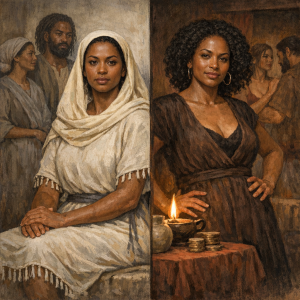
Ma’am is an English traditionally polite form of direct address for a woman and is the contracted form of madam: MADAM → MA’AM. Madam entered English through French madame, from ma dame, meaning “my lady,” and historically functioned as a title of respect or social rank. However, madam also developed an established English meaning for a woman who manages or operates a brothel or house of prostitution, including a woman exercising authority over or arranging prostitution within such an establishment. Thus, although modern English commonly presents ma’am as a polite honorific—“Yes, ma’am,” “Excuse me, ma’am,” or “Thank you, ma’am”—the contracted word remains linguistically derived from madam, a word carrying both an honorific meaning and a later brothel-related meaning.
From an Israelite and biblical frame of reference, ma’am is not a scripturally established title of honor for a woman and is not required in order to demonstrate respect. Scripture identifies women according to meaningful relationships and standing—such as woman, wife, mother, daughter, sister, widow, or elder woman—rather than requiring the English title ma’am. Therefore, while ma’am may communicate courtesy within the English cultural construct, an Israelite may reasonably reject or avoid the term because of its foreign linguistic tradition and the later derogatory and prostitution-related meaning attached to its parent word, madam. This does not mean that madam originally meant “brothel keeper”; its earliest sense was “my lady.” Rather, a complete definition should disclose the entire semantic relationship instead of presenting ma’am solely as an uncomplicated term of honor.
The standard spelling is ma’am, with an apostrophe marking the omitted letters of madam. Informal spellings such as maam, ma’am, and occasionally mam occur in writing, but ma’am is the customary formal spelling. The pronunciation varies by dialect. In much of American English it is commonly pronounced approximately “mam”; in certain British and Commonwealth settings it may sound closer to “marm” or “mum,” depending on the accent. The word should not be confused with mom, mum meaning mother, or the British dialectal mam meaning mother.
Etymology and Origin
Ma’am developed in English during the seventeenth century as a spoken shortening of madam; Merriam-Webster records its first known use in 1668. ([merriam-webster.com](https://www.merriam-webster.com/dictionary/ma%27am?utm_source=openai)) The contraction did not arise from the English word mama, from “mother,” or from an alleged hidden legal formula. It is an abbreviation of a longer honorific.
The history of the parent word is more revealing. Madam entered English through French madame, literally “my lady.” The French expression derives from forms equivalent to “my” and “lady,” ultimately connected with Latin mea domina, “my lady” or “my mistress.” In older Latin usage, domina could refer to a female head of household, mistress, lady, or woman possessing authority in a household. The English word therefore originated in language of courtesy and social rank, not in a technical doctrine of common law. ([etymonline.com](https://www.etymonline.com/word/ma%27am?utm_source=openai))
Historically, words such as lady, madam, sir, master, and mistress could carry stronger implications of station, household authority, or social hierarchy than they ordinarily do in modern American speech. Over time, madam widened from an address for a woman of high rank to a conventional polite form of address. Ma’am then became the shorter everyday form in many English-speaking communities.
The shortening also illustrates a common process in language: frequent words used in rapid conversation tend to be reduced. The apostrophe does not create a separate legal or spiritual word; it simply records the contraction. Thus, etymologically, ma’am means no more and no less than a shortened madam, though the social associations of the word have changed substantially across regions and generations.
Cultural and Historical Context
For much of English history, forms of address helped speakers navigate visible distinctions of age, sex, occupation, household position, and class. A formal honorific could acknowledge distance, authority, or respect. In courtly and royal settings, Madam could be used for a queen, princess, or high-ranking woman. In domestic settings, servants might use madam for the female head of a household. These historical uses explain why the term can still sound ceremonious to modern ears.
In the United States, however, ma’am acquired a broader life as a routine courtesy. It is especially familiar in the South, in military environments, in customer service, and in exchanges involving strangers. “Yes, ma’am” and “No, ma’am” may be taught to children as manners, not as declarations that the addressed person is socially superior. Etymological references note that American usage is particularly common in replies following yes or no. ([etymonline.com](https://www.etymonline.com/word/ma%27am?utm_source=openai))
Regional difference remains important. In some communities, addressing an adult woman as “ma’am” is ordinary and warmly respectful regardless of age. In other communities, particularly where first-name workplace culture is dominant, some women dislike it because they hear it as an implication that they are older, distant, or matronly. The U.S. Department of Defense has specifically cautioned service members entering civilian workplaces that formal military address may be welcome in some regions but unwelcome in others, and that some women regard “ma’am” as a label reserved for older women. ([defense.gov](https://www.defense.gov/News/News-Stories/article/article/1213804/translating-military-culture-to-the-civilian-workplace/?utm_source=openai))
The word’s history also has less favorable associations because madam developed secondary meanings. By the eighteenth and nineteenth centuries, it could refer to a courtesan or to a woman who managed a brothel. Those senses belong principally to madam, not to the everyday honorific ma’am; nevertheless, they contribute to the reason that madam may sound more stiff, theatrical, or ambiguous in modern American speech. Etymological sources document these later secondary meanings separately from the respectful form of address. ([etymonline.com](https://www.etymonline.com/word/ma%27am?utm_source=openai))
Biblical / Torah Context
Ma’am has no origin in the Hebrew Torah, biblical Hebrew, Koine Greek, or the original languages of Scripture. It is an English contraction that arose centuries after the biblical texts were written. It is therefore inaccurate to claim that the word itself is a Torah command, a Hebrew sacred title, a biblical office, or an ancient covenantal term.
That said, the general idea of respectful speech is relevant to biblical and Torah ethics. The Torah repeatedly requires honor toward parents, elders, judges, and neighbors, while the wider biblical tradition commends humility, truthful speech, and respect for persons. Those moral principles may support courteous forms of address when they are sincere. They do not prescribe the English word ma’am, require its use, or establish a universal rule that every woman must accept it.
English Bible translations may use words such as “madam,” “lady,” “mistress,” “my lady,” or “ma’am” according to the translators’ idiom, but a translator’s English choice should not be mistaken for the wording of the original Hebrew or Greek. A reader seeking biblical meaning should distinguish between the source-language text, the translator’s rendering, and later English social custom.
In interpretive terms, a person of faith may use “ma’am” as an expression of neighborly respect. Yet the moral value lies in the speaker’s genuine regard for the person addressed, not in a particular honorific formula. Courtesy that deliberately ignores a person’s expressed preference can defeat its own purpose.
Legal Implications
Common Law and Historical Legal Usage
In historical English common law, social forms of address could reflect rank and courtesy, but ma’am was not a legal estate, a conveyancing term, a jurisdictional designation, or a word that changed a woman’s civil capacity. English common law recognized legal categories such as wife, widow, feme sole, feme covert, tenant, executor, plaintiff, defendant, and witness. “Ma’am” was not one of those technical categories.
Nor does the word derive from Roman-law terminology, equity pleading, military law, statutory law, or a governmental process. Its ancestry reaches Latin through ordinary French and English development, but that linguistic fact does not transform it into a Roman legal term. Etymology and legal classification are different inquiries. A word may have Latin roots without carrying a rule of Roman law.
At common law, as now, a person’s rights and duties generally arise from law, facts, agreements, official acts, and legally recognized relationships—not from an ordinary courtesy word used in conversation. Calling someone “ma’am” does not create agency, establish guardianship, concede jurisdiction, waive constitutional rights, prove consent, make a contract, or alter marital or property status.
Modern Courts and Government
Modern courts ordinarily use more specific forms of address for judges. Court guidance commonly directs lawyers and litigants to say “Your Honor” or “Judge [Last Name],” rather than “sir” or “ma’am.” For example, the United States District Court for the District of Oregon instructs participants to address the court as “Your Honor,” not “Ma’am” or “Sir.” ([ord.uscourts.gov](https://www.ord.uscourts.gov/index.php/attorneys/trial-court-guidelines?utm_source=openai)) This is a matter of courtroom protocol and respect for office; it does not mean that “ma’am” is unlawful in ordinary speech.
In government, a person may courteously call a female official “ma’am,” but the official’s actual authority comes from her office, appointment, election, delegation, statute, constitution, or regulation. The word neither grants nor removes governmental power. Where a statute, regulation, court rule, agency form, or official proceeding supplies a required title or mode of address, that specific authority governs.
Employment, Sex, and Respectful Address
In ordinary private conversation, accidental use of “ma’am” is usually a question of etiquette rather than a legal violation. In workplaces, schools, housing, public accommodations, and government programs, however, patterns of intentionally disrespectful or discriminatory treatment can have legal consequences under applicable law. Federal employment law, including Title VII of the Civil Rights Act of 1964, prohibits employment discrimination because of sex; the Supreme Court held in Bostock v. Clayton County (2020) that firing an individual merely for being gay or transgender violates Title VII’s prohibition on discrimination because of sex. ([law.cornell.edu](https://www.law.cornell.edu/supremecourt/text/17-1618?utm_source=openai))
Bostock did not make every mistaken honorific independently unlawful, nor did it create a universal federal rule requiring any particular pronoun or title in every setting. Its holding concerns employment discrimination under Title VII. Nevertheless, employers and institutions should distinguish isolated, promptly corrected mistakes from repeated, targeted conduct that may contribute to discriminatory treatment or a hostile environment. State and local laws, institutional policies, collective-bargaining agreements, and professional rules may impose additional or different requirements.
Spiritual Meaning
There is no inherent mystical power in the word. It does not bind the speaker spiritually, transfer dominion, invoke a deity, create a religious obligation, or establish a sacred hierarchy merely by being spoken. Claims that “ma’am” is secretly an occult, ecclesiastical, governmental, or legal spell are unsupported by its documented linguistic history. The word is a contraction of madam, a conventional courtesy title. ([merriam-webster.com](https://www.merriam-webster.com/dictionary/ma%27am?utm_source=openai))
A spiritual interpretation may nevertheless consider intention. Used honestly, the term can express humility, self-control, peaceableness, and recognition of another person’s dignity. Used mockingly, manipulatively, or with contempt, the same word can communicate the opposite. In that sense, its spiritual significance—if any—is ethical and relational rather than magical or technical.
Modern Usage
Today, ma’am remains common in several settings:
- Everyday politeness: “Thank you, ma’am,” especially when addressing an unfamiliar adult woman.
- Military culture: It is a customary form of respectful address, particularly for female commissioned officers and often for women generally. The Department of Veterans Affairs describes “ma’am” as a proper method of addressing female officers in particular and women in general. ([va.gov](https://www.va.gov/vetsinworkplace/docs/em_termslingo.asp?utm_source=openai))
- Customer service and public safety: Clerks, hospitality workers, police personnel, dispatchers, and others may use it to maintain professional distance and courtesy.
- Formal correspondence: It may appear in a salutation or reply, although “Ms. [Surname],” “Dr. [Surname],” an office title, or a requested form of address may be more precise.
- Responses of assent: “Yes, ma’am” and “No, ma’am” remain especially established idioms in American English.
Good contemporary practice is simple: use the term where it is culturally natural, avoid making assumptions about a person’s age or identity, and follow the person’s stated preference when one is known. If uncertain, a neutral opening such as “Excuse me,” “Hello,” or the person’s name and professional title may be better. Respect is ordinarily communicated more effectively by attentiveness than by rigid insistence on one traditional form.
Controversies / Criticisms
The principal controversy concerns social meaning, not the dictionary definition. Some speakers regard “ma’am” as a durable mark of civility and resent the suggestion that traditional manners are offensive. Others experience it as distancing, patronizing, overly formal, or suggestive of age. Both reactions are socially real because honorifics acquire meaning from lived custom as well as from dictionaries.
A second issue concerns gendered language. Because “ma’am” conventionally identifies the addressee as female, it may be unwelcome when it incorrectly assumes a person’s gender or conflicts with the person’s expressed identity. The most practical response is correction without hostility: apologize briefly, use the requested name or title, and continue the conversation respectfully. Deliberate refusal to do so after being informed may have interpersonal, workplace, or institutional consequences depending on the circumstances and governing rules.
A third problem is overreading the word’s historical roots. The fact that madam once related to “my lady,” household authority, or rank does not mean that every modern use of ma’am recreates feudal hierarchy, slavery, marriage authority, or legal subordination. Such assertions confuse historical associations with present legal effect. Conversely, it is also incomplete to insist that the term is always received as respectful; tone, setting, and listener preference matter.
Conclusion
Ma’am is a seventeenth-century English contraction of madam, ultimately connected through French with the idea of “my lady.” Its primary modern meaning is a polite form of direct address for a woman. Historically, it reflects traditions of courtesy and social rank; in modern American usage, it often expresses routine respect, particularly in Southern, military, service, and formal settings.
It has no independent status in common law, Roman law, equity, statutory law, military law, or theology. It creates no contract, jurisdiction, office, or spiritual obligation. Its proper use is governed chiefly by context, courtesy, and—in professional or official settings—any applicable rule or stated preference. Used with sincere respect and reasonable sensitivity, it remains a familiar and legitimate English honorific.
Sources / Further Reading
- Merriam-Webster, “Ma’am.” https://www.merriam-webster.com/dictionary/ma%27am
- Online Etymology Dictionary, “Ma’am.” https://www.etymonline.com/word/ma%27am
- U.S. Department of Defense, “Translating Military Culture to the Civilian Workplace.” https://www.defense.gov/News/News-Stories/article/article/1213804/translating-military-culture-to-the-civilian-workplace/
- U.S. Department of Veterans Affairs, “Common Terms and Lingo.” https://www.va.gov/vetsinworkplace/docs/em_termslingo.asp
- Legal Information Institute, Cornell Law School, Bostock v. Clayton County. https://www.law.cornell.edu/supremecourt/text/17-1618
- United States District Court, District of Oregon, “Trial Court Guidelines.” https://www.ord.uscourts.gov/index.php/attorneys/trial-court-guidelines