Utterance
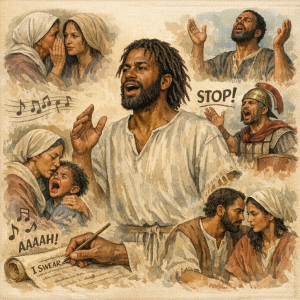
Primary Definition
In ordinary English, this noun means something expressed or produced by the voice: a spoken word, phrase, statement, cry, sound, or verbal expression. It may also describe the act, power, style, or manner of speaking. The word is broader than a formal declaration. A whisper, exclamation, prayer, warning, oath, command, confession, song lyric, or fragment of conversation may each be described as one, depending on context.
The central idea is expression brought outward. The term commonly emphasizes the act of giving voice to something, rather than the grammatical completeness, truth, authority, or legal force of what is said. A person may make an intelligible statement, an involuntary cry, a deliberate promise, or an offensive remark; each may be an instance of vocal expression, but their moral, social, and legal significance differs.
In linguistics, an utterance is often understood as a bounded piece of spoken language produced by a speaker in a particular setting. It need not be a complete sentence. “Stop,” “Help!,” “Yes,” a sigh accompanied by a word, or an extended speech can each function as an utterance. Meaning arises not only from the words selected, but also from context, speaker, audience, timing, tone, volume, gesture, and the practical purpose for which the words were made.
Dictionary Distinctions
- Utterance and word: A word is a unit of language; an utterance may consist of one word or many words, and may sometimes include a nonlexical vocal sound.
- Utterance and statement: A statement ordinarily conveys an assertion. An utterance can be an assertion, but it can also be a question, command, exclamation, prayer, cry, or sound.
- Utterance and declaration: A declaration is generally more formal or purposeful. Not every spoken expression is a declaration.
- Utterance and speech: Speech may refer to the general human faculty of speaking, a public address, or protected expression. An utterance is usually a particular instance or portion of speech.
- Utterance and writing: In ordinary usage the word primarily concerns vocal expression. In legal writing, however, older authorities sometimes use related forms of utter in connection with issuing, publishing, passing, or putting documents or currency into circulation.
Etymology and Origin
The noun developed in Middle English from the verb utter, meaning to speak, make known, express, or issue. The modern verb has a Germanic history connected with the idea of bringing something outward or making it known. Etymological sources trace important Middle English forms to Middle Dutch and Middle Low German words meaning, among other things, to show, speak, make known, or give currency to something. The English verb was also influenced by native forms associated with out and disclosure.
This history helps explain why the word has both verbal and commercial-legal associations. To utter words is to send them forth in speech. To utter a forged instrument, in the older legal sense, is to put it forth, offer it as genuine, or circulate it. These are related historical developments around outward presentation, not proof that every modern use carries a hidden commercial meaning.
The noun is recorded in English from the fifteenth century. Over time, its ordinary sense settled chiefly around vocal expression: something spoken or the act of speaking. Modern dictionaries commonly define it as vocal expression, speech, or something uttered orally or in writing. Its usage remains somewhat more formal than everyday alternatives such as remark, comment, word, or statement.
A separate English adjective, utter, as in “utter nonsense” or “utter failure,” has a different though historically related development from the idea of outermost, furthest, or extreme. That adjective means complete, absolute, or total. It should not be confused with the noun considered here merely because both words share spelling and history.
Cultural and Historical Context
Human communities have long treated spoken expression as consequential. Before widespread literacy, oral communication carried law, custom, commerce, religion, genealogy, diplomacy, poetry, warning, instruction, and public memory. Oaths, proclamations, testimony, and promises were often delivered aloud before witnesses. Writing later supplied durability and proof, but did not eliminate the importance of spoken words.
The term therefore often appears in literary, rhetorical, theological, and legal contexts where the manner of expression matters. A “solemn utterance” suggests deliberation and gravity; a “rash utterance” suggests speech made without sufficient thought; an “inarticulate utterance” may indicate emotion, pain, fear, or inability to form clear language. In such uses, the word describes both an audible act and a human event: an inward thought, feeling, judgment, or intention becoming outwardly perceptible.
In public life, spoken expression can inform, persuade, comfort, threaten, negotiate, command, or mislead. The mere fact that words were spoken does not establish their truth. Nor does an emotional delivery prove sincerity. Responsible listeners distinguish the occurrence of speech from the accuracy of its content, the authority of its speaker, and the consequences that law or custom attaches to it.
Governmental and Military Context
Governmental and military institutions may use oral commands, warnings, reports, orders, acknowledgments, and ceremonial statements. Yet the noun itself is not a general legal formula that makes speech binding. Whether an oral instruction has official force depends upon such matters as the speaker’s lawful authority, applicable regulations, the chain of command, the subject matter, notice, and governing law. A private person’s forceful words do not become an official order merely by being called an utterance.
Likewise, a public official’s spoken remark may be politically important without itself constituting a statute, regulation, executive order, judgment, or enforceable governmental act. Formal legal instruments normally require the procedures prescribed by the applicable constitution, statute, rule, or regulation.
Biblical / Torah Context
The English word appears in several English Bible translations, especially older translations, but it is important not to mistake an English translation choice for a single original-language technical term. Biblical Hebrew and Koine Greek employ several words for speaking, saying, word, voice, proclamation, prophecy, and declaration. Their meaning must be determined from the particular passage rather than from the English noun alone.
In the Torah, the recurring themes are divine speech, human response, covenantal instruction, blessing, oath, testimony, prayer, and proclamation. Hebrew terms commonly translated as “say,” “speak,” “word,” or “matter” include forms of אָמַר (amar, to say) and דָּבַר (dabar, to speak; also word or matter). The Torah does not establish an English legal or spiritual category called “utterance.” Instead, it presents speech as morally weighty: words can bless or curse, testify or deceive, instruct or rebel, and bind a person in contexts such as vows and oaths.
For example, the commandment against bearing false witness concerns truthful testimony and the protection of one’s neighbor, not a mystical property inherent in sound. Similarly, biblical teaching about vows underscores that a person should not speak promises carelessly. The enduring principle is accountability for speech, especially where speech invokes God, affects another person, or creates a commitment.
In the New Testament, the King James Version uses the word in passages concerning inspired or courageous speech. Acts 2:4 says that those gathered began to speak in other tongues “as the Spirit gave them utterance.” In that passage, the relevant Greek verb concerns speaking forth or declaring. Ephesians 6:19 asks that “utterance” be given so that the speaker may make known the mystery of the gospel boldly; there the underlying Greek term is commonly rendered “word” or “message.” These passages support a theological theme of enabled proclamation, but they do not make every human vocalization divinely inspired.
Legal Implications
General Legal Significance
In law, spoken words may matter because they are evidence of knowledge, intent, notice, consent, threat, agreement, defamation, agency, fraud, or another legally relevant fact. The legal question is rarely whether words were an “utterance” in the ordinary sense. The question is what was said, by whom, to whom, under what circumstances, for what purpose, and under which rule of law.
Under the Federal Rules of Evidence, a “statement” includes an oral assertion, a written assertion, or intended nonverbal conduct. Hearsay is generally an out-of-court statement offered to prove the truth of what it asserts, subject to exclusions and exceptions. Thus, ordinary vocal expression is not automatically admissible or inadmissible. Its evidentiary treatment depends on the use for which it is offered and the applicable rules.
Excited Utterance
“Excited utterance” is a recognized evidentiary phrase. Federal Rule of Evidence 803(2) permits, as an exception to the rule against hearsay, a statement relating to a startling event or condition that was made while the declarant remained under the stress of excitement caused by it. The rule rests on the traditional view that excitement may reduce the opportunity for conscious fabrication. It does not mean that every distressed statement is true, nor does it remove the trial judge’s responsibility to assess the foundation for admission.
This evidentiary doctrine developed through common-law hearsay exceptions and is now expressed in modern evidence rules. It is not Roman law, and it should not be confused with a general common-law rule that spontaneous speech is always reliable. Jurisdictions may differ in applying their own evidence rules, constitutional requirements, and precedents.
Uttering a Forged Instrument
In criminal-law usage, uttering has a specialized meaning distinct from merely speaking. Historically at common law, uttering a forged instrument meant offering or presenting it as genuine with intent to defraud. The offense focused on putting a false writing, document, security, or similar instrument into circulation or using it to deceive. The wrong was not simply creating a forgery; it was representing the forgery as authentic.
Modern statutes may preserve this older vocabulary. For example, 18 U.S.C. § 472 criminalizes, among other acts, passing, uttering, publishing, or selling falsely made, forged, counterfeited, or altered obligations or securities of the United States with intent to defraud. The precise elements of a criminal offense always depend on the statute, jurisdiction, and controlling case law. One should not assume that the historical common-law definition alone resolves a current charge.
Contracts, Oaths, and Oral Commitments
Spoken words can form an oral contract when the ordinary elements of contract formation are present, including mutual assent, consideration, capacity, and legality. But not every conversation, promise, negotiation, or expression of future intent is a contract. Furthermore, statutes of frauds and other statutes may require certain agreements to be evidenced by a signed writing. The rules vary by jurisdiction and by subject matter.
Words may also have legal effect in oaths, affirmations, pleas, testimony, acceptance of an offer, consent, and warnings. Their effect comes from the governing legal framework and surrounding facts, not from the label applied to the words. Equity may sometimes address reliance, fraud, mistake, or unjust enrichment, but equity is not a license to disregard statutory writing requirements or clear legal rules.
Constitutional Speech
In the United States, many spoken expressions fall within the broad protection for freedom of speech secured against governmental abridgment by the First Amendment and incorporated constitutional doctrine. Protection is substantial but not unlimited. Legal analysis may differ for such categories as true threats, perjury, fraud, solicitation, defamation, speech integral to criminal conduct, and speech within regulated proceedings. A word’s offensive, unpopular, religious, political, or emotional character does not by itself determine its legal status.
Spiritual Meaning
Spiritually, the term may be used to describe speech as the outward fruit of inward belief, intention, emotion, or conviction. In Jewish and Christian moral reflection, words are often treated as significant because they can reveal character, bless, teach, encourage, accuse, wound, deceive, or bear witness to truth. Prayer, praise, confession, proclamation, and testimony are forms of speech that may carry spiritual importance when offered sincerely and in accordance with the worshiper’s faith.
This is interpretive and devotional language, not a linguistic claim that the English noun possesses inherent spiritual power. The word’s etymology does not establish a hidden religious code, and no sound automatically becomes sacred merely because it is spoken. Spiritual significance, where a faith tradition recognizes it, arises from the speaker’s intent, the content of the words, the relationship to God and neighbor, and the teachings of that tradition.
Modern Usage
Contemporary usage ranges from ordinary conversation to specialized fields. Journalists may refer to a public figure’s “latest utterances”; literary critics may discuss an authorial or poetic utterance; linguists may analyze a child’s utterance; and courts may consider an utterance as evidence. The term is especially useful where the fact and manner of vocal expression are more important than whether the language was a polished statement.
In everyday speech, simpler alternatives are often preferred. A person is more likely to say “What did she say?” than “What was her utterance?” The latter can sound formal, analytical, ironic, or literary. It may also carry disapproval when used to characterize speech as foolish, hostile, or extreme.
Controversies / Criticisms
The principal controversy concerns overreading the word. Etymology can illuminate historical development, but it does not control modern legal outcomes. Claims that the term always means a commercial transaction, always creates a contract, or operates as a special common-law formula are unsupported by ordinary dictionary usage and by the structure of modern law. Courts apply statutes, procedural rules, precedent, and facts; they do not ordinarily decide cases by treating a word’s oldest possible sense as controlling.
There is also legitimate criticism of the excited-utterance exception. Its traditional rationale assumes that stress can suppress deliberate fabrication. Critics observe that stress may also impair perception, memory, narration, and identification. Modern courts nevertheless apply the rule where its requirements are satisfied, while parties may challenge whether the declarant was actually under continuing stress, whether the statement relates to the startling event, and whether constitutional confrontation concerns apply in a criminal case.
Finally, language about “spiritual utterance” can be meaningful within a faith community but should not be used to evade ordinary standards of truth, accountability, discernment, or lawful conduct. A claim of inspiration is a religious assertion; its acceptance depends on the standards of the relevant community and is not established merely by applying a devotional label to speech.
Conclusion
This term primarily denotes vocal expression or something spoken. Its history reflects the broader idea of bringing something outward—making it known, issuing it, or putting it forth. In law, the word has limited but important specialized uses, particularly in the doctrines of excited utterances and the criminal offense of uttering forged instruments. In biblical and spiritual settings, it may describe inspired, prayerful, prophetic, or morally consequential speech, but the English term itself is not a universal technical category in Hebrew or Greek Scripture.
The soundest interpretation is contextual. Determine whether the setting is ordinary language, linguistics, evidence law, criminal law, contract law, Scripture, theology, or public discourse. Then identify the actual words, the speaker’s authority and intent, the audience, the surrounding circumstances, and the specific rule—if any—that gives the expression legal, moral, or spiritual consequence.
Sources / Further Reading
- Merriam-Webster Dictionary, “Utterance”
- Merriam-Webster Dictionary, “Utter”
- American Heritage Dictionary, “Utter”
- Online Etymology Dictionary, “Utter”
- Legal Information Institute, Federal Rule of Evidence 801
- Legal Information Institute, Federal Rule of Evidence 803
- Legal Information Institute, “Uttering”
- United States Code, 18 U.S.C. § 472
- Legal Information Institute, “Oral Contract”
- Legal Information Institute, First Amendment
- Sefaria, Exodus 20
- Bible Gateway, Acts 2:4 and Ephesians 6:19, King James Version