Dam (Damnation)
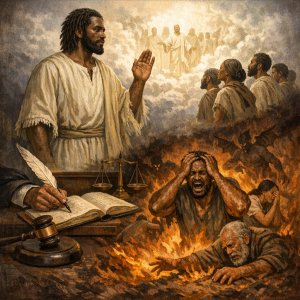
Primary Definition
Damnation is the act or condition of being damned: condemned, judged adversely, or consigned to punishment. In its oldest legal sense, the word concerned a judgment declaring liability, guilt, loss, or penalty. In its principal religious sense in English, it came to mean divine condemnation—especially final exclusion from the blessed presence of God and, in many Christian traditions, punishment after death.
The supplied form “Dam” is best understood here as an abbreviated or clipped reference to damnation, rather than as the ordinary English noun dam meaning a barrier built to hold back water or the female parent of an animal. In formal writing, damnation is the proper spelling. The related verb is damn; its ordinary past participle and adjective are damned.
The word should not be treated as a single, fixed technical term across all settings. Its meaning depends heavily on context:
- Historical legal context: a condemnation, adverse judgment, penalty, or assessment of loss.
- Theological context: divine judgment, often understood as final separation from God or punishment for unrepented sin.
- Figurative context: severe criticism, rejection, ruin, or moral denunciation.
- Colloquial context: an oath, exclamation, intensifier, or mild-to-strong profanity, often no longer intended as a literal theological declaration.
Dictionary usage should therefore distinguish damnation from a court’s ordinary judgment. A civil or criminal court may impose a judgment, sentence, fine, injunction, or other legal consequence; it does not possess authority to pronounce a person eternally damned. In a constitutional legal order, eternal destiny is a religious and metaphysical question, not a judicial remedy.
Etymology and Origin
Damnation entered English in the Middle Ages through Old French forms such as damnation or dampnacion, derived from Latin damnatio. The Latin noun arose from damnare, meaning to condemn, adjudge guilty, sentence, or impose a loss or penalty. The linguistic family originally carried a strong juridical sense: an authoritative decision that a person was liable to punishment, forfeiture, or loss.
The older Latin background is important because it prevents an oversimplified origin story. The word was not invented as a uniquely Christian term, nor did it begin as the name of a postmortem place of punishment. It belonged first to the language of judgment and condemnation. English religious use developed through the interaction of biblical translation, medieval theology, preaching, ecclesiastical vocabulary, and popular speech.
By about the fourteenth century, English damnation was used both for judicial condemnation and for condemnation to hell by God. Over time, the theological sense became dominant in ordinary English. The verb damn followed a similar path: from a legal sense of condemning or declaring guilty to a theological sense of assigning to future punishment, and then to broader figurative uses such as “to condemn strongly,” “to ruin,” or “to criticize severely.” Etymological sources also record damnation as an imprecation by around the early modern period. ([etymonline.com](https://www.etymonline.com/word/damnation?utm_source=openai))
The development illustrates a common linguistic process: a term of adjudication acquires moral and religious force, then becomes broadened in common speech. That history does not establish that every present-day use of “damn” is a declaration of eternal judgment. A speaker who says “damn the weather” normally expresses frustration, not a claim to divine authority.
Cultural and Historical Context
In Western culture, damnation became a powerful word because it joins law-like judgment with ultimate moral consequence. Medieval sermons, religious art, dramatic literature, hymns, and public preaching often presented the final judgment as a division between salvation and condemnation. The imagery of fire, darkness, exclusion, punishment, devils, and a final reckoning shaped the emotional and cultural weight of the word.
That cultural history was not uniform. Jewish, Catholic, Orthodox, Protestant, and later secular readers have used overlapping language while holding materially different beliefs concerning judgment, the soul, punishment, repentance, divine mercy, and the duration or nature of hell. Thus, a historical use of “damnation” should not be assumed to prove one complete doctrine accepted by all believers.
In English-speaking Protestant culture, the King James Version of 1611 had particular influence on the vocabulary of judgment. Its wording includes “damnation” in passages where many modern translations prefer terms such as judgment, condemnation, or condemned. Consequently, readers should compare translations and, where doctrinal precision matters, consider the underlying Hebrew or Greek terms rather than resting an entire theological conclusion upon one English word choice. The King James Version remains a public-domain translation in the United States and has exercised long-standing influence on English religious language. ([biblegateway.com](https://www.biblegateway.com/versions/King-James-Version-KJV-Bible?vm=r&utm_source=openai))
The word also became culturally detached from formal religion. In literature and public speech, damnation may mean disgrace, destruction, a disastrous fate, or stern rejection. “Damned” may describe something regarded as cursed, difficult, contemptible, or intensely irritating. These figurative usages retain the force of condemnation but often lack a literal claim about God, the afterlife, or final judgment.
Biblical / Torah Context
Torah and the Hebrew Bible
The English word damnation is not a Torah term. The Torah and the wider Hebrew Bible speak in their own vocabulary about sin, covenant faithfulness, blessing, curse, judgment, death, exile, restoration, and the grave. The Hebrew term Sheol commonly concerns the realm or condition of the dead; it should not automatically be equated with the later, more developed Christian concept of hell or eternal damnation.
The Torah repeatedly presents consequences for wrongdoing within covenant life: judicial penalties, restitution, exclusion from the community in particular cases, and national consequences such as defeat or exile. These are temporal and communal legal realities within Israel’s covenantal order. They should not be casually converted into proof that the Torah teaches every later doctrine associated with eternal torment.
At the same time, the Hebrew Bible plainly affirms divine judgment and moral accountability. The prophetic books regularly condemn injustice, idolatry, violence, exploitation, and unfaithfulness. Yet they also repeatedly call for repentance and return. The biblical pattern is therefore not merely condemnation; it includes warning, correction, mercy, restoration, and the demand for justice.
New Testament Language and Translation
In the New Testament, several different Greek terms and images may appear in English translations under the broad ideas of hell, judgment, condemnation, or damnation. These include krisis and related words concerning judgment or condemnation; Gehenna, a term used in grave warnings; Hades, often connected to the abode of the dead; and images including outer darkness, fire, destruction, resurrection, and final judgment. These are related concepts, but they are not mechanically interchangeable.
For example, older English translations may use “damnation” where modern translations use “condemnation” or “judgment.” The difference in English wording does not necessarily signal a change in the underlying Greek text; it may reflect translators’ choices about how to convey a term to modern readers. A responsible study should ask: What is the original word? Who is speaking? What is the immediate context? Is the passage addressing a present judgment, a communal consequence, a final judgment, or a metaphorical warning?
Christian traditions commonly connect damnation with passages concerning final judgment, including warnings attributed to Jesus and the apostolic teaching on accountability before God. However, biblical interpretation remains contested regarding the nature and duration of final punishment. The scriptural materials must be read in context, not reduced to a slogan or used as a weapon against persons.
Legal Implications
Roman Law and Historical Legal Meaning
Historically, the Latin root of damnation belonged to the legal language of condemnation and penalty. In Roman legal thought, a person might be adjudged liable, condemned, fined, or sentenced. This historical legal ancestry explains why the word bears the sense of authoritative adverse judgment. It does not mean that Roman civil law and later Christian doctrine were identical, nor that every religious doctrine of hell is simply a Roman legal creation. Roman law was one important linguistic and institutional source through which legal vocabulary traveled into later European languages. ([scholarship.law.cornell.edu](https://scholarship.law.cornell.edu/clr/vol35/iss1/4/?utm_source=openai))
Common Law, Equity, and Modern Civil Law
In the English common-law tradition, courts have long used words such as condemn, convict, judgment, sentence, damages, forfeiture, and penalty. “Damnation” itself is not a standard modern term of art for a criminal sentence or civil judgment. A court’s authority is limited by its jurisdiction and by the applicable constitution, statutes, common-law rules, procedural rules, and precedents. Equity historically supplied remedies such as injunction, specific performance, rescission, and accounting; it did not create a legal power to declare a person’s eternal spiritual fate.
A distinction is especially necessary between damnation and damages. Although both words share remote Latin associations with loss or harm, damages are a legal monetary remedy or measure of compensation in a civil action. Damnation ordinarily concerns condemnation, especially religious condemnation. The words are not interchangeable, and no competent legal pleading should substitute one for the other.
Current United States law does not authorize civil courts to adjudicate theological truth or impose damnation as a legal punishment. The Constitution forbids religious tests for public office, and constitutional protections of religious liberty limit governmental authority over religious belief. Courts may address secular legal questions involving religious institutions in appropriate circumstances, but they do not decide who is saved, damned, orthodox, or heretical as a matter of civil law. ([law.cornell.edu](https://www.law.cornell.edu/constitution-conan/article-6/clause-3/bar-on-religious-tests?utm_source=openai))
Governmental and Military Context
No special military meaning of damnation is established as a standard modern United States military term. Military justice may involve charges, findings, sentences, discharge, confinement, or other statutory consequences; those are legal and administrative matters, not damnation. Government officials likewise may condemn conduct in a rhetorical or political sense, but they have no lawful civil authority to pronounce divine condemnation.
Claims that a government document, court filing, tax record, license, birth certificate, military form, or commercial contract “damns” a person spiritually should be treated as theological or ideological assertions, not as a recognized rule of common law or current American law. Such claims require extraordinary documentary support and should not be presumed from the historic legal roots of the word.
Spiritual Meaning
Spiritually, damnation is often understood as the ultimate consequence of estrangement from God. In many Christian traditions, the central harm is not described merely as physical pain but as final separation from God, who is understood as the source of life, goodness, truth, and blessedness. The Catholic Catechism, for example, describes hell’s chief punishment as eternal separation from God and teaches that God predestines no one to hell; it frames condemnation in relation to a willful and persistent turning away from God. ([usccb.org](https://www.usccb.org/sites/default/files/flipbooks/catechism/272/?utm_source=openai))
Other Christian traditions emphasize divine judgment in different ways. Historic Lutheran confessional teaching affirms a final judgment and everlasting punishment for the ungodly and devils. Other Christians defend conditional immortality or annihilationism, holding that final punishment ends in destruction rather than endless conscious suffering. Universalist Christians argue that divine judgment is ultimately remedial and that God will finally reconcile all. These positions are doctrinally incompatible in important respects, so none should be represented as the uncontested meaning of the Bible for all Christians. ([bookofconcord.org](https://bookofconcord.org/augsburg-confession/of-christs-return-to-judgment/?utm_source=openai))
As interpretive analysis, the spiritual force of the term lies in its warning against treating moral evil, injustice, cruelty, and alienation from God as insignificant. Yet a spiritually responsible use of the word should be joined to humility. Many believers maintain that final judgment belongs to God, not to private individuals seeking authority over others. The language of damnation can call a person to repentance; it can also be abused through fear, manipulation, self-righteousness, or religious coercion.
Modern Usage
Modern English uses damnation less frequently in formal religious discourse than earlier generations did, but the word remains intelligible and potent. It appears in sermons, theological writing, translations of older texts, fiction, political rhetoric, and discussions of hell. The phrase eternal damnation usually signals a traditional doctrine of final punishment after death.
In ordinary conversation, damn, damned, and damnation may function as profanity or intensifiers. Their severity varies by region, generation, religion, workplace, and audience. A word that one speaker considers mild may be experienced by another as irreverent or offensive because of its religious reference. Formal legal, professional, pastoral, and public communications generally benefit from more exact language: condemnation, judgment, criticism, punishment, liability, or damages, as the case requires.
Controversies / Criticisms
The principal controversy concerns doctrine. Christians disagree about whether damnation entails eternal conscious punishment, final destruction, self-exclusion from God, remedial correction, or another account of divine judgment. Jewish traditions do not simply map onto later Christian uses of “damnation,” and non-Christian religions have their own distinct teachings about moral consequence and the afterlife. Precision therefore requires identifying the particular religious tradition being described.
A second controversy concerns translation. Because older English Bibles sometimes use “damnation” where contemporary translations use “judgment” or “condemnation,” readers may mistakenly assume that the English word itself settles the theological issue. It does not. Translation choices matter, but context, grammar, genre, reception history, and the source language also matter.
A third concern is ethical and pastoral. The threat of damnation has at times been used to control communities, stigmatize dissenters, justify exclusion, or intensify fear in vulnerable people. Critics argue that such use can distort religious teaching and harm conscience. Defenders of traditional doctrines answer that warnings of judgment may express moral seriousness and concern for repentance, provided they are taught with truthfulness, mercy, and without coercive abuse.
Finally, legal-history claims should be carefully tested. The fact that damnation descends from a Latin legal word does not establish that modern courts operate under Roman law, that common law confers spiritual jurisdiction, or that modern governmental acts determine eternal status. Those propositions confuse etymology, historical legal development, religious doctrine, and present law.
Conclusion
Damnation is a historically layered word. Its root meaning concerns condemnation and adverse judgment; its most influential English meaning concerns divine judgment and final spiritual loss. It has traveled from Latin legal vocabulary through medieval religious thought into modern theology, literature, rhetoric, and colloquial speech.
For careful use, distinguish the historical legal root from present legal authority, distinguish biblical source terms from later English translation choices, and distinguish a particular tradition’s doctrine from a universally agreed conclusion. In legal matters, use the vocabulary of actual remedies and jurisdiction. In spiritual matters, recognize that damnation remains a serious, disputed, and tradition-specific concept concerning judgment, responsibility, mercy, and the ultimate relation of the human person to God.
Sources / Further Reading
- Merriam-Webster, “Damnation”
- Online Etymology Dictionary, “Damnation”
- Bible Gateway, King James Version information and text
- United States Conference of Catholic Bishops, Catechism of the Catholic Church, paragraphs 1033–1037
- Book of Concord, Augsburg Confession, Article XVII: “Of Christ’s Return to Judgment”
- Cornell Legal Information Institute, Constitution Annotated: Article VI, Religious Tests
- Hessel E. Yntema, “Roman Law and Its Influence on Western Civilization,” Cornell Law Review