Bride Price
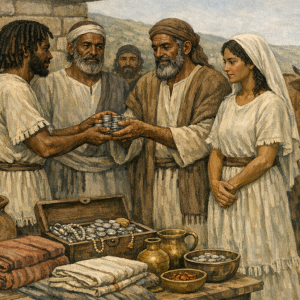
Primary Definition
Bride price, more neutrally termed bridewealth in much anthropological writing, is money, livestock, property, valuable goods, or agreed services transferred by a prospective husband or his family to the prospective wife’s family or kin group in connection with a marriage. Depending on the governing custom, the transfer may formally recognize the marriage, establish obligations between families, demonstrate the husband’s commitment, compensate the bride’s household for the loss of her labor, or help determine the social affiliation and inheritance rights of children.
The word price can misleadingly suggest that the woman herself is sold as property. In some societies, participants explicitly reject that interpretation and understand the transfer as a relational gift or covenant between families. In other settings, however, demands for payment, control over the woman, or compulsory repayment following separation may make the practice operate in a manner resembling purchase. The meaning therefore cannot be determined from the existence of a payment alone; the surrounding custom, the woman’s consent, the recipient, the conditions of payment, and the legal consequences must all be examined. ([cambridge.org](https://www.cambridge.org/core/journals/evolutionary-human-sciences/article/does-bride-price-harm-women-using-ethnography-to-think-about-causality/D9503E06D30556A5701B597F1F93A5A8?utm_source=openai))
Related but Distinct Terms
- Bridewealth: The generally preferred anthropological term for wealth transferred from the groom’s side to the bride’s family or kin.
- Dowry: Property transferred from the bride’s family, usually to the bride, the married household, or the groom’s side. It moves in a different direction and should not be treated as a synonym.
- Dower: Property provided by the husband for the wife’s support, historically including rights available to her upon widowhood.
- Mahr: Under Islamic law, a mandatory marital gift or obligation owed by the husband directly to the wife. Because it belongs to her, it is not accurately defined merely as a payment to her parents.
- Bride service: Labor performed by a prospective husband for the woman’s household, sometimes instead of material wealth.
- Wedding gifts: Voluntary or reciprocal gifts exchanged during marriage celebrations. These do not necessarily carry the legal or customary consequences of bridewealth.
Etymology and Origin
The English expression combines bride, an old Germanic word for a woman entering marriage, with price, meaning an amount given in exchange or as an assessed value. Merriam-Webster records a first known English use of bride-price in 1863, while Collins dates the expression to approximately 1875–1880. The alternative word bridewealth developed as a less commercial description of the same broad category of marital transfer. ([collinsdictionary.com](https://www.collinsdictionary.com/us/dictionary/english/bride-price?utm_source=openai))
The institution itself is far older than the English expression and has no single documented origin. Forms of groom-side marriage payment arose independently in numerous pastoral, agricultural, and kinship-based societies. It is therefore inaccurate to claim that the practice was invented exclusively by pagans, Israelites, Romans, Africans, or any single religious or governmental authority.
Marriage transfers existed in several ancient legal and cultural systems, but their direction and effect differed. Ancient Near Eastern records and biblical texts contain groom-side payments, while classical Roman law emphasized the dos, or dowry, ordinarily transferred from the bride’s side to the husband to assist with the burdens of the household. Roman dowry law is consequently related to the larger history of marriage property but is not the origin of bridewealth. ([penelope.uchicago.edu](https://penelope.uchicago.edu/thayer/e/roman/texts/secondary/smigra%2A/dos.html?utm_source=openai))
Cultural and Historical Context
In societies organized around extended families, clans, or lineages, marriage may be understood as more than a private agreement between two individuals. It can create an enduring alliance between kin groups, obligations of hospitality and mutual aid, and rules concerning residence, inheritance, children, and responsibility during hardship. Bridewealth may publicly confirm that the families have approved and witnessed this change in relationship.
The form of the transfer has reflected local ideas of wealth. Pastoral communities have often used cattle, goats, or other livestock; agricultural communities may use grain, land-use rights, tools, or labor; and modern urban families commonly negotiate money, jewelry, household goods, or symbolic tokens. Payment may occur at once, by installments, or through reciprocal exchanges. An unpaid balance can sometimes preserve an ongoing relationship between the families rather than function as an ordinary commercial debt.
Historically attributed functions include:
- recognizing the social legitimacy of the union;
- building an alliance between families;
- demonstrating the groom’s capacity or willingness to assume responsibility;
- compensating the bride’s household for the departure of a productive member;
- redistributing wealth between generations or kin groups;
- confirming the family or lineage affiliation of children; and
- providing a public record when written marriage registration is absent.
These explanations are anthropological descriptions, not universal rules. A transfer that honors a woman in one community may limit her autonomy in another. Colonial administrations also altered many customary systems by reducing flexible, negotiated practices to fixed legal formulas. Monetization later transformed livestock or symbolic exchanges into cash demands, sometimes increasing the financial burden and encouraging families to treat the amount as a measure of status.
No inherent military origin exists. Nevertheless, wealth acquired through warfare, cattle raiding, royal service, or military achievement has sometimes enabled men to satisfy marriage obligations. Such connections are historically contingent rather than part of the definition.
Biblical / Torah Context
The Hebrew Bible uses the word mohar for a groom-side betrothal or marriage payment. Genesis 34:12 records Shechem offering Jacob’s family a large mohar and gifts in seeking Dinah as a wife. The surrounding narrative concerns violence, family honor, deception, and retaliation; it should not be read as a simple endorsement of the proposal or of every ancient marriage custom. ([sefaria.org](https://www.sefaria.org/Genesis.34.12?utm_source=openai))
Exodus 22:15–16 in the Hebrew versification, commonly numbered 22:16–17 in English Bibles, addresses a man who seduces an unbetrothed young woman. He must provide the customary marital payment, but her father may refuse the marriage, in which case the monetary obligation remains. The provision reflects an ancient household economy in which premarital sexual relations could damage a woman’s marriage prospects and economic security. Modern readers disagree over the extent to which the law protects the woman, protects her father’s household interest, or does both within the limitations of its historical setting. ([sefaria.org](https://www.sefaria.org/The_Torah%3B_A_Women%27s_Commentary%2C_Exodus.22.15?utm_source=openai))
Deuteronomy 22:28–29 requires a fifty-shekel payment in a separate sexual-offense provision. The Hebrew terminology, the nature of the act, and the relationship between this passage and the seduction law in Exodus remain subjects of serious translation and interpretive dispute. It is therefore improper to erase the ethical difficulty of the passage, but it is equally improper to claim that every reference to mohar means an ordinary sale of a woman.
Other narratives illustrate alternative forms of marital obligation. Jacob’s years of labor for Laban in Genesis 29 resemble bride service. In 1 Samuel 18, Saul demands a violent military feat from David rather than a conventional monetary payment for Michal. These narratives show that service or achievement could substitute for wealth, not that bridewealth had an essentially military origin.
Later Jewish marriage law developed the ketubah, a written marital obligation intended in part to protect the wife financially, particularly upon divorce or widowhood. The ketubah is not simply another name for the biblical mohar. Jewish sources themselves contain differing explanations of whether the ancient payment primarily benefited the father, the bride, or the new household. ([jewishencyclopedia.com](https://www.jewishencyclopedia.com/articles/5297-dowry?utm_source=openai))
Legal Implications
Bridewealth is not a general doctrine of English common law, nor is it the same thing as a “common-law marriage.” Historical English law more commonly dealt with dower, dowry, jointure, coverture, and marriage settlements. Roman dos, English dower, equitable settlements, statutory marital-property law, and customary bridewealth are legally distinct institutions even when all involve property and marriage.
In contemporary legal systems, the effect of bridewealth depends on the jurisdiction. Relevant questions may include whether the payment is required to prove a customary marriage, whether a token is sufficient, whether an agreement is enforceable, who owns the transferred property, and whether repayment may lawfully be demanded after divorce.
Kenya’s Marriage Act 2014 provides that, where dowry is required as proof of a customary marriage, payment of a token amount is sufficient. South Africa’s Recognition of Customary Marriages Act recognizes marriages concluded according to customary law, while official government guidance states that lobola is not by itself a necessary statutory condition of validity, although it may provide evidence that the marriage was negotiated according to custom. ([new.kenyalaw.org](https://new.kenyalaw.org/akn/ke/act/2014/4/eng%402014-05-09?utm_source=openai))
In Mifumi (U) Ltd v. Attorney General, decided on August 6, 2015, Uganda’s Supreme Court did not abolish bride-price payments generally. It held, however, that requiring repayment as a condition of ending a customary marriage was unconstitutional. The decision distinguished voluntary cultural practice from a refund requirement capable of preventing a woman from leaving a broken or abusive marriage. ([loc.gov](https://www.loc.gov/item/global-legal-monitor/2015-08-12/uganda-court-declares-refund-of-bride-price-under-customary-law-unconstitutional/?utm_source=openai))
In the United States, a cultural payment ordinarily does not by itself create a valid marriage. Legal capacity, the parties’ consent, licensing or other statutory requirements, and valid solemnization or recognized common-law-marriage rules remain controlling. A separate transfer may raise ordinary questions involving gifts, contracts, fraud, unjust enrichment, public policy, or conflict of laws, but no uniform American rule treats a woman or her consent as transferable property.
Modern constitutional and human-rights principles require the free and full consent of the intending spouses. A payment cannot lawfully substitute for personal consent, justify forced marriage, authorize violence, or give a spouse ownership over the other. The United Nations Convention on Consent to Marriage likewise affirms consent, minimum-age legislation, and official registration as safeguards against coercive marriage practices. ([ohchr.org](https://www.ohchr.org/sites/default/files/convention.pdf?utm_source=openai))
Spiritual Meaning
Spiritually interpreted, bridewealth may symbolize commitment, sacrifice, responsibility, gratitude to the family that raised the bride, and the joining of two households. Where the transfer is modest, consensual, and relational rather than commercial, participants may understand it as a visible pledge that marriage carries duties extending beyond private desire.
The practice can also serve as a warning about the difference between covenant and ownership. A covenant recognizes reciprocal duties and the dignity of persons; a purchase gives the buyer dominion over an object. No amount of money, property, labor, or ceremony can purchase another person’s conscience, body, or continuing consent.
The dictionary’s interpretive conclusion is that the spiritual value of such a custom depends less on the amount transferred than on the character of the relationship it expresses. A gift freely offered in honor may strengthen community. A demand used to compel marriage, excuse abuse, or trap a spouse contradicts the principles of justice, mercy, and human dignity.
Modern Usage
The practice remains active under many names, including lobola in parts of southern Africa and numerous local terms elsewhere in Africa, Asia, and the Pacific. Modern payments may combine older ceremonial elements with cash, consumer goods, education expenses, or contributions toward a wedding and household.
Some families deliberately preserve only a symbolic payment. Others negotiate high amounts based on social rank, education, employment, or family expectations. Migration and intercultural marriage can create misunderstandings when one family views the exchange as sacred recognition while another interprets it as the purchase of a spouse.
Recent scholarship cautions against treating all bridewealth systems as identical. Research has associated some forms with reduced household decision-making power, domestic violence, and barriers to divorce. Other studies report that women may value the practice because it publicly recognizes the marriage, strengthens claims upon the husband’s support, or increases the standing of the wife and her children. The consequences depend heavily on local rules, the amount demanded, control of the payment, and the availability of an exit from the marriage. ([sciencedirect.com](https://www.sciencedirect.com/science/article/pii/S0277539511001282?utm_source=openai))
Controversies / Criticisms
Commodification and Ownership
The strongest criticism is that payment encourages husbands or their relatives to believe that they have purchased the woman’s labor, sexuality, fertility, and obedience. Defenders answer that the payment purchases no person and instead recognizes a family alliance. Both descriptions can be true in different communities, making evidence of actual practice more important than ceremonial language alone.
Consent, Child Marriage, and Economic Pressure
When a bride’s family depends on the payment, financial interest may interfere with her freedom to accept or reject a marriage. Bridewealth can also create incentives for child marriage where younger daughters attract higher payments or where families face severe poverty. It is not the sole cause of child marriage, which is also associated with limited education, insecurity, gender inequality, and restricted economic opportunities. ([unicef.org](https://www.unicef.org/protection/child-marriage?utm_source=openai))
Debt and Inflation
High demands may delay marriage, burden young couples, or place the groom’s family in debt. Competitive escalation can transform a ceremonial token into a commercial negotiation in which education or employment is treated as increasing a woman’s assessed value.
Divorce and Refund Demands
Compulsory repayment can make separation practically impossible where the woman’s relatives have spent or redistributed the property. It may also pressure relatives to return a woman to an abusive household. Reform proposals therefore commonly distinguish between voluntary reconciliation of property disputes and repayment imposed as a condition of personal freedom.
Reform Rather Than Automatic Abolition
Community-led reforms include symbolic payments, agreed limits, written records, direct gifts to the bride, prohibitions on compulsory refunds, and explicit declarations that payment creates no ownership right. Such measures seek to preserve cultural recognition while removing coercive or discriminatory effects.
Conclusion
Bridewealth is best understood as a culturally variable marriage transfer rather than a universal purchase price. Historically, it has served economic, ceremonial, familial, and legal purposes, including alliance-building, public recognition, redistribution of wealth, and confirmation of kinship obligations. Its presence in the Torah and other ancient traditions demonstrates its antiquity but does not establish a single religious origin or impose it as a universal command.
Under a common-law dictionary analysis, custom may explain the meaning of the transaction, but custom cannot conclusively determine the rights of the persons involved. Valid consent, dignity, legal capacity, equality, and freedom from violence remain controlling principles. The decisive distinction is between property given to honor a marriage and property used to claim authority over a human being.
Sources / Further Reading
- Merriam-Webster, “Bride-Price”: https://www.merriam-webster.com/dictionary/bride-price
- OpenStax, Introduction to Anthropology: Marriage and Families across Cultures: https://openstax.org/books/introduction-anthropology/pages/11-4-marriage-and-families-across-cultures
- Sefaria, Genesis 34:12: https://www.sefaria.org/Genesis.34.12
- Sefaria, Exodus 22 and associated commentary: https://www.sefaria.org/Exodus.22.15
- South Africa, Recognition of Customary Marriages Act 120 of 1998: https://www.saflii.org/za/legis/consol_act/rocma1998366/
- Kenya Law, Marriage Act 2014: https://new.kenyalaw.org/akn/ke/act/2014/4/eng@2014-05-09
- Supreme Court of Uganda, Mifumi (U) Ltd v. Attorney General: https://judiciary.go.ug/files/downloads/Mifumi%20v%20AG%20%20Judgment%20%20Aug%205%202015%20and%20_Dessenting%20_Judgment_2_.pdf
- OHCHR, Convention on Consent to Marriage, Minimum Age for Marriage and Registration of Marriages: https://www.ohchr.org/sites/default/files/convention.pdf
- Brandl and Colleran, “Does Bride Price Harm Women? Using Ethnography to Think About Causality”: https://pmc.ncbi.nlm.nih.gov/articles/PMC11363001/
- Nunn, Qian, and Sequeira, “Bride Price and Female Education,” National Bureau of Economic Research: https://www.nber.org/papers/w22417