Appeal
Primary Definition
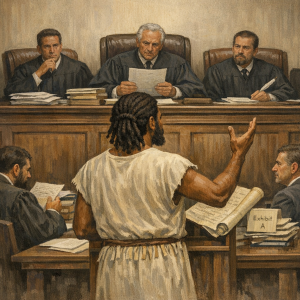
Appeal is both a legal term and a word of broader human address. In law, it ordinarily means a proceeding by which a party asks a court or other authorized reviewing body to examine a judgment, order, sentence, or administrative decision. The reviewing tribunal may affirm the decision, reverse it, modify it, vacate it, or remand the matter for further proceedings.
An appeal is not ordinarily a new trial. Appellate courts generally work from the record created below: pleadings, admitted exhibits, transcripts, rulings, and other properly preserved materials. They usually decide whether a legal or procedural error occurred and, where required, whether that error affected the result. New evidence, new claims, and arguments not presented to the original tribunal are commonly restricted or excluded.
The word also means an earnest request, invocation, or effort to obtain aid, sympathy, judgment, or reconsideration. A person may appeal to conscience, reason, mercy, public opinion, or a recognized authority. In this broader sense, the essential action is a call directed beyond the speaker toward someone or something believed capable of answering.
Related Legal Terms
- Appellant: the party seeking review.
- Appellee or respondent: the party defending the decision below.
- Appellate court: a court authorized to review decisions of another tribunal.
- Cross-appeal: an appeal filed by another party seeking separate alteration of the judgment.
- Appeal as of right: review that a qualifying party may obtain by complying with governing law and procedure.
- Discretionary appeal: review that the higher tribunal may accept or decline.
- Interlocutory appeal: review of an order entered before final disposition of the whole case.
- Certiorari: a discretionary device by which a higher court, especially the Supreme Court of the United States, is asked to review a lower court’s decision.
Etymology and Origin
The English word entered legal usage in the early fourteenth century through Anglo-French and Old French forms of apeler, meaning to call upon, summon, accuse, or address. These forms descend from Latin appellare, meaning to address, call, name, summon, or appeal to. The root therefore emphasizes a call directed toward another person or authority. The legal meaning developed naturally: a dissatisfied or threatened person calls upon a superior power for intervention. ([etymonline.com](https://www.etymonline.com/word/appeal?utm_source=openai))
Roman law used the related terms appellatio and provocatio for applications to magistrates, the people, or ultimately imperial authority. The Roman procedures were not identical to modern appellate review, and their operation changed between the Republic and Empire. Nevertheless, they contributed to the enduring vocabulary of calling upon a higher authority for protection against an adverse exercise of power. Under imperial administration, the emperor became the theoretical court of final resort, although delegates commonly performed the actual judicial work. ([en.wikisource.org](https://en.wikisource.org/wiki/1911_Encyclop%C3%A6dia_Britannica/Appeal?utm_source=openai))
Cultural and Historical Context
Hierarchical review developed in different forms because concentrated power creates a recurring problem: what remedy exists when the first decision-maker is mistaken, partial, corrupt, or exceeds lawful authority? Systems of appeal seek to answer that problem without allowing every controversy to continue forever. Appellate institutions therefore balance two competing values—correction and finality.
In medieval and early modern English law, the word did not always carry its present meaning. An appeal of felony was historically a private criminal accusation brought by an injured person or, in certain cases, by a victim’s relative. It was not simply a request that a superior court review a conviction or acquittal. Some such proceedings could lead to trial by battle. Blackstone’s discussion records the appellant and appellee formally joining issue and offering to prove or defend the accusation “body for body.” ([avalon.law.yale.edu](https://avalon.law.yale.edu/18th_century/blackstone_bk4ch27.asp?utm_source=openai))
This older procedure became notorious in the early nineteenth century when an appellee invoked trial by battle. Parliament responded with the Appeal of Murder, etc. Act 1819, which abolished appeals of treason, murder, felony, and other offenses, together with trial by battle in the relevant proceedings. This historical meaning should not be confused with a modern criminal defendant’s appeal from a conviction or sentence. ([en.wikisource.org](https://en.wikisource.org/wiki/Appeal_of_Murder%2C_etc._Act_1819?utm_source=openai))
Historical common-law review was also divided among several procedural forms. Review of errors at law often proceeded through a writ of error, while equity, admiralty, and related matters could be reviewed by appeal. In the United States, congressional legislation gradually reorganized these categories, created intermediate federal courts of appeals, and shifted the Supreme Court toward discretionary review of nationally significant questions. The Evarts Act of 1891 was especially important in establishing the federal circuit courts of appeals and reducing the Supreme Court’s mandatory docket. ([fjc.gov](https://www.fjc.gov/history/work-courts/role-of-the-courts-of-appeals?utm_source=openai))
Biblical / Torah Context
The Torah does not present a modern appellate code, but it contains structures resembling referral to higher judicial authority. In Exodus 18, Jethro advises Moses to appoint capable judges over ordinary disputes while reserving difficult matters for Moses. Deuteronomy 17:8–13 directs that cases too difficult for local determination be taken to the designated priests and judge at the place chosen by God. These passages concern the administration of covenantal justice; they should not be treated as direct enactments of present civil appellate procedure. They do, however, express principles of ordered jurisdiction, judicial competence, and authoritative resolution. ([sefaria.org](https://www.sefaria.org/Deuteronomy.17.8?utm_source=openai))
The Hebrew Scriptures also repeatedly portray an appeal in the broader sense of crying out to God for judgment, rescue, or vindication. Such a plea does not necessarily deny human responsibility or lawful process. Rather, it recognizes that human judgment may be incomplete and that divine justice stands above rulers and judges.
In the New Testament, Acts 25 records Paul invoking his status and declaring, “I appeal to Caesar.” The narrative provides a recognizable example of calling upon imperial authority instead of accepting the proposed local disposition of the accusation. It illustrates the jurisdictional meaning of appeal within the Roman setting, although historians caution against assuming that every feature of modern appellate practice can be read back into the episode. ([biblegateway.com](https://www.biblegateway.com/verse/en/Acts%2025%3A11?utm_source=openai))
The word also appears in a spiritual and persuasive sense. In 2 Corinthians 5:20, Paul describes God as making an appeal through appointed messengers, urging reconciliation. Here the term concerns entreaty rather than judicial review. The legal and spiritual senses remain related by the underlying idea of a serious call addressed to one capable of responding. ([biblegateway.com](https://www.biblegateway.com/verse/en/2%20Corinthians%205%3A20?utm_source=openai))
Legal Implications
Source and Scope of the Right
A right to appeal must arise from a constitution, statute, rule, charter, or other governing law. Under historical English common law, appellate review of criminal convictions was far more limited than it is today. The Supreme Court of the United States has stated that an appeal from a criminal conviction is not, independently of constitutional or statutory authorization, an absolute right or a necessary element of due process. Once a jurisdiction establishes an appellate system, however, constitutional protections may regulate its operation. For example, due process and equal protection principles restrict discriminatory barriers to a defendant’s first appeal, and effective assistance of counsel may be required where the state provides such an appeal. ([supreme.justia.com](https://supreme.justia.com/cases/federal/us/153/684/?utm_source=openai))
Article III of the United States Constitution gives the Supreme Court appellate jurisdiction, subject to exceptions and regulations made by Congress. Federal intermediate appellate jurisdiction is largely statutory. Under 28 U.S.C. § 1291, federal courts of appeals generally possess jurisdiction over final decisions of federal district courts. Particular statutes authorize review of certain nonfinal orders, agency actions, sentences, and specialized matters. ([law.cornell.edu](https://www.law.cornell.edu/constitution-conan/article-3/section-2/clause-2/appellate-jurisdiction?utm_source=openai))
Finality and Interlocutory Review
The final-judgment rule generally postpones review until the trial court has resolved the whole case. This prevents repeated appeals from every ruling, promotes efficient trial administration, and allows related issues to be reviewed together. Exceptions permit immediate review in defined circumstances, including certain injunctions, certified controlling questions of law, and a narrow class of collateral orders. The existence and scope of an exception depend on the governing jurisdiction; merely labeling an order “appealable” does not create appellate jurisdiction. ([law.cornell.edu](https://www.law.cornell.edu/wex/appellate_procedure?utm_source=openai))
Procedure and Preservation
An appeal normally begins with a timely notice filed in the tribunal designated by procedural rules. Deadlines can be jurisdictional or otherwise strictly enforced. Under the federal rules, for example, the ordinary civil notice period is generally thirty days, subject to important exceptions, including a longer period in certain cases involving the United States. Criminal, state, military, and administrative proceedings have their own deadlines. A person should never assume that filing a motion for reconsideration automatically extends the appellate period; the effect depends on the type and timing of the motion and the applicable rules. ([ca4.uscourts.gov](https://www.ca4.uscourts.gov/Rules/Rule04.html?utm_source=openai))
The appellant generally must identify reversible error, support the argument with legal authority, cite the record, and show that the issue was preserved below. Preservation commonly requires a timely objection, motion, offer of proof, or other action sufficient to alert the original tribunal. Limited doctrines such as plain-error review may reach certain unpreserved errors, especially in criminal cases, but they are exceptions rather than substitutes for proper preservation.
Standards of Review
The standard of review determines how closely the appellate court examines the challenged ruling:
- De novo: commonly applied to questions of law, with no controlling deference to the lower court’s legal conclusion.
- Clearly erroneous or substantial-evidence review: commonly applied to factual findings, with significant respect for the original fact-finder.
- Abuse of discretion: commonly applied to discretionary rulings, including many evidentiary, scheduling, remedial, and case-management decisions.
- Reasonableness review: may protect jury findings where sufficient evidence supports the verdict.
- Arbitrary-and-capricious review: frequently encountered in judicial review of administrative action.
The label matters because an appellate court may agree that it would have decided an issue differently yet still affirm if the decision below falls within the permissible range allowed by the relevant standard. ([law.cornell.edu](https://www.law.cornell.edu/wex/standard_of_review?utm_source=openai))
Relief and Effect
A successful appeal does not always produce final victory. Reversal may result in a new trial, resentencing, reconsideration under the correct legal standard, entry of a different judgment, or dismissal where no lawful further proceeding is possible. A remand returns jurisdiction to the lower tribunal for action consistent with the appellate mandate.
Filing an appeal does not invariably stay enforcement of the judgment. A separate stay, bond, or statutory provision may be necessary. Appellate review also differs from collateral proceedings such as habeas corpus, which generally challenge unlawful custody through an independent action subject to specialized restrictions.
Governmental, Administrative, and Military Appeals
Administrative agencies frequently provide internal appeal or reconsideration procedures. A party may be required to exhaust those remedies and obtain final agency action before seeking judicial review. Exhaustion serves institutional purposes by giving the agency an opportunity to correct error and develop the record, but exceptions and statutory variations exist. ([law.cornell.edu](https://www.law.cornell.edu/cfr/text/21/10.45?utm_source=openai))
Military justice likewise has an appellate structure established by statute rather than by ordinary civilian common law. The Uniform Code of Military Justice created military review bodies and civilian oversight, including what is now the United States Court of Appeals for the Armed Forces. Courts of Criminal Appeals may possess review powers that differ in material respects from those of civilian appellate courts. ([jagcnet.army.mil](https://www.jagcnet.army.mil/acca?utm_source=openai))
Government appeals in criminal cases are specially limited because renewed prosecution may implicate the constitutional prohibition against double jeopardy. Federal law authorizes specified government appeals but expressly preserves double-jeopardy restrictions. ([uscode.house.gov](https://uscode.house.gov/view.xhtml?edition=prelim&path=%2Fprelim%40title18%2Fpart2%2Fchapter235&utm_source=openai))
Spiritual Meaning
Spiritually interpreted, an appeal is an acknowledgment that the first visible judgment may not be the highest judgment. It can represent humility—the recognition that one’s own understanding is incomplete—or hope that injustice may be corrected by a greater wisdom. Prayer, repentance, intercession, and the cry for mercy can all be described metaphorically as appeals.
This analogy must be used carefully. Divine judgment is not merely another tier in a human court system, and spiritual confidence does not cancel lawful obligations, filing deadlines, evidence, or jurisdiction. The dictionary’s interpretive analysis is that the enduring spiritual force of the word lies in its movement from isolation toward accountable authority: the speaker refuses to treat an adverse condition as beyond examination, mercy, or truth.
Modern Usage
Modern legal usage includes civil appeals, criminal appeals, administrative appeals, immigration appeals, tax appeals, benefits appeals, disciplinary appeals, military appeals, and private organizational grievance procedures. Outside law, the word describes fundraising requests, emergency pleas, public campaigns, and attempts to persuade emotion or reason. Something may also “have appeal,” meaning that it possesses attractiveness or persuasive force.
In legal conversation, the statement “I will appeal” should not be understood as a complete remedy. A valid appeal requires an appealable decision, standing or party status, an authorized reviewing body, timely filing, compliance with procedural requirements, and a legally cognizable ground for relief. The appellate court’s role is usually correction of reviewable error, not general reconsideration of every unfavorable fact.
Controversies / Criticisms
Appeals promote consistency, legality, and accountability, but they also generate delay and expense. Wealthier litigants may be better able to finance transcripts, specialized counsel, extensive briefing, and prolonged proceedings. Filing fees, record-preparation costs, restrictive deadlines, and technical preservation rules can prevent review before the merits are reached.
Critics also debate the degree of deference owed to trial judges, juries, agencies, and military authorities. Too much deference may shelter error; too little may undermine the institutions that heard the witnesses or exercised delegated expertise. Harmless-error rules create a similar tension. They prevent retrial for inconsequential mistakes, but critics contend that courts may underestimate the cumulative or practical influence of procedural violations.
Finality presents the deepest structural controversy. A system with no meaningful review risks arbitrary power, while a system permitting endless review may never deliver a stable judgment. Appellate law therefore does not promise correction of every error. It establishes bounded procedures through which specified errors may be examined by an authorized authority.
Conclusion
The term unites several related ideas: calling upon authority, seeking protection, requesting reconsideration, and challenging a decision within an ordered hierarchy. Its history extends from Latin and Roman legal vocabulary through medieval accusation, common-law writ practice, and the modern appellate court. Its biblical and spiritual uses preserve the more ancient sense of earnest invocation.
In present law, an appeal is a jurisdictionally limited proceeding governed by constitutions, statutes, rules, precedents, and standards of review. It should not be confused with a retrial, a private declaration that a judgment is void, or an automatic suspension of enforcement. At its best, appellate review restrains error without destroying finality and subjects the exercise of authority to reasoned examination.
Sources / Further Reading
- United States Courts, “Appeals”: https://www.uscourts.gov/about-federal-courts/types-cases/appeals
- United States Courts, “About the U.S. Courts of Appeals”: https://www.uscourts.gov/about-federal-courts/court-role-and-structure/about-us-courts-appeals
- Legal Information Institute, “Appellate Procedure”: https://www.law.cornell.edu/wex/appellate_procedure
- Legal Information Institute, “Standard of Review”: https://www.law.cornell.edu/wex/standard_of_review
- 28 U.S.C. § 1291, Final Decisions of District Courts: https://www.law.cornell.edu/uscode/text/28/1291
- Federal Judicial Center, “Jurisdiction: Appellate”: https://www.fjc.gov/history/work-courts/jurisdiction-appellate
- Blackstone’s Commentaries, Book IV, Chapter 27: https://avalon.law.yale.edu/18th_century/blackstone_bk4ch27.asp
- Appeal of Murder, etc. Act 1819: https://en.wikisource.org/wiki/Appeal_of_Murder%2C_etc._Act_1819
- Sefaria, Deuteronomy 17:8: https://www.sefaria.org/Deuteronomy.17.8
- Bible Gateway, Acts 25:11: https://www.biblegateway.com/verse/en/Acts%2025%3A11
- Online Etymology Dictionary, “Appeal”: https://www.etymonline.com/word/appeal