Youth
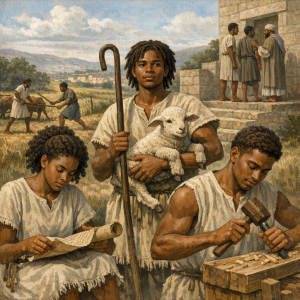
Primary Definition
Youth is a noun describing (1) the period of life characterized by being young, especially the transition between childhood and mature adulthood; (2) a young person or young people collectively; and (3) the quality of being youthful, such as freshness, vigor, inexperience, or early development. In ordinary English, the word does not identify one exact birthday at which youth begins or ends. Its meaning is shaped by context: family life, education, employment, religion, medicine, government programs, and law may each use a different age range.
As a collective noun, youth commonly refers to young people as a group: “the youth of the community.” In that use it is often treated grammatically as plural in sense. The plural youths ordinarily refers to particular young persons, frequently males in older or formal usage: “two youths were present.” The word may also describe the early stage of something not human, as in “a nation in its youth,” “the youth of an organization,” or “a technology still in its youth.” Merriam-Webster records all three principal senses: the period of being young, a young person or young people, and youthfulness. ([merriam-webster.com](https://www.merriam-webster.com/dictionary/youth?utm_source=openai))
For dictionary purposes, the central idea is not merely chronological age. Youth signifies a condition of development: a period in which a person ordinarily acquires knowledge, discipline, physical maturity, judgment, work capacity, civic responsibility, and independence. That observation is interpretive rather than a fixed legal rule. A person may be legally an adult while still being described socially as a youth; conversely, a younger person may display unusual maturity without thereby acquiring every legal capacity of an adult.
Etymology and Origin
The English word comes through Middle English youthe from Old English geoguþ, meaning the early stage of life, youthfulness, and young people. It is related to Old English geong, meaning “young,” the ancestor of modern English young. The deeper Germanic ancestry is associated with a Proto-Indo-European root connected with vitality and youthful vigor. The word is documented in English before the twelfth century. ([merriam-webster.com](https://www.merriam-webster.com/dictionary/youth?utm_source=openai))
The older meanings are important because they show that youth did not begin as a narrow modern bureaucratic classification. Old English usage could refer both to the quality or season of being young and to young people as a class. Etymological evidence also records an older association with junior warriors and with young animals. That historical association does not make youth a military legal term; rather, it illustrates that young persons were recognized as a distinct social group long before modern schools, juvenile courts, youth agencies, or age-based public programs existed. ([etymonline.com](https://www.etymonline.com/word/youth?utm_source=openai))
Over time, English developed more specialized age-related vocabulary. Child, adolescent, teenager, minor, juvenile, young adult, and adult overlap with youth but are not interchangeable. “Adolescent” is often associated with developmental science; “minor” and “juvenile” can carry technical legal meanings; “teenager” is a modern age-based social label; and “young adult” may include persons who are legally adults. Youth remains broader and more flexible than each of those terms.
Cultural and Historical Context
Across many societies, youth has been understood as a passage between dependency and fuller participation in household, work, worship, defense, family formation, and public life. The boundaries of that passage have varied greatly. In agricultural and craft-based societies, children often entered productive work early. In industrial and post-industrial societies, longer schooling, professional training, and delayed economic independence have frequently extended the social period called youth. These changes affect common speech, but they do not create a universal definition.
The modern tendency to divide the life course into tightly defined age categories should therefore be treated with caution. A census bureau, school district, court, religious body, employer, and international organization may use distinct classifications for legitimate purposes. The United Nations expressly states that there is no universally agreed international definition of youth. For statistical purposes, it uses ages fifteen through twenty-four, while recognizing that member states and institutions may define the category differently. That definition emerged from preparations for International Youth Year in 1985 and is a statistical convention, not a universal declaration of legal status. ([un.org](https://www.un.org/en/global-issues/youth?utm_source=openai))
Culturally, youth is often associated with promise, energy, learning, experimentation, and renewal. It can also be associated with inexperience, impulsiveness, vulnerability to exploitation, or dependence upon parents and institutions. Neither cluster of associations should be treated as a rule about every young person. Such generalizations can help explain cultural language, but they can also become stereotypes when used to deny individual ability, dignity, accountability, or participation in public life.
Youth as a Collective Social Category
When institutions speak of “youth,” they often mean a population needing particular opportunities or protections: education, apprenticeships, housing, mentoring, health services, recreation, employment, civic participation, or protection from violence and exploitation. The category is useful because persons in transitional stages of life may face shared conditions. Yet it remains a broad grouping, not a single identity. Age, family structure, disability, culture, economic circumstances, locality, and personal experience can materially change what youth means for a particular person.
Biblical / Torah Context
The English word youth should not be projected mechanically onto the biblical languages. Biblical Hebrew and Koine Greek use several terms whose meanings depend on context, and English translations may render the same original word as “boy,” “child,” “young man,” “servant,” “youth,” or another expression. Consequently, a biblical use of “youth” in English translation does not establish a modern numerical age category or a uniform legal classification.
In the Torah, the Hebrew word na’ar is especially relevant because it can describe a young male, but its range is broader than a modern English age label. Genesis 37:2 calls Joseph a na’ar while also stating that he was seventeen years old. The passage presents him as young in relation to his family role and experience, while already engaged in the responsible work of tending flocks with his brothers. ([sefaria.org](https://www.sefaria.org/Genesis.37.2-3?set-language-cookie=&with=Midrash&utm_source=openai))
This example supports an important interpretive point: biblical descriptions of youth often concern relational standing, development, service, and responsibility rather than a single fixed threshold. Scripture contains young persons who learn, serve, lead, err, receive correction, and act faithfully. It does not support the simplistic proposition that every young person is incapable of responsibility, nor the opposite proposition that age and development are legally or morally irrelevant.
Wisdom literature treats youth as a temporary season requiring both gratitude and moral remembrance. Ecclesiastes 11:9–12:1 speaks of enjoyment in the days of youth while placing human conduct under divine judgment and urging remembrance of the Creator before later decline. The passage joins vitality with accountability; it does not reduce youth to license or dismiss it as merely immature. ([sefaria.org](https://www.sefaria.org/Ecclesiastes.11.9?utm_source=openai))
Torah, Maturity, and Later Jewish Practice
The Torah does not provide one comprehensive civil “age of majority” equivalent to a modern statute governing every contract, crime, vote, marriage, property right, and public office. Biblical legal responsibilities are addressed through particular commandments and factual circumstances. Later rabbinic law developed more detailed categories of minority and maturity. Customs associated with bar mitzvah and bat mitzvah are significant within Judaism, but they should not be inaccurately described as a universal Torah definition of youth or as the source of modern Anglo-American common-law rules.
Accordingly, the dictionary’s interpretive analysis is that biblical and Torah material presents youth as a morally meaningful stage of formation and responsibility. It does not authorize a claim that the English word youth itself has a uniquely biblical legal origin.
Legal Implications
Common Law
Youth was not, in itself, a precise technical term of historical English common law comparable to infant, minor, ward, or adult. Historical common law generally treated a person under twenty-one as an “infant” for many civil-law purposes, with full age reached at twenty-one. Sir William Blackstone described twenty-one as full age for male and female, while also noting that particular capacities and disabilities could arise at different ages. ([avalon.law.yale.edu](https://avalon.law.yale.edu/18th_century/blackstone_bk1ch17.asp?utm_source=openai))
That historical rule must be stated carefully. It does not mean that every person under twenty-one lacked all responsibility, nor that the old common-law age remains the controlling rule in every present-day jurisdiction. Blackstone’s discussion itself recognized differentiated historical rules. For certain criminal matters, he wrote that an infant above fourteen could be liable as a person of full age, while other rules gave infants protections in particular circumstances. ([avalon.law.yale.edu](https://avalon.law.yale.edu/18th_century/blackstone_bk4ch2.asp?utm_source=openai))
Thus, historical common law distinguished between general civil capacity and particular legal acts. It was not a single, simple doctrine that “youth” always excused conduct or always prevented a person from acting. The common-law vocabulary also reflected the social language of its time; its use of “infant” usually meant a person below legal full age, not necessarily a baby.
Current United States Law
In current United States law, the legal consequences of age arise mainly from constitutions, statutes, regulations, court decisions, and state law—not from a free-standing common-law definition of “youth.” The age of majority is generally eighteen in most states, but it varies. Cornell’s Legal Information Institute notes that Nebraska and Alabama set it at nineteen and Mississippi at twenty-one. The applicable jurisdiction and subject matter must always be checked. ([law.cornell.edu](https://www.law.cornell.edu/wex/adult?utm_source=openai))
Moreover, adulthood, majority, consent, contractual capacity, criminal jurisdiction, school attendance, voting, alcohol regulation, firearm regulation, marriage, emancipation, parental authority, and eligibility for public benefits are governed by different laws. Reaching eighteen does not automatically settle every legal question, and being described as a youth does not itself determine legal incapacity.
Federal law demonstrates the term’s variable statutory use. In one provision concerning certain federal programs, “youth” means a person aged eleven through twenty-four. That definition is expressly limited to the relevant subchapter and should not be carried into unrelated law. ([law.cornell.edu](https://www.law.cornell.edu/definitions/uscode.php?def_id=34-USC-115168979-1259336254&height=800&iframe=true&term_occur=999&term_src=title%3A34%3Asubtitle%3AI%3Achapter%3A121%3Asubchapter%3AIII%3Asection%3A12291&width=840&utm_source=openai))
Federal juvenile-delinquency law uses a different term and rule: for that chapter, a “juvenile” generally means a person who has not reached eighteen, while proceedings and disposition for alleged juvenile delinquency may involve a person who has not reached twenty-one. ([law.cornell.edu](https://www.law.cornell.edu/uscode/text/18/5031?utm_source=openai))
The legal lesson is plain: a dictionary definition of youth cannot substitute for legal research. A claim that someone is “a youth” does not by itself establish minority, immunity, diminished capacity, parental control, eligibility for a program, or jurisdiction in juvenile court. The controlling question is always what the governing constitution, statute, regulation, case law, or contract says in the relevant place and context.
Roman Law, Equity, and Statutory Law
Roman-law categories of age and legal capacity influenced later European legal thought, but they are not the same thing as English common law and should not be conflated with it. Likewise, equity historically developed alongside common-law courts and could respond to the interests of infants and wards, but equity did not turn the ordinary word youth into a universal legal status. In the United States today, statutory enactments and judicial decisions ordinarily supply the operative age rules.
Spiritual Meaning
In spiritual and moral reflection, youth may symbolize beginning, renewal, teachability, strength, hope, and the forming of character. It can describe the season in which habits take root and in which a person learns how freedom relates to duty. This is an interpretive and devotional use, not an independent legal definition.
Many faith traditions encourage reverence for the young while also calling young persons toward wisdom, self-command, honesty, courage, and service. The strongest spiritual reading avoids two opposite errors: romanticizing youth as automatically pure or powerful, and belittling youth as automatically foolish or insignificant. Human dignity does not depend on age, though age and experience can affect the kind of guidance, protection, and responsibility appropriate to a person.
Modern Usage
Modern usage is broad. Governments and international organizations may use youth as a planning category; schools use it in “youth programs”; sports organizations use it in “youth leagues”; churches may speak of “youth ministry”; employers may refer to “youth employment”; and advocates may use “youth voice” or “youth leadership” to emphasize meaningful participation by younger people.
The term often includes persons who are legally adults. A twenty-two-year-old university student, apprentice, soldier, worker, parent, or community organizer may still be described as part of “the youth” in a social or policy discussion. At the same time, a legal document should avoid assuming that ordinary usage supplies an age limit. A careful drafter should define the word expressly, state whether ages are inclusive, identify the controlling date, and distinguish youth from child, minor, juvenile, and young adult where necessary.
Controversies / Criticisms
The principal controversy is definitional. Because youth is flexible, institutions can use it inconsistently. A broad definition may improve access to services for young adults who remain economically dependent or vulnerable. A narrow definition may better target limited resources toward minors or adolescents. Neither approach is automatically correct; the purpose of the program and the governing law matter.
Another concern is paternalism. Calling adults “youth” may sometimes recognize a real transitional stage, but it can also diminish their authority or obscure their legal rights. Conversely, treating all young people as fully mature can ignore developmental differences and the need for protection against coercion, exploitation, violence, or neglect.
Claims that a single ancient, biblical, Roman, common-law, or governmental definition controls the word in all settings are not well supported. The documented history instead shows a long-standing ordinary-language term whose legal consequences have always depended upon more particular rules. Assertions that “youth” automatically means a person under twenty-one, under eighteen, fifteen through twenty-four, or any other universal range should therefore be identified as context-specific claims rather than settled universal fact.
Conclusion
Youth is a durable English term for young persons, the period of being young, and the qualities associated with early life and development. Its origins reach back to Old English, and its ordinary meaning remains broader than a statutory age label. Historically, common law used more technical categories—especially infancy and full age—while modern law relies upon jurisdiction-specific statutes and cases. Biblical and spiritual contexts portray youth as a season of formation, vitality, and accountability, not as a fixed legal condition.
For careful use, define the term when legal rights, duties, eligibility, consent, or jurisdiction depend upon age. In ordinary speech, retain its broad human meaning: a stage of growth in which dignity, guidance, opportunity, and responsibility properly meet.
Sources / Further Reading
- Merriam-Webster, “Youth.”
https://www.merriam-webster.com/dictionary/youth - Online Etymology Dictionary, “Youth.”
https://www.etymonline.com/word/youth - United Nations, “Youth.”
https://www.un.org/en/global-issues/youth - William Blackstone, Commentaries on the Laws of England, Book I, Chapter 17, Avalon Project, Yale Law School.
https://avalon.law.yale.edu/18th_century/blackstone_bk1ch17.asp - William Blackstone, Commentaries on the Laws of England, Book IV, Chapter 2, Avalon Project, Yale Law School.
https://avalon.law.yale.edu/18th_century/blackstone_bk4ch2.asp - Cornell Law School Legal Information Institute, “Adult.”
https://www.law.cornell.edu/wex/adult - 18 U.S. Code § 5031, “Definitions.”
https://www.law.cornell.edu/uscode/text/18/5031 - 34 U.S. Code § 12291, statutory definition of “youth.”
https://www.law.cornell.edu/definitions/uscode.php?def_id=34-USC-115168979-1259336254&height=800&iframe=true&term_occur=999&term_src=title%3A34%3Asubtitle%3AI%3Achapter%3A121%3Asubchapter%3AIII%3Asection%3A12291&width=840 - Sefaria, Genesis 37:2.
https://www.sefaria.org/Genesis.37.2-3 - Sefaria, Ecclesiastes 11:9–12:1.
https://www.sefaria.org/Ecclesiastes.11.9