Hue Woman (Huwoman)
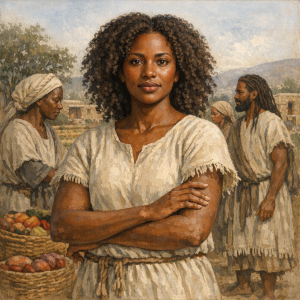
Primary Definition
Huwoman, also styled hue woman, is a modern, nonstandard expression used by some speakers and writers as a self-designation for a living female human being. In ordinary English, it is not an established synonym found in major general dictionaries, a historical term of art in English common law, or a defined category in United States statutory law. Its meaning depends principally on the intention of the person using it.
The expression appears to operate as a deliberate respelling or re-segmentation rather than as an inherited English word. In some settings, hue is understood literally as color, complexion, appearance, or visible distinction. In other settings, the spelling is used symbolically to emphasize humanity, womanhood, ancestry, embodied life, natural rights, or personal identity apart from perceived governmental, commercial, or institutional labels. These latter meanings are interpretive and rhetorical. They should not be mistaken for established linguistic etymology or binding legal doctrine.
A careful dictionary treatment must distinguish three propositions:
- Documented linguistic fact: woman is an old English word historically derived from Old English wīfmann, meaning a female person or female human being.
- Modern expressive usage: a person may choose Huwoman as a personal, cultural, spiritual, or political form of self-description.
- Unsupported legal claim: choosing this spelling does not, by itself, alter a person’s legal rights, duties, citizenship, court jurisdiction, contractual obligations, tax status, or identity under applicable law.
Etymology and Origin
The standard English word woman comes through Middle English womman from Old English forms including wīfmann and wimman. The older element wīf meant “woman” or “female” and is the source of modern English wife. The element mann ordinarily meant a human being or person and was not limited to a male person in its earlier use. Thus, the historical sense of wīfmann was substantially “female human being” or “female person,” not “man with a female prefix.” The later narrowing of man toward the male sense has led some modern speakers to misread the older compound.
The pronunciation and spelling changed over centuries. Middle English sound changes produced forms such as womman, while the plural developed separately as wimmen, now women. The word’s history is Germanic and English. It is not derived from Roman law, Latin ecclesiastical terminology, Greek mythology, military vocabulary, or a governmental code.
The first element in the modern expression, hue, is a separate English word. It comes from Old English hīw or hēow, with senses including color, appearance, form, and complexion. In modern use, a hue is a gradation or quality of color. Therefore, a literal reading of hue woman could suggest a woman identified in relation to color, complexion, appearance, or the diversity of human coloring. That reading is linguistically possible as a phrase, but it does not establish that hue is the historical source of human, huwoman, or woman.
Some writers use the spelling as a form of folk etymology: a meaningful reinterpretation of a word based on contemporary sound, spelling, symbolism, or personal belief rather than documented historical descent. Folk etymology can be culturally powerful and artistically useful, but it is not the same thing as historical etymology. A word may acquire a new community meaning without changing its actual recorded origin.
Cultural and Historical Context
Alternative spellings of words concerning women have long been used to challenge inherited assumptions in language. Writers, activists, religious communities, artists, and cultural movements have sometimes preferred forms that foreground female identity, reject male-centered conventions, or express connection to ancestry and nature. The use of Huwoman can be understood within that broad tradition of linguistic self-definition.
For some users, the expression may carry an affirmation that a woman is a complete human being, rather than a dependent category defined by a male norm. This concern has historical force. In earlier English usage, man could refer generally to humanity, but later common usage increasingly treated man as male-specific. Modern preferences for terms such as humanity, human being, people, and gender-inclusive occupational titles reflect efforts to reduce ambiguity and to recognize women as independent subjects.
The history of women in law also gives this language a serious social background. English common law once imposed the doctrine of coverture upon many married women. Under the traditional doctrine, a married woman’s independent legal capacity was severely restricted; she commonly could not freely own or control property, make contracts, or sue independently in the manner available to an unmarried woman or a man. American legislatures gradually displaced many of these restrictions through Married Women’s Property Acts and related reforms. The historical doctrine is important because it demonstrates that women’s legal personality and property rights were not always recognized equally in practice, even though women were unquestionably human beings.
That history does not mean that a newly coined spelling itself changes legal status. Rather, it explains why language of independent womanhood, natural dignity, and personal identity may have cultural resonance. The interpretive value of the expression lies in its use as a declaration of identity, not in an automatic legal transformation.
Biblical / Torah Context
The English expression has no documented origin in the Bible, the Torah, Hebrew, or biblical Greek. It should not be presented as an ancient scriptural word. Nevertheless, biblical and Torah passages concerning womanhood may be relevant where the expression is used spiritually.
Genesis 2:23 contains a well-known Hebrew wordplay between ish (man) and ishah (woman): “She shall be called Woman [ishah], because she was taken from Man [ish].” In context, the terms identify male and female members of the human species. The wordplay belongs to Hebrew, not English, and it does not supply an etymology for woman, hue, or Huwoman.
Genesis also presents both male and female as bearing the image of God. For readers approaching the subject from a biblical perspective, that teaching supports the inherent worth of women and men alike. It is reasonable as theological interpretation to see a self-chosen designation as an affirmation of God-given dignity, embodiment, and responsibility. It is not reasonable to convert that spiritual affirmation into a claim that a chosen spelling overrides civil law or removes a person from the ordinary jurisdiction of courts.
Jewish and Christian traditions contain diverse teachings about women’s roles, family, inheritance, authority, modesty, labor, prophecy, and leadership. Those debates should not be collapsed into a single claim that scripture either requires or prohibits this modern expression. The term is contemporary; scriptural application is interpretive.
Legal Implications
Common Law and Historical Usage
There is no known English common-law category called “hue woman” or “Huwoman.” Historical common law used classifications such as feme sole (an unmarried woman with legal capacity) and feme covert (a married woman affected by coverture). Those categories developed in English legal history and concerned marital status, property, procedure, and contractual capacity. They were not based upon the word hue.
The common-law phrase hue and cry is sometimes confused with the present expression because it contains the word hue. The connection is only superficial. “Hue and cry” was an Anglo-French and medieval common-law practice involving an alarm or public outcry calling for pursuit of an alleged offender. Its hue meant an outcry, not color, womanhood, human status, or spiritual identity. It supplies no legal foundation for the expression considered here.
Roman Law, Equity, Statutes, and Present Law
Roman law did not create this English expression. Nor is it a recognized doctrine of equity. Equity historically developed remedies and principles distinct from the common-law courts, but no equitable maxim gives legal effect to a private respelling of “woman.”
Current United States law uses words such as person, individual, natural person, citizen, woman, female, and other terms according to the particular Constitution, statute, regulation, or case involved. Definitions vary by legal context. For example, a federal health-information regulation defines “person” to include a natural person—that is, a human being born alive—as well as entities such as trusts, estates, partnerships, and corporations. Other laws use “individual” to refer to a human being. Legal meaning therefore comes from the governing text and judicial interpretation, not from private etymology.
The Fourteenth Amendment states that persons born or naturalized in the United States and subject to its jurisdiction are citizens of the United States and the state in which they reside. It also protects persons against deprivation of life, liberty, or property without due process and requires equal protection of the laws. The Constitution does not condition those protections or obligations on whether someone calls herself a woman, a human being, a natural person, a living woman, or uses an alternative spelling.
Names, Identity, and Jurisdiction
A person may generally adopt a preferred name or style in ordinary social, religious, artistic, and many commercial settings, subject to laws concerning fraud, official records, court procedure, identification, and name changes. However, a label such as Huwoman does not itself create a separate legal capacity or prevent a court from identifying the actual individual involved in a case.
Courts have repeatedly rejected arguments asserting that a person can avoid governmental authority by declaring herself a “flesh-and-blood” human, denying that she is a legal “person,” separating herself from a name printed in capital letters, or claiming that citizenship and jurisdiction are optional by unilateral declaration. Courts commonly describe such arguments as frivolous. The precise legal issue in a real case may still matter—such as whether a court has subject-matter jurisdiction, personal jurisdiction, proper service, lawful authority, or constitutional compliance—but those questions are resolved through applicable law and evidence, not by wordplay.
This distinction is essential. A woman may assert constitutional rights, challenge unlawful state action, demand due process, contest jurisdiction where recognized legal grounds exist, and seek legal remedies. None of those legitimate actions requires abandoning ordinary legal identity or adopting a nonstandard spelling. Conversely, using a personal designation does not waive fundamental rights, but it also does not exempt anyone from generally applicable law.
Spiritual Meaning
As spiritual language, the expression can function as an affirmation of personhood. A user may intend to honor the visible diversity of humanity, the embodied reality of womanhood, maternal lineage, the sacredness of life, or a relationship between identity and creation. In this sense, “hue” may be metaphorical: color becomes a sign of individuality, heritage, beauty, and the variety found among human beings.
This is a matter of conscience and interpretation. A dictionary should respect the possibility of sincere spiritual use while avoiding claims that cannot be documented. No universal spiritual meaning attaches to the term, and no major biblical, Torah, Islamic, Roman, or ancient legal source establishes it as a sacred technical designation.
Modern Usage
Modern use is uncommon and context-sensitive. It may appear in personal biographies, spoken affirmations, community writing, social-media posts, poetry, spiritual teaching, or political commentary. The spelling may be selected to distinguish a speaker’s self-understanding from ordinary legal, bureaucratic, or gendered language.
Because the expression is unfamiliar to many readers, writers should define it on first use. If the intended meaning is simply “an adult female human being,” standard English woman is clearer in ordinary communication. If the intended meaning includes cultural, racial, spiritual, or philosophical commitments, those commitments should be stated directly rather than assumed from the spelling alone.
Controversies / Criticisms
The principal criticism is linguistic: historical evidence does not support the claim that Huwoman is the original, legally superior, or etymologically correct form of woman. The documented English history points instead to Old English wīfmann. Claims that the standard word secretly denies female humanity are therefore historically inaccurate, even if the speaker’s concern about modern sexist language is understandable.
A second criticism concerns race and color. Because hue ordinarily concerns color or appearance, the expression may be read as emphasizing complexion or racial identity. That may be intentional and meaningful for some users, but it may also be unclear, exclusionary, or open to competing interpretations. No single racial, ethnic, national, or religious community owns the term by established linguistic rule.
A third and more serious criticism concerns pseudo-legal use. When the expression is used to imply exemption from law, immunity from court process, separation from a legal name, or the ability to nullify citizenship by declaration, the claim lacks support in common law, equity, statutes, or controlling constitutional doctrine. Such arguments can distract from valid legal defenses and may expose a litigant to dismissal, sanctions, or other adverse consequences.
Conclusion
Huwoman is best understood as a modern expressive designation, not as an ancient English term, a biblical technical word, or a legal status. Its possible value lies in personal, cultural, and spiritual self-description: it may communicate dignity, embodied humanity, color, ancestry, and independent womanhood. Its limits are equally important. The historical etymology of woman is Old English wīfmann, meaning female person; the ordinary word hue concerns color or appearance; and neither common law nor current United States law recognizes the combined expression as creating a distinct legal identity.
Accordingly, the term may be used conscientiously as a matter of speech and self-understanding, while legal claims should rest on the Constitution, statutes, procedural rules, facts, and valid precedent rather than on alternative spellings or symbolic etymologies.
Sources / Further Reading
- Oxford Learner’s Dictionaries, “Woman”: https://www.oxfordlearnersdictionaries.com/us/definition/english/woman
- Online Etymology Dictionary, “Woman”: https://www.etymonline.com/word/woman
- Merriam-Webster, “Hue”: https://www.merriam-webster.com/dictionary/hue
- Online Etymology Dictionary, “Hue”: https://www.etymonline.com/word/hue
- Sefaria Library, Genesis 2:23: https://www.sefaria.org/Genesis.2.23?lang=en
- Library of Congress, Constitution Annotated, Fourteenth Amendment: https://constitution.congress.gov/constitution/amendment-14/
- Library of Congress, Constitution Annotated, Personal Jurisdiction and Due Process: https://constitution.congress.gov/browse/essay/amdt14-S1-7-1-1/ALDE_00000907/
- Legal Information Institute, 45 C.F.R. § 160.103: https://www.law.cornell.edu/cfr/text/45/160.103
- Legal Information Institute, Women’s Suffrage from the Founding Era to the Civil War: https://www.law.cornell.edu/constitution-conan/amendment-19/womens-suffrage-from-the-founding-era-to-the-civil-war
- United States District Court opinion discussing and rejecting sovereign-citizen theories: https://www.govinfo.gov/content/pkg/USCOURTS-cand-4_24-cv-01925/pdf/USCOURTS-cand-4_24-cv-01925-1.pdf