Plain Language
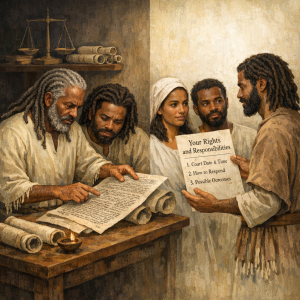
Primary Definition
In ordinary usage, this term means communication designed so that its intended readers can find, understand, and use the information they need without unnecessary effort. It is not merely “simple words.” It is a disciplined method of expression that joins clear wording with sound organization, appropriate detail, accurate terminology, readable design, and attention to the actual audience.
Plain language does not require the writer to remove every technical word, shorten every sentence, or write as though all readers have the same education and experience. A technical or legal term may be necessary where it has a settled meaning that cannot safely be replaced. The central question is practical: can the intended reader understand what the document says, what it requires, what choices are available, and what consequences may follow?
A useful working definition is:
Language that enables its intended audience to understand and act on a message accurately, efficiently, and with reasonable confidence on the first reading or hearing.
This definition emphasizes that clarity is measured in relation to an audience. A medical protocol written for surgeons may properly use specialized medical vocabulary. A hospital consent form given to patients should explain the same subject in terms a patient can understand. Likewise, a court opinion may address lawyers and judges, while a notice telling a citizen how to answer a lawsuit should be organized and written for the citizen who must respond.
Plain language is therefore not synonymous with casual language, informal speech, childish writing, or reduced precision. Properly used, it seeks both comprehensibility and accuracy. A document is not plain if it is short but misleading, friendly but vague, or simple in appearance while concealing important qualifications in footnotes or cross-references.
Etymology and Origin
The adjective plain entered English through Middle English and Anglo-French forms connected to the Latin planus, meaning flat, level, or even. From the physical image of level ground came related figurative meanings: unobstructed, open to view, evident, direct, unadorned, ordinary, and uncomplicated. To make something “plain” is therefore, in the broad historical sense, to make it level enough to be seen or traversed without needless obstruction.
The word language came into English through Old French langage, from Latin lingua, meaning tongue and, by extension, speech. The combined expression describes not a separate language such as English, Spanish, or Hebrew, but a manner of using language: speech or writing made direct, intelligible, and usable.
“Plain English” has long been used as an expression for straightforward speech. Modern use of “plain language” is broader. It applies to communication in any language and in any medium, including statutes, contracts, court forms, websites, warnings, instructions, public notices, digital interfaces, and oral explanations. It also recognizes that accessibility may involve more than word choice: translation, interpretation, visual layout, screen-reader compatibility, and communication with persons who have limited English proficiency may all be material.
The term has no inherent pagan, Roman, military, ecclesiastical, or governmental origin. Its Latin etymological connection is linguistic, not a claim that the modern movement began in Roman law or Roman government. Its present professional meaning developed gradually through efforts in public administration, consumer protection, legal drafting, education, and technical communication.
Cultural and Historical Context
The demand for understandable public communication is older than the modern plain-language movement. People have long criticized pompous, obscure, and overly technical official writing. Yet the modern movement gained particular force in the twentieth century as government administration, consumer markets, insurance, finance, and mass paperwork expanded. When a person’s benefits, taxes, housing, credit, health care, or legal rights depend on completing a form correctly, unclear writing can produce material harm rather than mere annoyance.
In Britain, Sir Ernest Gowers’s Plain Words, first published in 1948 for civil-service use, became an influential postwar guide to clear official writing. It argued that official language should communicate meaning readily and precisely rather than rely on abstraction, inflated phrasing, or bureaucratic habit. The book did not invent clear prose, but it helped make clarity a recognized duty of public administration.
The later public campaign for plain English became highly visible in the United Kingdom. Plain English Campaign, founded by Chrissie Maher in 1979, publicly challenged confusing forms, legalese, jargon, and misleading consumer information. Its advocacy connected writing style with democratic participation: a person cannot meaningfully comply with a rule, claim a benefit, or consent to an agreement that he or she cannot understand.
In the United States, federal plain-language efforts developed through agency initiatives in the 1970s and became more coordinated in the 1990s. A 1998 presidential memorandum directed executive departments and agencies to use plain language in public documents explaining benefits, services, and compliance duties. Congress later enacted the Plain Writing Act of 2010. The Act’s stated purpose is to improve federal-agency effectiveness and accountability by promoting government communication that the public can understand and use.
The historical development shows an important change in emphasis. Earlier calls for “plain English” sometimes focused chiefly on style: shorter sentences, familiar words, and removal of legal jargon. Contemporary practice is more audience-centered. It treats document structure, headings, sequence, visual presentation, testing with users, accessibility, and the reader’s task as integral parts of clear communication.
Core Practices
- State the principal point, duty, warning, or decision early.
- Organize information in the order the reader needs it.
- Use headings, lists, examples, and white space where they aid navigation.
- Prefer concrete, familiar words unless a technical term is necessary.
- Use active voice where it identifies who must act.
- Use verbs rather than abstract noun-heavy phrases where possible.
- Define unavoidable specialized terms close to their first use.
- Avoid hidden exceptions, double negatives, vague qualifiers, and unexplained cross-references.
- Test whether actual intended readers can locate, understand, and use the information.
Biblical / Torah Context
The modern professional concept should not be read back uncritically into ancient Scripture. The Bible and Torah do not provide a modern legislative manual for consumer disclosures or administrative forms. Nevertheless, several passages express a related concern: that authoritative words be written or communicated distinctly enough to be received and followed.
Deuteronomy 27:8 instructs Israel to write the words of the law on stones “very plainly” or “very clearly,” depending on translation. The Hebrew wording is commonly understood to convey making the writing distinct, explained, or clearly set out. In its immediate context, the command concerns public inscription of the law after entering the land. The passage does not establish a modern legal doctrine of plain-language drafting, but it does support the practical principle that public obligations should be made legible and intelligible.
Habakkuk 2:2 likewise directs that the vision be written and made plain on tablets so that it may be read readily. The setting is prophetic, not contractual or administrative. Its primary concern is faithful transmission of a divine message at its appointed time. Still, the verse has often been used illustratively by preachers, teachers, and communicators to emphasize that an important message should be presented clearly enough for others to carry and act upon it.
These passages should be handled with care. They do not authorize changing the substance of law, prophecy, covenant, or doctrine simply to make it more popular. Their relevance is narrower: clarity can serve faithful communication. A message may be demanding, morally serious, or legally consequential while still being written distinctly.
Legal Implications
Plain Language and Common Law
“Plain language” is not, by itself, a freestanding rule of historical English common law. The common law developed through judicial decisions, customary principles, and later interaction with statutes and equity. It did not generally impose a universal requirement that every private agreement be written in modern plain language.
Common-law contract doctrine has traditionally focused more directly on matters such as offer, acceptance, consideration, capacity, fraud, duress, mistake, unconscionability, interpretation, notice, and enforceability. A contract may be legally binding even if it is difficult to read. Conversely, a plainly written document may be unenforceable if it lacks essential legal elements or violates a statute or public policy.
That said, clarity has always mattered in common-law interpretation. Courts ordinarily begin with the words of a written agreement or statute. If language is unambiguous, courts commonly seek to apply its ordinary meaning in context; if language is ambiguous, interpretation may require consideration of the document as a whole, established legal usage, surrounding circumstances, and other permissible interpretive materials. The phrase “plain language” in judicial opinions often refers to the apparent ordinary meaning of a legal text. This judicial usage should not be confused with the modern drafting practice of writing documents in an accessible style.
Statutes, Regulations, and Consumer Protection
Modern plain-language duties arise chiefly from statutes, regulations, agency rules, and institutional policies rather than from a single universal common-law rule. In the United States, particular requirements vary by jurisdiction and subject matter. Consumer leases, insurance policies, loan disclosures, government forms, health-plan information, and public notices may be subject to specialized clarity or disclosure requirements.
For example, the federal Plain Writing Act of 2010 applies to certain public-facing documents of executive agencies. It covers documents concerning federal benefits or services, tax filing, and public compliance with federal requirements, including letters, publications, forms, notices, and instructions. It does not itself make every federal regulation a covered document. Federal banking agencies also have a statutory requirement to use plain language in proposed and final rulemakings published after January 1, 2000.
Federal statutes sometimes provide more specific definitions. In health-insurance exchange disclosures, “plain language” is defined as language the intended audience, including persons with limited English proficiency, can readily understand and use because it is concise, well organized, and follows other best practices of plain-language writing. Such definitions demonstrate that legal clarity is not merely a matter of replacing long words; organization and usability are part of the legal standard where the statute says they are.
Some states have enacted “plain-language” laws affecting consumer contracts. These laws differ in scope, required features, remedies, exemptions, and effect. A writer should not assume that a general preference for clarity creates a private lawsuit, invalidates an agreement, or overrides a precise statutory requirement. The applicable statute, regulation, and case law in the relevant jurisdiction must be examined.
Plain Writing Is Not Permission to Alter Legal Meaning
In legal drafting, the goal is not to substitute conversational language for settled legal meaning without analysis. Some words carry a defined statutory, contractual, or judicial meaning. Replacing them casually may create ambiguity or change rights. The better approach is often to retain the necessary term, define it accurately, and explain its practical effect. For example, a document may use the defined term “indemnify” but should explain who must pay, for what losses, under what conditions, and with what limits.
Nor should plain writing be confused with Roman law, equity, admiralty, military law, or any theory that ordinary language automatically defeats formal legal obligations. Those bodies of law have distinct histories and rules. Clear writing can improve notice and reduce disputes, but it does not eliminate jurisdictional rules, statutes of limitation, evidentiary requirements, procedural rules, or the need for competent legal advice in a particular case.
Spiritual Meaning
In a spiritual or ethical sense, plain language may signify honesty, candor, and responsible communication. It resists the use of words to create a false appearance of knowledge, conceal a burden, evade accountability, or manipulate another person into agreement without understanding. This is an interpretive moral application, not a separate legal definition.
Plain speech does not require harshness. A person can speak directly while remaining truthful, charitable, and respectful. Likewise, religious teaching need not be shallow in order to be clear. Difficult truths may require careful explanation, context, repetition, and patience. The spiritual value lies not in oversimplifying truth, but in removing needless barriers between a truthful message and the hearer.
For persons guided by biblical principles, clear communication may be understood as a form of stewardship. Words can guide, warn, comfort, bind, mislead, or burden. Where a writer has greater knowledge or institutional power than the reader, the duty to communicate fairly becomes especially weighty.
Modern Usage
Today, the term is used across law, government, business, education, medicine, technology, journalism, and nonprofit work. It is especially important where readers must make decisions under time pressure or where misunderstanding can cost money, liberty, health, benefits, or access to justice.
In government, it appears in tax instructions, benefit notices, agency websites, emergency communications, public-health guidance, and compliance materials. In law, it appears in court forms, jury instructions, client letters, contracts, privacy notices, policies, and settlement explanations. In business, it applies to terms of service, product instructions, billing statements, insurance materials, and employee handbooks.
Digital communication has expanded the concept. A clear webpage must help users complete a task on a phone, find essential information quickly, understand links and buttons, and use the service with assistive technology. A document can have simple sentences yet fail plain-language principles if its headings are vague, its required action is buried, its links are unlabeled, or its design excludes readers with disabilities.
Modern usage also recognizes multilingual audiences. Providing clear English alone may not be enough where a substantial intended audience has limited English proficiency. Translation and interpretation should preserve meaning, not merely exchange words. A poor translation can turn an otherwise clear original into an inaccessible or misleading communication.
Controversies / Criticisms
Most criticism of plain language concerns misuse rather than the value of clarity itself. One criticism is that “plain” can become a vague label used to approve writing that is merely shorter or more informal. A short document may omit qualifications, exceptions, risks, or definitions that readers need. Brevity is useful only when it does not sacrifice material truth.
A second criticism is that advocates sometimes underestimate the value of technical vocabulary. Legal, scientific, financial, and medical terms can compress carefully developed concepts. Replacing them with loose everyday substitutes may reduce precision. The sound response is not a return to needless jargon; it is to pair necessary technical terms with understandable explanations and concrete examples.
A third concern involves audience and power. Language that is plain for one group may not be plain for another. Reading level, cultural knowledge, disability, language proficiency, and prior experience all affect comprehension. The phrase therefore should not be treated as a one-size-fits-all formula or determined solely by a readability score. Readability formulas can identify some problems, but they cannot reliably measure legal accuracy, fairness, logical sequence, or whether a reader can complete a required task.
Finally, plain language should not become a pretext for obscuring responsibility through friendly tone. A notice that says “we may adjust your account” may sound less severe than “we may charge a fee,” but the first statement may be less informative. Plain language requires direct disclosure of who will act, what will happen, when it will happen, and what the recipient can do.
Conclusion
This term describes a standard of responsible communication: expressing necessary information so that the people affected by it can understand and use it. Its deepest practical value is not stylistic elegance but informed action. Clear writing supports consent, compliance, access to services, fair dealing, and accountability.
In legal settings, it should be applied with disciplined caution. It is not a magic phrase that voids contracts, replaces statutory text, or converts every difficult issue into a simple one. Historical common law, statutory law, equity, administrative regulations, and judicial interpretation each retain their separate roles. Yet wherever law or government imposes duties on the public, plain and usable communication is an important safeguard against confusion, avoidable disputes, and unequal access to rights.
Sources / Further Reading
- U.S. Government Publishing Office, Plain Writing Act of 2010: https://www.govinfo.gov/app/details/COMPS-13907
- U.S. Department of Justice, Plain Writing: https://www.justice.gov/open/plain-writing-act
- Digital.gov, Plain Language: History and Timeline: https://digital.gov/resources/plain-language-history-and-timeline/
- Legal Information Institute, Cornell Law School, Plain-Language Law: https://www.law.cornell.edu/wex/plain-language_law
- Legal Information Institute, Cornell Law School, 12 U.S.C. § 4809, “Plain Language” Requirement for Federal Banking Agency Rules: https://www.law.cornell.edu/uscode/text/12/4809
- Legal Information Institute, Cornell Law School, 42 U.S.C. § 18031(e)(3)(B), definition of “plain language”: https://www.law.cornell.edu/definitions/uscode.php?def_id=42-USC-1940194066-957205113&height=800&iframe=true&term_occur=2&term_src=title%3A42%3Achapter%3A7%3Asubchapter%3AXVIII%3Apart%3AE%3Asection%3A1395cc&width=840
- Merriam-Webster, Plain: https://www.merriam-webster.com/dictionary/plain
- Plain English Campaign, About Us and History: https://www.plainenglish.co.uk/about-us
- Sefaria, Habakkuk 2: https://www.sefaria.org/Habakkuk.2?lang=en
- Bible Gateway, Deuteronomy 27:8: https://www.biblegateway.com/verse/en/Deuteronomy%2027%3A8