Orator
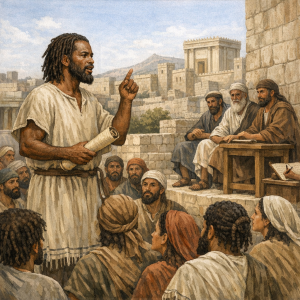
Primary Definition
An orator is a person who speaks publicly with the object of informing, persuading, moving, defending, commemorating, or otherwise influencing an audience. In ordinary modern English, the word usually carries a favorable implication: an orator is more than a person who happens to speak in public; he or she is understood to possess notable skill in public speech, argument, delivery, or persuasion.
The term may describe a political speaker, advocate, preacher, lecturer, civic representative, ceremonial speaker, or person presenting a cause before an assembly. Its central idea is not merely speaking aloud, but speaking for a purpose before others. An orator commonly addresses matters of public concern, controversy, law, government, religion, morality, or collective action.
Historically, the word also had a narrower legal meaning. In English chancery practice, an orator was the party who brought a bill before a court of equity and petitioned the court for relief. A female party was traditionally called an oratrix. This older legal usage does not mean that every litigant was a public speaker. Rather, it reflected the form of equitable pleading, in which the claimant was represented as respectfully addressing, entreating, or petitioning the chancellor.
In Roman legal and civic usage, an orator could mean an advocate or pleader: one who presented a case or cause before a public body or tribunal. Thus, the word has long occupied ground shared by rhetoric, advocacy, petition, public deliberation, and law.
Etymology and Origin
Orator entered English in the late Middle Ages through Anglo-Norman French oratour, ultimately from the Latin orator, meaning a speaker or pleader. The Latin noun is connected with orare, a verb whose older range of meanings included speaking formally, pleading before an assembly or court, entreating, and praying.
This history is important because it explains why several modern English words are related without being identical. Oration may mean a formal speech; oratory may mean either the art of public speaking or, in another context, a small place of prayer; and oration in older ecclesiastical use could refer to a prayer. The shared Latin background reflects the overlap between formal address, petition, and prayer: each involves speech directed toward an authority, an assembly, or the divine.
The word should not be reduced to “one who prays.” In classical and legal Latin, its central public sense was a speaker, advocate, or pleader. Prayer is one historical branch of the underlying vocabulary of formal entreaty, not proof that every orator is a religious official or that the English word arose exclusively from church practice.
Some etymological discussions connect orare with an ancient Indo-European root concerning ritual utterance or prayer. Other linguistic analysis associates the Latin development more closely with the idea of the mouth and formal speech. The precise deepest linguistic reconstruction is debated among specialists; the documented and undisputed practical development is that Latin orator meant a speaker or pleader, and English inherited that sense through French legal, literary, and rhetorical usage.
Cultural and Historical Context
Greek and Roman Rhetorical Traditions
The cultural importance of the orator is especially visible in the ancient Mediterranean world. Greek civic life gave exceptional importance to spoken persuasion in assemblies, courts, and public ceremonies. Although the English word orator is Latin rather than Greek, Greek rhetorical education substantially influenced Roman public life and Roman theories of persuasive speech.
Roman society made the orator a central civic figure. In republican Rome, public questions of law, war, office, taxation, honor, criminal accusation, and political power were often argued before courts, the Senate, or popular assemblies. A capable advocate could gain reputation, clients, allies, and political influence through speech. The Roman orator therefore was not simply an entertainer or polished lecturer. He was expected to understand facts, law, character, history, public duty, and the temper of an audience.
Cicero’s works on rhetoric, including De Oratore and Orator, became influential statements of this ideal. The accomplished speaker, in this tradition, was expected not merely to arrange attractive words but to reason carefully, educate an audience, please it where appropriate, and move it toward judgment or action. Classical rhetoric often described the speaker’s tasks as proving or teaching, delighting, and moving the audience.
Medieval and Early Modern Development
After the decline of Roman republican institutions, formal speaking did not disappear. It changed settings. Oratory continued in courts, churches, royal administrations, universities, diplomatic missions, legislative bodies, and civic ceremonies. Sermons, legal arguments, proclamations, parliamentary debates, funeral addresses, and public petitions all preserved elements of the older rhetorical tradition.
In English-speaking societies, the term came to signify an eloquent public speaker, while older legal records retained the specialized chancery sense of a petitioner. The distinction matters to historical reading. A document describing “your orator” may not be praising the filer’s eloquence; it may simply use the established formal language of equity pleading.
Governmental and Civic Context
In constitutional government, oratory can be a means by which citizens, representatives, advocates, and public officials explain policies, criticize power, seek redress, or persuade a community to act. Public speech has been vital to elections, legislative debate, abolition and reform movements, labor advocacy, religious revival, civil-rights organizing, and public commemoration.
Yet an orator holds no necessary governmental office merely by being persuasive. A person may be an influential orator without legal authority, and an officeholder may exercise authority without exceptional skill in speech. The term describes a communicative role or ability, not a rank, sovereign status, or grant of governmental power.
Military Relevance
There is no separate military origin inherent in the word. Military leaders have often used speeches to encourage troops, announce objectives, demand discipline, or memorialize the dead, and ancient historians frequently preserved or constructed speeches attributed to commanders. Those examples show the usefulness of oratory in military settings, but they do not make orator a military title or establish a distinct military legal office.
Biblical / Torah Context
The English word orator is not a controlling Hebrew or Torah office-title. Care is therefore needed when applying it to biblical persons. It can be used descriptively for a person who speaks publicly, pleads a cause, or serves as a spokesman, but it should not be treated as though the Torah established an office called “orator.”
The most relevant Torah account concerns Moses and Aaron. In Exodus 4, Moses objects that he is not eloquent and describes himself as slow of speech and tongue. The text answers this concern by appointing Aaron to speak with and for Moses. Exodus 4:16 states that Aaron will serve as Moses’ mouth, while Exodus 7:1–2 again presents Aaron as Moses’ spokesman before Pharaoh. In this limited descriptive sense, Aaron may be compared to an advocate, herald, or orator: he communicates an entrusted message before a ruler.
This comparison must remain qualified. Aaron’s role in the narrative is not simply that of a trained classical rhetorician seeking victory through personal eloquence. He speaks under a commission connected with divine command, Moses’ prophetic mission, and Israel’s deliverance from Egypt. The authority claimed in the text rests on the message and its source, not on verbal artistry alone.
The Torah also repeatedly depicts speech as morally consequential. Words may bless, curse, testify, teach, vow, accuse, reconcile, deceive, or lead a people. Deuteronomy emphasizes the public teaching and recitation of covenantal instruction. The prophets likewise speak before rulers and communities, often in confrontation with injustice, idolatry, oppression, or unfaithfulness. These passages supply a biblical context for public speech, but they do not authorize the assumption that persuasive speech is automatically righteous. Biblical speech is repeatedly judged by truth, faithfulness, justice, and obedience.
In later Christian scripture, English translations sometimes use “orator” or “eloquent speaker” to describe a skilled advocate or speaker. Such translation choices should not be used to erase the distinctions among Hebrew, Aramaic, Greek, Latin, and English terms. The safest conclusion is that biblical literature recognizes spokesmen, advocates, heralds, teachers, preachers, witnesses, and petitioners; “orator” can sometimes be an appropriate English description, but it is not a universal biblical technical term.
Legal Implications
Roman Law and Advocacy
In Roman usage, an orator could denote an advocate or person who pleaded a cause. Roman advocacy developed within a legal culture where formal speech, reputation, patronage, and civic standing had great importance. The Roman advocate was not identical to the modern licensed attorney. Roman legal institutions, procedural rules, professional classifications, and concepts of representation differed substantially from those of present-day American law.
Accordingly, a statement that an orator was an advocate in Roman law is historically sound, but it does not create a present legal right to act as counsel, practice law without authorization, or disregard modern court rules.
English Chancery and Equity Pleading
Under the historical English division between common-law courts and courts of chancery, the claimant seeking equitable relief commonly filed a bill in chancery. In that pleading, the claimant might identify himself as “your orator,” addressing the chancellor in the language of a respectful petition. The corresponding feminine form was “oratrix.” Legal dictionaries such as Bouvier’s recorded this usage, and later legal dictionaries explained that it had fallen largely into disuse.
This chancery meaning belongs chiefly to the history of equity, not to the common law in its narrower technical sense. Historically, common-law courts and chancery courts developed separately. Common-law practice emphasized particular writs and forms of action, while chancery addressed categories of relief traditionally regarded as equitable, such as injunctions, specific performance, trusts, and certain forms of accounting. The word orator appeared in the petitionary style of chancery pleadings; it was not a magic legal status and did not turn a person into a judge, sovereign, attorney, or court officer.
Modern American Law
In modern United States federal civil procedure, the operative terms are generally plaintiff, defendant, petitioner, respondent, appellant, and related procedural labels. Federal Rule of Civil Procedure 2 provides for one form of action: the civil action. The historical procedural separation between law and equity has largely been merged for federal procedural purposes, though equitable doctrines and remedies remain important.
Thus, calling oneself an “orator” in a modern filing ordinarily does not alter jurisdiction, create a special form of action, preserve an obsolete chancery procedure, or exempt a party from current pleading requirements. Courts determine rights and obligations according to applicable constitutions, statutes, rules, precedents, facts, and properly presented claims—not by archaic self-descriptions.
The constitutional rights of speech, assembly, and petition protect important forms of public advocacy, but they are not identical to a right to practice law or to control judicial procedure. The First Amendment protects the right to petition government for redress of grievances. A litigant nevertheless must comply with the court’s jurisdictional rules, filing requirements, deadlines, evidentiary standards, and rules governing representation. A person who represents another for compensation or holds himself out as legal counsel may be subject to state rules concerning the unauthorized practice of law.
Spiritual Meaning
In spiritual or devotional reflection, the orator may symbolize the responsible use of speech. The image is not of a person who merely commands attention, but of one entrusted with words that can influence conscience, community, and conduct. From this perspective, effective speech should be joined to truthfulness, humility, courage, discernment, and responsibility for the effects of one’s words.
This is an interpretive application rather than a separate legal or linguistic definition. The word itself does not guarantee moral character. An eloquent person may speak truthfully or deceptively, seek justice or manipulate fear, encourage peace or inflame hostility. Spiritual traditions that value preaching, testimony, prayer, teaching, or prophecy commonly insist that speech be accountable to something higher than applause, victory, or personal advancement.
The Moses-and-Aaron account can be read spiritually as a reminder that a messenger’s apparent weakness does not necessarily defeat a calling, and that communication may involve cooperation between the person entrusted with a message and the person equipped to voice it. That is a theological interpretation of the narrative, not a rule of civil law or a claim that every speaker receives divine authority.
Modern Usage
Today, orator is most often used in formal, historical, literary, political, or ceremonial language. One may call a gifted political leader, civil-rights advocate, trial lawyer, preacher, professor, commencement speaker, or community organizer an orator. The term usually emphasizes force, elegance, clarity, emotional power, or persuasive skill.
The word is less common in routine conversation than speaker, presenter, advocate, or public speaker. Those alternatives may be preferable where no special claim of eloquence is intended. “Orator” can sound admiring, elevated, or sometimes ironic, depending on context. A commentator who says that someone is “more an orator than an administrator,” for example, may be contrasting rhetorical talent with practical executive skill.
Related forms include oration, a formal speech; oratorical, relating to the style or manner of an orator; and oratory, the art of public speaking. In legal history, researchers may encounter “orator” in digitized chancery files, legal forms, and older equity reports. There it should be read in its procedural historical sense, ordinarily equivalent to the party seeking relief.
Controversies / Criticisms
The principal criticism of oratory is as old as rhetoric itself: persuasive speech can obscure weak reasoning, incomplete evidence, or unjust purposes. A speaker may appeal to fear, resentment, vanity, tribal loyalty, or emotion while appearing principled and compelling. For that reason, eloquence alone is not a reliable measure of truth, legality, wisdom, or moral worth.
A related criticism is that public-speaking traditions have sometimes favored elite education, social status, male participation, or access to institutions. Ancient civic and legal forums were not equally open to all persons. Modern appreciation of great orators should therefore be balanced by attention to who was permitted to speak, whose testimony was believed, and who was excluded from political or legal participation.
There are also recurring but unsupported claims that archaic legal words such as orator create hidden legal capacities or permit a person to evade ordinary court rules. The historical record supports a much simpler proposition: “orator” was a conventional term in older chancery pleading for the person petitioning the court. It is not a present-day formula that changes citizenship, jurisdiction, liability, legal representation, or the validity of a court proceeding.
Conclusion
An orator is, at its core, a public speaker who speaks with purpose and persuasive intent. The word comes from Latin language connecting formal speech, pleading, entreaty, and prayer. Its historical range includes the classical advocate, the civic speaker, the religious preacher, and the chancery petitioner.
Its legal history is genuine but limited: in older equity pleadings, “your orator” identified the party seeking the chancellor’s relief. That historical expression should not be confused with a modern legal status or a source of special procedural rights. In biblical and spiritual reflection, the term can illuminate the serious responsibility attached to speech, particularly speech offered before rulers, communities, courts, or congregations. Across its uses, the enduring question is not only whether an orator can speak effectively, but whether the speech serves truth, justice, and responsible public judgment.
Sources / Further Reading
- Online Etymology Dictionary, “Orator”: https://www.etymonline.com/word/orator
- Oxford Learner’s Dictionaries, “Orator”: https://www.oxfordlearnersdictionaries.com/us/definition/english/orator
- John Bouvier, Bouvier’s Law Dictionary (1856), “Orator”: https://constitution.org/1-Constitution/bouv/bouvier_o.htm
- The Law Dictionary, “Orator” (reporting the historical Black’s Law Dictionary definition): https://thelawdictionary.org/orator/
- Legal Information Institute, Federal Rule of Civil Procedure 2: https://www.law.cornell.edu/rules/frcp/rule_2
- Constitution Annotated, First Amendment, Library of Congress: https://constitution.congress.gov/constitution/amendment-1/
- Chabad.org, Exodus 7, including Aaron as Moses’ speaker: https://www.chabad.org/library/bible_cdo/aid/9868/jewish/Chapter-7.htm