Ask
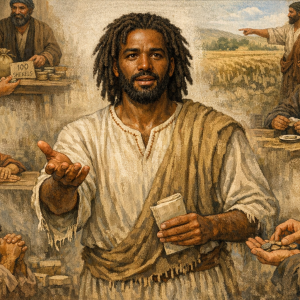
Primary Definition
Ask is principally a verb meaning to seek information, request an answer, make a request, invite a person, seek permission, or state the price desired for property, goods, or services. It may also mean to require or expect something of another, as when a task “asks much” of a person. As a noun, ask denotes a request, expectation, proposed amount, or desired act, especially in fundraising, negotiation, business, politics, and informal speech. Major English dictionaries recognize these related senses. ([dictionary.cambridge.org](https://dictionary.cambridge.org/us/dictionary/english/ask?utm_source=openai))
The unifying idea is that the asker seeks a response from another person, institution, source, or—figuratively—from circumstances. What is sought may be information, action, permission, assistance, property, money, agreement, or consideration. Asking normally leaves room for an answer, including refusal. That feature distinguishes an ordinary request from a command, although tone, authority, dependency, or threat may make an apparent request function coercively.
- To question: to seek knowledge or an answer.
- To request: to express a desire that another person provide or do something.
- To seek permission: to request authorization before acting.
- To invite: to request someone’s presence or participation.
- To inquire of oneself: to examine one’s motives, assumptions, or judgment.
- To state a desired price: to name the amount a seller wants.
- As a noun: the request, price, expectation, or action being proposed.
Ask, request, inquire, question, beg, demand, and order overlap, but they are not identical. Inquire emphasizes the search for information; beg suggests urgency or dependence; demand asserts entitlement or pressure; and order invokes authority. Ask is broader and may be neutral, humble, insistent, ceremonial, commercial, or strategic according to context.
Etymology and Origin
The English verb descends through Middle English forms such as asken from Old English āscian or ascian, meaning to request, question, or call for an answer. Related forms appear in other Germanic languages. Etymologists commonly connect the Germanic family with an older reconstructed root associated with wishing, desiring, or seeking. The precise prehistoric forms are linguistic reconstructions rather than surviving written words, and should be identified as such. ([etymonline.com](https://www.etymonline.com/word/ask?utm_source=openai))
The familiar pronunciation represented by aks or ax is not a recent invention. Old and Middle English exhibited forms with the consonants in both orders. The change is an example of metathesis, the rearrangement of sounds within a word. The ask form eventually became dominant in standardized written English, while the metathesized pronunciation continued in regional and social dialects, including varieties of African American English. Standard spelling determines expectations in formal writing, but the historical record does not support treating every speaker who says aks as ignorant or incapable of language. ([en.wiktionary.org](https://en.wiktionary.org/wiki/ask?utm_source=openai))
The noun has historical precedent, but its visibility has increased in modern institutional speech. Expressions such as “the ask,” “a difficult ask,” and “our legislative ask” convert the action into a defined objective. This usage is especially common where a request is prepared, measured, assigned, and presented as part of a campaign or negotiation.
Cultural and Historical Context
Asking is one of the foundational acts of social life. Teaching depends upon questions; trade depends upon proposed terms; hospitality depends upon invitations; governance depends upon petitions; and personal relationships depend upon the ability to request help, clarification, consent, or forgiveness. In many cultures, rules of rank and courtesy govern who may ask, what may be asked, and how directly the request may be expressed.
Historically, the freedom to ask authority for redress developed into the more formal practice of petitioning. The English Bill of Rights of 1689 declared that subjects had a right to petition the Crown and that prosecution for petitioning was unlawful. This was not merely a rule of vocabulary. It recognized that communicating a grievance to the governing power was part of lawful political participation. ([avalon.law.yale.edu](https://avalon.law.yale.edu/17th_Century/england.asp?utm_source=openai))
That tradition influenced American constitutional culture. Petitions concerning pensions, land, slavery, suffrage, taxation, public works, and other matters became a regular means by which individuals and groups asked government to act. National Archives records show that petitioning was an important instrument of nineteenth-century grassroots political organization, including for people who lacked the vote. ([archives.gov](https://www.archives.gov/legislative/resources/education/petitions-to-congress-1800-1850?utm_source=openai))
The word also carries a strong association with civic responsibility because of President John F. Kennedy’s inaugural address of January 20, 1961. His celebrated use of “ask” reversed the ordinary direction of a citizen’s request and challenged citizens to consider their duties to the country. The rhetorical force came from setting two questions against one another: what the state should provide and what the citizen should contribute. ([inaugural.senate.gov](https://www.inaugural.senate.gov/inaugural-address/?utm_source=openai))
Biblical / Torah Context
The English word ask translates several Hebrew and Greek words rather than one perfectly equivalent biblical term. Consequently, the meaning of a particular passage must be determined from its original language, grammar, literary setting, and subject matter—not from the English word in isolation.
Hebrew and Torah Usage
A principal Hebrew verb is sha’al (שָׁאַל), whose range includes asking, inquiring, requesting, consulting, demanding, and, in certain translations or contexts, borrowing. Its breadth illustrates that asking may involve simple information, formal consultation, prayer, a demand, or a request for possession. Translation disputes sometimes arise where an older English version renders the verb as “borrow” while another renders it as “ask” or “request.” The legal or moral character of the event cannot safely be built upon one English gloss without examining the underlying text. ([biblehub.com](https://biblehub.com/hebrew/7592.htm?utm_source=openai))
Deuteronomy 32:7 directs the hearer to ask a father and elders about the days of old. Here asking is connected with memory, testimony, transmitted wisdom, and the responsibility of one generation to learn from another. The passage presents inquiry as an antidote to forgetfulness. ([sefaria.org](https://www.sefaria.org/Deuteronomy.32.7?with=Midrash&utm_source=openai))
First Samuel 8 supplies a different lesson. Israel’s elders seek the appointment of a king like those of surrounding nations. Their request is granted, but only after a warning about the powers and burdens that monarchy will bring. The narrative demonstrates a recurring biblical principle: obtaining what one asks for does not prove that the request was wise, harmless, or aligned with the highest good. A granted request may carry foreseeable consequences. ([biblegateway.com](https://www.biblegateway.com/verse/en/1%20Samuel%208%3A5?utm_source=openai))
New Testament Usage
New Testament Greek employs, among other terms, aiteō, commonly associated with requesting, petitioning, desiring, or asking for something, and erōtaō, which may refer to questioning, requesting, or entreating. These distinctions are useful but should not be converted into rigid formulas that ignore context. ([bibletools.org](https://www.bibletools.org/index.cfm/fuseaction/Lexicon.show/ID/G154/aiteo.htm?utm_source=openai))
Matthew 7:7 joins asking with seeking and knocking. In its religious context, asking is active dependence upon God rather than passive entitlement. James 4:3 provides a balancing warning: a person may ask and not receive because the request arises from disordered motives. Read together, these passages do not establish a mechanical promise that every desire verbally expressed must be fulfilled. They connect petition with trust, persistence, motive, wisdom, and alignment with divine will. ([biblegateway.com](https://www.biblegateway.com/verse/en/James%204%3A3?utm_source=openai))
There is no documented basis for claiming that the English word itself has a uniquely Hebrew, Greek, Roman, pagan, or ecclesiastical origin. Its linguistic ancestry is Germanic. Biblical importance arises from its use in translation, not from a sacred origin of the English form.
Legal Implications
Ask is not, by itself, a single technical term of common law. Legal consequences depend upon who asks, what is requested, the authority involved, the surrounding words, and whether the law attaches a duty to respond. An informal question, a contractual offer, a discovery request, a petition, and a motion may all be described in ordinary speech as asks, but they operate under different rules.
Requests to Courts
A litigant may informally be said to “ask the court” for relief, but courts generally require the request to be made through a recognized procedure. Under Rule 7(b) of the United States Federal Rules of Civil Procedure, a request for a court order must be made by motion, stating the grounds and the relief sought. Historically, pleadings at common law and petitions or bills in equity used different forms. Modern procedural systems have largely merged the administration of law and equity, but the requested remedy and legal basis still matter. ([law.cornell.edu](https://www.law.cornell.edu/rules/frcp/rule_7?utm_source=openai))
Thus, merely expressing a desire does not necessarily place an issue properly before a court. Jurisdiction, standing, notice, evidence, timeliness, and procedural compliance may all be required. The word ask describes the communicative act; procedural law determines whether that act is legally effective.
Petitioning Government
The First Amendment to the United States Constitution protects the right of the people peaceably to assemble and petition government for redress of grievances. Constitutional doctrine extends petitioning beyond appeals to a legislature and may protect lawful approaches to executive agencies and courts. The right to ask government for action is not identical to a right to receive the requested result. Government may reject a petition, and separate laws govern whether it must provide a hearing, explanation, record, or remedy. ([constitution.congress.gov](https://constitution.congress.gov/constitution/amendment-1/?utm_source=openai))
Contracts and Prices
An asking price is the amount a seller says is desired. It is not automatically a binding offer in every setting. Contract formation ordinarily requires an objective manifestation sufficiently definite to invite acceptance, and the surrounding language may show that the parties are only negotiating. A statement of price can be an offer, an invitation to make an offer, or preliminary information, depending upon context. Under the Uniform Commercial Code, an actual offer to make a contract may invite acceptance in any reasonable manner unless the language or circumstances indicate otherwise. ([law.cornell.edu](https://www.law.cornell.edu/ucc/2/2-206?utm_source=openai))
In securities and financial markets, the ask is the price at which a seller is willing to sell, contrasted with the bid, the price a buyer is willing to pay. The difference is called the bid-ask spread. This specialized commercial noun should not be confused with a completed sale.
Permission, Consent, and Authority
Asking permission acknowledges that another person’s authorization may be necessary, but the request itself does not supply consent. Silence, hesitation, submission to authority, or failure to resist may have different legal effects under different statutes and factual circumstances. Likewise, calling a directive “an ask” does not prevent it from being treated as coercive if it is accompanied by threats, penalties, overwhelming authority, or the practical inability to refuse. Law generally examines substance and context rather than relying exclusively on the speaker’s label.
Spiritual Meaning
Spiritually, asking may express humility: the asker admits a lack of knowledge, power, or sufficiency. It can also express faith, because a sincere request assumes that truth, help, mercy, or direction may be available. Asking another person can create relationship by allowing that person to answer freely rather than treating assistance as an entitlement.
The dictionary’s interpretive analysis is that responsible asking involves at least four disciplines: clarity about what is sought, honesty about motive, respect for the freedom of the person asked, and readiness to receive an answer other than the one desired. Asking without listening is not genuine inquiry. Asking while secretly demanding a predetermined outcome turns the language of request into a tool of control.
Self-questioning is another spiritual dimension. To ask oneself why one desires something, what duties accompany it, and what consequences may follow can transform impulse into discernment. In this sense, the question is not merely a device for acquiring facts; it is an instrument of conscience.
Modern Usage
Modern institutions frequently use ask as a noun: a charity prepares “the ask,” an organization announces a “policy ask,” and a negotiator identifies a “minimum ask.” The phrase big ask means a difficult, burdensome, ambitious, or unlikely request. Although useful, this language can sound impersonal because it reduces a human appeal to a transaction or deliverable.
Digital culture has expanded the word’s association with search engines, help systems, online question forums, “ask me anything” sessions, and artificial intelligence. In these settings, asking may resemble conversation, but the user may actually be submitting a query to a database or computational model. A fluent response does not guarantee truth. The duty to examine sources, assumptions, uncertainty, and evidence remains with the human reader.
In governmental, corporate, and military hierarchies, the difference between a request and an order may be obscured by polite wording. A superior’s “ask” may be understood as mandatory because of rank or employment power. Conversely, a subordinate’s request may require formal approval before it can authorize action. The operative authority comes from law, office, contract, regulation, or command structure—not from the vocabulary alone.
Controversies / Criticisms
Dialect and Linguistic Prejudice
The pronunciation aks is often stigmatized, particularly when associated with racial or working-class dialects. Formal standards may reasonably prescribe ask in particular educational or professional settings, but historical linguistics shows that the reversed consonant order is old. Criticism becomes prejudicial when a dialect feature is treated as proof of inferior intelligence, character, or moral worth.
Corporate and Political Jargon
Critics object that the noun phrase “the ask” can conceal who wants what from whom. It may turn a moral appeal, public demand, or employment directive into neutral managerial language. Clear speech should identify the requesting party, the requested act, the cost, the authority involved, and whether refusal is genuinely permitted.
Manipulative Questioning
The expression “just asking questions” can describe honest inquiry, but it may also be used to circulate an accusation without accepting responsibility for asserting it. A grammatical question can imply a factual premise, damage reputation, pressure a witness, or direct an audience toward a conclusion. The form of a question does not automatically make the communication neutral or innocent.
Religious Overstatement
Some teachings isolate promises about asking from biblical passages concerning motive, wisdom, obedience, providence, and divine will. This can produce a transactional theology in which unanswered prayer is automatically blamed on insufficient faith. Such a conclusion is disputed and is not required by the ordinary meaning of the word or by the broader scriptural treatment of petition.
Pseudo-Legal Claims
Disputed pseudo-legal theories sometimes attribute magical force to ordinary words, claiming, for example, that asking always creates jurisdiction, proves consent, waives rights, or forms a contract. No universal common-law rule gives the word such automatic power. A legally significant request must be evaluated under the applicable law of contracts, procedure, evidence, agency, consent, constitutional rights, or statutory duties.
Conclusion
To ask is to reach beyond one’s present knowledge, possession, authority, or ability. The act may be as simple as seeking a name or as consequential as petitioning a government, requesting judgment, negotiating a price, seeking consent, or praying for aid. Its ordinary form suggests an opening for response, but real freedom to answer depends upon circumstances.
The word’s history is Germanic, while its cultural reach is broad. Torah and biblical usage connect asking with inquiry, memory, petition, motive, and the consequences of desire. Common-law and constitutional traditions developed formal protections and procedures through which people could ask rulers, legislatures, agencies, and courts for redress. Modern business and digital culture have further turned the verb into a measurable noun.
The central distinction is between a genuine request and concealed compulsion. A worthy ask speaks clearly, respects lawful boundaries, permits an honest answer, and remains accountable for motive and consequence. The wisdom of asking lies not only in forming the question, but also in recognizing the authority of truth—and the freedom of another—to answer.
Sources / Further Reading
- Merriam-Webster Dictionary, “Ask”
- Cambridge Dictionary, “Ask”
- Online Etymology Dictionary, “Ask”
- Ohio State University, Metathesis in Language
- Cornell Legal Information Institute, Federal Rule of Civil Procedure 7
- Cornell Legal Information Institute, U.C.C. § 2-206
- Congress.gov, Constitution Annotated: First Amendment
- Yale Law School Avalon Project, English Bill of Rights 1689
- National Archives, Petitions to Congress: Grassroots Democracy, 1800–1850
- Brown-Driver-Briggs and Strong’s Hebrew Lexical Material for שָׁאַל
- Sefaria, Deuteronomy 32:7 and Related Commentary
- Bible Gateway, Matthew 7:7
- Bible Gateway, James 4:3
- Joint Congressional Committee on Inaugural Ceremonies, The Inaugural Address