Primary Definition
Youngling is a noun meaning a young person, a young animal, or, more broadly, a being or thing in an early stage of growth or development. In some uses it may also mean a novice, beginner, or inexperienced person. As an adjective, it can mean youthful or young. The word is generally literary, affectionate, archaic-sounding, playful, or used in fantasy and historical-style speech rather than in ordinary formal modern prose.
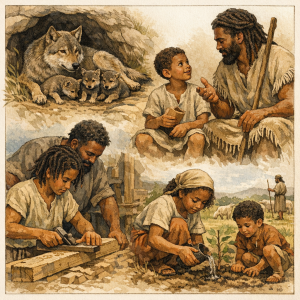
The ordinary sense is descriptive rather than technical. A youngling is not necessarily an infant, nor does the word itself identify a precise age. Depending on context, it may refer to a child, adolescent, juvenile animal, young plant, or a person new to a discipline. Thus, “the wolf guarded her younglings” concerns immature animals; “the youngling asked many questions” concerns a child; and “a youngling in the trade” may refer figuratively to an inexperienced apprentice.
The word should not be confused with a legal classification. In modern legal writing, terms such as child, minor, juvenile, infant, ward, or dependent may carry statutory or case-specific meanings. Youngling ordinarily does not. Its meaning is governed primarily by ordinary language and the setting in which it is used.
Etymology and Origin
Youngling is an old English word, not a recent invention and not originally a term of Roman law, canon law, military law, or government administration. Dictionary evidence traces it to Old English geongling, meaning a youth or young person. It later appeared in Middle English in forms such as yongling and youngling. The word is cognate with Dutch jongeling and German Jüngling, both words associated with a young person or youth.
The word is transparently formed from young and the suffix -ling. The base word young comes through Old English geong, part of a wider Germanic and Indo-European family of words connected with youth. Related forms include German jung and Latin juvenis. The English suffix -ling commonly forms nouns identifying a person or thing associated with a quality, state, occupation, origin, or category. In some words it can carry a diminutive sense, but that sense should not be assumed mechanically in every instance.
Accordingly, the most reliable plain-language analysis is that a youngling is “one who is young” or “a young one.” The word’s form does not prove that the person or creature is insignificant, inferior, legally disabled, spiritually immature, or owned by another. Those additional meanings, if intended, must come from the context rather than from etymology alone.
Historically, the term could apply to human beings and animals. Modern dictionaries continue to record both senses, together with the figurative sense of a novice. This range is unsurprising: English frequently extends age-related language from people to animals and from physical youth to inexperience. A “young company,” “young movement,” or “young scholar” may be recent, developing, or comparatively inexperienced without being literally a child.
Cultural and Historical Context
Because youngling is an inherited English word with an old-fashioned sound, it has long been useful in literary, religious, pastoral, and imaginative writing. It can create a tone of tenderness, distance, authority, or poetic solemnity. The speaker may be emphasizing vulnerability, freshness, inexperience, promise, or a stage of becoming.
Older English literature demonstrates that the term could be applied metaphorically as well as literally. John Milton used youngling in Areopagitica when discussing virtue that is still immature in its understanding of evil. That use did not concern a literal child. Rather, it treated moral understanding as something capable of growth and maturation. The example illustrates a durable figurative pattern: a “youngling” can be a person, quality, institution, or idea that is newly formed and not yet fully developed.
In earlier social settings, age language often carried assumptions about household authority, apprenticeship, inheritance, military service, marriage, education, and religious instruction. But the word youngling itself did not establish any universal rule concerning those matters. It was a descriptive term in ordinary speech. Legal consequences historically depended on more exact categories, including infancy, majority, heirship, wardship, pupilage, and service.
In contemporary popular culture, the word has become strongly associated with Star Wars. In that fictional setting, “Jedi Youngling” is a recognized stage in the education of children training in the Force before selection as Padawan learners. This prominent cultural use has made the word more familiar to audiences who might otherwise regard it as archaic. The fictional Jedi usage is a specialized cultural designation; it should not be mistaken for the word’s historical origin or general legal meaning.
Military and Governmental Context
Youngling is not, by itself, a standard modern military rank, governmental office, citizenship classification, or official administrative status. A military organization, school, youth program, religious body, or fictional institution could adopt the word as an internal title, but that would arise from the rules of that organization. The English word does not inherently create authority, duty, allegiance, guardianship, or jurisdiction.
Biblical / Torah Context
The English word youngling has some relevance to Bible translation history, but it is not a central technical biblical or Torah term. The Hebrew Bible/Torah was written principally in Hebrew, with some Aramaic elsewhere in the biblical canon; the New Testament was written in Greek. English words such as child, little one, youth, boy, girl, offspring, and youngling are translation choices, not the original biblical words themselves.
In Torah passages concerning children, translators commonly use English expressions such as “little ones” or “children.” For example, Deuteronomy 1:39 speaks of Israel’s “little ones” and children who did not yet know good from bad. The Hebrew word in that passage, often rendered “little ones,” refers to dependents or small children. It should not be equated automatically with the English word youngling, even though the concepts overlap.
The Hebrew Bible uses several age-related terms whose meanings vary by setting. Yeled commonly concerns a child; na’ar can refer to a boy, youth, servant, or young man depending on context; and taph often refers collectively to little ones or dependents. The breadth of these terms shows why a translator must examine context rather than assume a fixed age category from one English equivalent.
One notable English translation example occurs in the Wycliffe Bible’s rendering of Mark 16:5, where the women entering the tomb see “a youngling” clothed in white. Modern translations generally say “a young man.” The underlying Greek term is neaniskos, ordinarily a young man or youth. The Wycliffe use is therefore evidence of historical English vocabulary and translation style; it is not evidence that “youngling” is a distinct biblical office, spiritual rank, or doctrinal category.
From a Jewish or Christian interpretive standpoint, youth in Scripture may symbolize dependence, teachability, covenantal continuity, vulnerability, inheritance, growth in wisdom, and responsibility before God. Those themes arise from particular passages and theological traditions. They should not be treated as hidden meanings automatically contained in the English suffix -ling.
Legal Implications
Historical common law. In the English common-law tradition, the principal legal term for a person below full age was generally infant, not youngling. Historically, “infant” did not mean only a baby. It often meant a person below the age of legal majority. At common law, majority was generally reached at twenty-one years of age, although legal capacity could vary by subject matter and by sex under historical rules that no longer govern in the same form.
Common-law doctrines treated infancy as legally significant in such areas as contracts, property, guardianship, custody, torts, criminal responsibility, and family relations. For example, many contracts made by minors were historically voidable rather than simply void. Criminal law also developed age-based presumptions concerning a child’s capacity to form criminal intent. These doctrines concerned the legally defined status of infancy, not a verbal label such as youngling.
Roman law and equity. Roman law used its own classifications of persons below full legal maturity, including infantes, impuberes, and persons under guardianship or curatorship. These are historically important categories, but they are not the source of the English word youngling. Likewise, equity historically developed protective doctrines for infants and wards, especially in matters involving guardians, trusts, estates, and property. Equity’s concern for protection did not transform youngling into a technical equitable term.
Current United States law. Modern American law ordinarily uses statutes and regulations that define terms such as minor, child, juvenile, or infant. The age of majority is set chiefly by state law and is generally eighteen, though legal ages for voting, contracts, alcohol, driving, marriage, criminal procedure, medical consent, employment, and other matters may differ by jurisdiction and subject. A person’s rights and responsibilities cannot be determined merely by calling that person a youngling.
For legal interpretation, a court would ordinarily ask whether a statute, contract, will, policy, organizational rule, or other operative document defines the word. If not, the court may give it its ordinary meaning in context. In most settings, “youngling” would likely be understood as an informal reference to a young person or immature creature, not a precise legal classification.
Claims that an archaic English word changes one’s legal age, citizenship, legal personality, parental status, court jurisdiction, contractual obligations, or constitutional rights are unsupported by ordinary principles of statutory construction and common law. Legal status arises from applicable law and facts, not from private etymological reinterpretation. Where a person’s age, capacity, guardianship, criminal exposure, or contractual rights are at issue, jurisdiction-specific legal advice is necessary.
Spiritual Meaning
There is no single established spiritual meaning of youngling shared across Judaism, Christianity, Islam, or other religious traditions. The word is English and descriptive. It does not, by itself, signify a sacrament, covenantal office, spiritual lineage, divine status, or religious rank.
Interpretively, however, writers may use youngling to evoke spiritual youth: humility, receptiveness, growth, dependence on wise guidance, or the beginning stages of moral and religious formation. Such use resembles broader biblical and philosophical imagery in which a person grows in wisdom, discipline, virtue, and understanding. This is an interpretive or devotional use, not a dictionary requirement.
Care is appropriate when the term is applied to adults. Calling an adult a “youngling” may be affectionate, humorous, mentoring, or intentionally patronizing. A spiritual teacher who uses the word may mean “learner” or “one new to the path,” but the relationship should remain respectful and should not be used to erase the adult person’s conscience, dignity, responsibility, or legal rights.
Modern Usage
Today, youngling appears most often in several settings:
- Fantasy and science fiction: especially in reference to Jedi children or fictional apprentices.
- Literary or poetic prose: to create an archaic, affectionate, pastoral, or mythic tone.
- Animal and nature writing: for young birds, mammals, or other immature animals.
- Mentorship and apprenticeship: sometimes humorously, for a beginner in a craft, profession, hobby, or discipline.
- Family speech: occasionally as a playful alternative to “child,” “kid,” or “little one.”
The plural is younglings. In formal writing, speakers should consider whether the word’s tone suits the audience. In a legal pleading, school policy, medical record, government form, or professional report, a more precise word is ordinarily preferable. “Child,” “minor,” “student,” “juvenile,” “new employee,” “trainee,” or “apprentice” will usually communicate more clearly.
Controversies / Criticisms
The main controversy surrounding youngling is not its origin but its tone and cultural association. Some speakers hear it as charming, imaginative, or respectful of childhood. Others hear it as overly cute, archaic, infantilizing, or closely tied to Star Wars. Neither reaction changes the word’s basic dictionary meaning.
In particular, the term may become demeaning when used to minimize an older teenager’s or adult’s competence, agency, or voice. Context matters: a mentor using it jokingly among willing participants differs from an authority figure using it to dismiss a person’s views. Respectful communication requires attention to the relationship, audience, and power imbalance involved.
Another point of confusion is the assumption that the word was created for modern entertainment. That claim is incorrect. The word predates modern film and is documented as an Old English and Middle English inheritance. Modern entertainment greatly increased its visibility, but did not create the underlying word.
Similarly, claims that the term has an inherent secret legal, religious, governmental, Roman, pagan, or military meaning are not established by the word’s documented history. Such claims should be treated as personal speculation unless supported by reliable primary sources and applicable law.
Conclusion
Youngling is an old English word for a young person, young animal, or inexperienced beginner. Its roots are Germanic and reach back to Old English, where it referred broadly to youth. Over time, it retained its basic age-related meaning while acquiring literary, affectionate, and figurative uses.
The term has no inherent technical force in modern law. Historical common law used more specific legal concepts such as infancy and majority, while current law relies mainly on statutes and jurisdiction-specific definitions of child, minor, and juvenile. Biblical and spiritual uses are likewise contextual: the word can appear in older English translations and can suggest teachability or growth, but it is not itself a scriptural office or doctrinal category.
In modern speech, youngling remains a vivid and flexible word. It can communicate tenderness, immaturity, promise, apprenticeship, or playful fantasy. Its proper interpretation depends on context, while its documented core meaning remains simple: a young one.
Sources / Further Reading
- Dictionary.com, “Youngling”
- Collins Dictionary, “Youngling”
- Merriam-Webster, “Young”
- The Concise Oxford Dictionary of English Etymology, “Young”
- Bible Gateway, Wycliffe Bible, Mark 16:3–5
- Sefaria, Deuteronomy 1:39
- Cornell Legal Information Institute, “Minor”
- Cornell Legal Information Institute, “Infancy”
- Cornell Legal Information Institute, “Legal Age”
- StarWars.com Databank, “Jedi Youngling”