Malfeasance
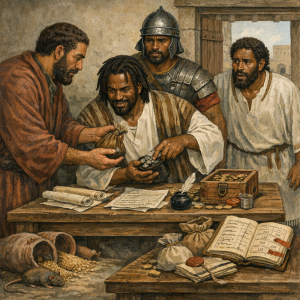
Primary Definition
Malfeasance is the deliberate commission of an act that is wrongful, unlawful, or incompatible with a duty of office, trust, employment, or authority. In its most precise legal sense, the word commonly describes intentional official misconduct: a public officer or other person entrusted with power does something that he or she has no lawful right to do, or intentionally performs an official duty in an unlawful manner.
The central idea is not merely that a bad result occurred. Malfeasance ordinarily implies culpable conduct: a knowing, willful, corrupt, fraudulent, or otherwise wrongful exercise of power. A public official who mistakenly makes an administrative error may have acted negligently; that does not automatically establish malfeasance. Likewise, a person who fails to act may be guilty of nonfeasance only when a legal duty required action. Malfeasance is generally associated with an affirmative wrongful act, although some statutes use the term broadly enough to include intentional refusal to carry out an official duty.
In ordinary speech, the term is also used more broadly for serious wrongdoing by corporations, executives, fiduciaries, institutions, or persons in positions of trust. Thus, “corporate malfeasance” may refer to fraud, embezzlement, deliberate concealment of dangers, bribery, accounting deception, or other intentional abuse of institutional power. That broader usage is often morally forceful, but it does not itself identify a particular crime, tort, or legal cause of action.
Related Terms
- Malfeasance: doing what one has no lawful right to do; intentional or wrongful misconduct, especially in office.
- Misfeasance: improperly performing an act that is otherwise lawful or authorized.
- Nonfeasance: failing to perform an act when there is a duty to perform it.
- Malpractice: professional misconduct or negligent performance by a person in a profession, such as medicine or law. Malpractice may be negligent, reckless, or intentional; it is not automatically synonymous with malfeasance.
- Misconduct in office: a closely related expression, often used in statutes and cases concerning abuse, corruption, or willful neglect by a public officer.
The distinctions are useful, but they are not perfectly uniform among jurisdictions. Legislatures, courts, insurance policies, and commentators sometimes use the three “feasance” terms loosely or overlap them. The controlling question in an actual case is therefore not merely what dictionary label is applied, but what statute, common-law rule, office, duty, mental-state requirement, and remedy govern the alleged conduct.
Etymology and Origin
Malfeasance entered English through French legal and moral vocabulary. It is built from the French idea of mal faire, meaning “to do badly” or “to do wrong.” The first element, mal-, signifies bad, evil, or wrongful; the second ultimately traces through French faire to Latin facere, “to do” or “to make.” The literal sense is therefore “wrongdoing” or “bad doing.”
English dictionaries record the term in the seventeenth century, with an early and enduring connection to wrongful conduct and official abuse. The related words malfeasant and malefactor likewise describe a wrongdoer. The word is not derived from a unique Roman governmental office, a religious rite, or a military institution. Its Latin component reflects the ordinary linguistic ancestry of many English and French legal terms, not proof that the modern doctrine is a direct survival of Roman law.
Over time, the word narrowed in much legal usage toward misconduct involving public office or entrusted authority. At the same time, it retained a broader popular meaning: serious wrongful behavior. Modern reporting commonly speaks of political, police, corporate, financial, or institutional malfeasance even where no court has determined that a legally defined offense occurred.
Cultural and Historical Context
The word gained particular importance in societies that recognized public office as a trust rather than a private possession. A sheriff, magistrate, tax collector, military commander, judge, minister, corporate director, trustee, or administrator could possess significant authority over money, liberty, property, records, or public decisions. When such a person used entrusted power for an unlawful purpose, the wrong was more serious than an ordinary private dispute because it injured both an individual and the integrity of the institution.
English legal and parliamentary history strongly influenced the later American understanding of official misconduct. Long before the United States Constitution, English impeachment practice addressed abuses by powerful officers and ministers when ordinary criminal proceedings were thought inadequate to protect the state. Historical impeachment practice included corruption, misuse of funds, neglect of duty, and abuses of public trust. This history helps explain why the language of malfeasance is frequently associated with removal, discipline, impeachment, disqualification, and public accountability rather than only with private damages.
In the American setting, the term has appeared in state constitutions, municipal-charter provisions, removal statutes, ethics rules, criminal statutes, employment regulations, and political debate. It expresses a basic expectation of republican government: a person exercising delegated public authority is accountable for its lawful use. That expectation does not mean that every unpopular decision, policy failure, or disputed exercise of discretion is malfeasance. Public officers often possess lawful discretion, and legal responsibility requires proof under the applicable standard rather than public dissatisfaction alone.
Biblical / Torah Context
Malfeasance is an English legal term, not a technical word found in the Hebrew Torah or the original Greek text of the New Testament. It should therefore not be presented as though Scripture created the modern legal category or supplied a universal statutory definition of it. Nevertheless, the underlying moral concerns—corrupt judgment, abuse of authority, bribery, false testimony, oppression, and betrayal of trust—are plainly addressed in biblical and Torah teaching.
The Torah repeatedly requires impartial justice. Exodus 23:8 forbids taking a bribe because bribery blinds the discerning and distorts the cause of the righteous. Deuteronomy 16:18–20 directs judges and officers to judge the people with righteous judgment, not to show partiality or accept a bribe. Deuteronomy 25:13–16 condemns dishonest weights and measures, connecting integrity in commerce with the broader demand for justice.
The Hebrew prophets likewise condemn rulers, judges, and officials who exploit power. Isaiah 1:23 rebukes rulers who pursue gifts and fail to defend the vulnerable. Micah 3:9–11 condemns leaders who pervert justice and judges who judge for payment. These passages do not establish elements of a modern criminal charge, but they supply a moral framework consistent with the principle that authority is a stewardship and not a license for self-enrichment or oppression.
In the New Testament, persons entrusted with public or economic power are called to act honestly and without extortion. Luke 3:12–14 records instructions to tax collectors and soldiers not to collect more than authorized or use false accusations for gain. Romans 13 describes civil authority as accountable to God for the proper administration of public order. These teachings are spiritual and ethical instructions; they should not be confused with a direct incorporation of biblical law into present American civil law.
Legal Implications
Common-Law Background
At common law, misconduct by a public officer could be treated as an offense against public justice and the public trust. The historical doctrine was concerned with corrupt, willful, or seriously wrongful misuse of official authority. Its precise boundaries varied over time and by jurisdiction. Some courts used terms such as malfeasance in office, misconduct in office, or misfeasance in public office interchangeably; others drew sharper distinctions.
Modern American law does not operate solely from generalized common-law terminology. In many jurisdictions, criminal liability must rest on a statute defining prohibited conduct and its required mental state. Courts are generally cautious about allowing an open-ended accusation of “official wrongdoing” to substitute for a clearly stated legal duty or criminal prohibition. A charge of malfeasance in office commonly requires proof that the defendant held public office or public employment, had a duty or authority connected to that position, acted intentionally or knowingly, and performed—or deliberately failed to perform—the duty in a manner forbidden by law.
Statutory Law and Criminal Liability
There is no single, universal United States crime called “malfeasance.” Federal and state laws address particular conduct through more specific offenses, including bribery, honest-services fraud, extortion, theft of public funds, obstruction of justice, civil-rights violations, falsification of records, conflicts of interest, and abuse of office. The word may appear in a statute, but its presence does not erase the need to prove the statute’s particular elements beyond a reasonable doubt in a criminal prosecution.
Louisiana provides a clear example of a statute expressly titled “Malfeasance in office.” Louisiana Revised Statutes section 14:134 covers a public officer or employee who intentionally refuses or fails to perform a lawfully required duty, intentionally performs such a duty unlawfully, or knowingly permits a subordinate to do so. The statute demonstrates an important point: statutory malfeasance may include both wrongful action and intentional nonperformance. The legal definition comes from the enacted statute and its judicial interpretation, not from a generalized dictionary meaning alone.
In State v. Petitto, the Louisiana Supreme Court explained that, before a public officer or employee may be charged under that statute, a statute or other provision of law must impose an affirmative duty on the accused. This illustrates a due-process safeguard: an official cannot fairly be convicted merely because a prosecutor, political opponent, or member of the public believes the person acted badly. The law must identify a duty, and the evidence must establish intentional violation of that duty.
Civil Claims, Public Office, and Remedies
Malfeasance may also have civil consequences. Depending on the jurisdiction and facts, wrongful official conduct can support a tort claim, a claim for breach of fiduciary duty, an administrative disciplinary action, an action for removal from office, restitution, injunction, mandamus, or a claim under a civil-rights statute. Immunities may limit claims against public officials, governmental entities, prosecutors, judges, or police officers. Such immunities vary by office, jurisdiction, and type of claim; intentional misconduct is not always treated the same as negligence, but neither is it automatically outside every immunity.
Corporate and nonprofit settings use the term less technically. Directors and officers owe duties of care, loyalty, and good faith under applicable corporate law. Deliberate self-dealing, fraud, concealment, or misuse of corporate assets may be described as malfeasance, but the actual legal claim may be breach of fiduciary duty, securities fraud, conversion, waste, or another defined cause of action.
Impeachment and Removal
Malfeasance is often discussed in relation to impeachment, recall, and removal from office. The United States Constitution, however, does not use the word malfeasance in its federal impeachment clause. Article II, section 4 provides for removal upon impeachment and conviction for “Treason, Bribery, or other high Crimes and Misdemeanors.” Historical abuse of office may be relevant to debates over that constitutional standard, but “malfeasance” is not itself a constitutional formula that automatically determines impeachment.
Impeachment is also not identical to a criminal trial. It is a constitutional political remedy involving separate institutional procedures. A person may be impeached without being convicted of an ordinary crime, and criminal liability—if any—depends on the relevant criminal law and judicial process. Conversely, conduct may be criminal without necessarily producing impeachment.
Spiritual Meaning
In spiritual and ethical reflection, malfeasance may be understood as the betrayal of stewardship. Power is never morally neutral when it is held over other people’s property, labor, liberty, safety, reputation, or access to justice. A person who knowingly uses entrusted authority to enrich himself, protect wrongdoing, punish an enemy, falsify the truth, or deny another person’s lawful rights commits more than a technical failure: he violates the trust placed in him.
This perspective should be applied with humility. Moral condemnation must not become a substitute for evidence, due process, or fair judgment. A spiritual concern for righteousness includes both holding genuine wrongdoing accountable and refusing false accusation, partisan exaggeration, and malicious slander. The same ethical commitment that condemns corruption also requires truthful witness and impartial judgment.
Modern Usage
Today, malfeasance appears most frequently in journalism, legal commentary, government investigations, corporate-governance discussions, and public debate. It is often paired with a modifier: official malfeasance, police malfeasance, corporate malfeasance, financial malfeasance, or institutional malfeasance.
The word is rhetorically strong. It implies more than inefficiency, incompetence, or an unpopular decision. For that reason, careful writers should distinguish among an allegation, an investigation, a civil finding, an administrative determination, a criminal charge, and a final conviction. Saying that a person “was accused of malfeasance” is materially different from saying that malfeasance was proved in a court or tribunal.
In everyday writing, plainer alternatives may sometimes communicate more accurately: “intentional misconduct,” “abuse of office,” “corruption,” “unlawful conduct,” “breach of duty,” or “fraud.” The best term depends on the facts and the governing law.
Controversies / Criticisms
The principal criticism of malfeasance language is that it can be vague when used without identifying the source of duty and the precise conduct alleged. In political speech, the word may become a label for any decision that a speaker considers harmful, dishonest, or ideologically objectionable. That usage can obscure the distinction between policy disagreement and provable unlawful abuse of authority.
A second concern is overcriminalization or selective enforcement. Broad common-law-style concepts of official misconduct can create uncertainty if officials are exposed to punishment without clear notice of what conduct is prohibited. Courts and legislatures address this concern by requiring identifiable legal duties, specific intent or knowledge, material evidence, and fair procedures.
A third controversy concerns the frequent conflation of malfeasance with misfeasance and nonfeasance. The terms have useful historical distinctions, but actual statutory schemes may define them differently or use only one of them. No legal conclusion should rest solely on a dictionary distinction when controlling legislation or binding case law provides a different rule.
Conclusion
Malfeasance means serious wrongful conduct, most characteristically the intentional abuse or unlawful exercise of entrusted authority. Its linguistic roots point simply to “bad doing,” while its legal history ties it especially to public office, public trust, and accountability. The term remains meaningful in discussions of government, fiduciary duty, corporate wrongdoing, and institutional integrity, but it is not a self-executing legal conclusion.
In law, the decisive questions are specific: What duty existed? What authority did the person possess? What act or omission occurred? What mental state must be proved? What statute, common-law rule, constitutional provision, or civil cause of action applies? Keeping those questions distinct protects both the public’s right to accountable government and the individual’s right to fair notice, evidence, and due process.
Sources / Further Reading
- Merriam-Webster Dictionary, “Malfeasance”
- Online Etymology Dictionary, “Malfeasance”
- Cornell Law School Legal Information Institute, Wex: “Malfeasance”
- Cornell Law School Legal Information Institute, Wex: “Misfeasance”
- Library of Congress, Constitution Annotated: Article II, Section 4
- Library of Congress, Constitution Annotated: Historical Background on Impeachable Offenses
- Louisiana State Legislature, La. R.S. 14:134, “Malfeasance in Office”
- State of Louisiana v. Michael Petitto, Louisiana Supreme Court (2011)
- Madsen v. Brown, Utah Supreme Court (1985)
- U.S. Department of Justice, Criminal Resource Manual: Reports of Special Grand Juries